
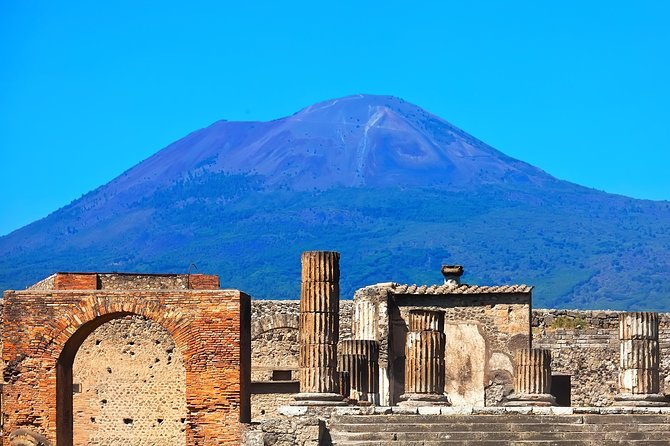
Review · POMPEII FROM SORRENTO
Pompeii Guided Walking Tour with Ticket
Pompeii feels close-up, not distant. This guided walking tour gives you skip-the-line entry plus an official tour guide so you spend your time looking at the ruins, not figuring out logistics.
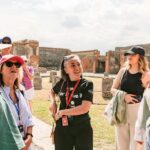
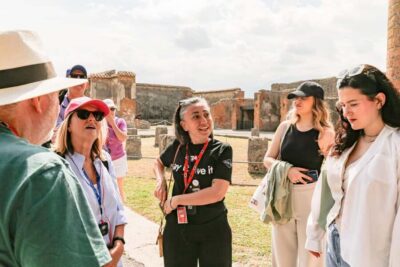
I especially like the small-group size (15 or fewer). It means you can actually ask questions and move at a human pace, and guides like Paulo and Pierpaolo (shown in past experiences) have a knack for making the site fun without turning it into a lecture—though you do need moderate walking stamina, and parts of the route run at a steady pace.
In This Review
- Key highlights to know before you go
- Pompeii in 2.5 hours: what you’re really buying
- Where the tour starts (and why that’s more important than it sounds)
- The core of Pompeii: Pompeii Archaeological Park with a licensed guide
- What you’ll notice once someone points it out
- Foro de Pompeya: the main square where politics and business met
- Teatro Grande: Greek-Roman theater you can walk through, not just look at
- Granai del Foro: the Forum granary and the thousands of surviving artifacts
- Stabian Baths: Terme Stabiane and the logic of Roman bathing
- Macellum: the shops along the main road and what everyday commerce looked like
- Lupanar brothel stop: erotic wall art and a bonus only if time fits
- What guides like Paulo and Pierpaolo do well (and why that helps you)
- Group size (15 or fewer) and pacing in Pompeii
- Value check: is $112.35 worth it for Pompeii?
- Practical tips to make your tour day smoother
- Should you book this Pompeii guided walking tour?
- FAQ
- How long is the Pompeii guided walking tour with ticket?
- Where does the tour start, and where does it end?
- What time does the tour begin?
- What’s included in the price?
- Are food and drinks included?
- Which areas in Pompeii will the tour cover?
- Is there a dress or packing recommendation?
- Is the tour physically demanding?
- Is the tour refundable or changeable?
Key highlights to know before you go
- Skip-the-line Pompeii tickets included so you start seeing the good stuff faster
- Official licensed guide who keeps the story clear as the ruins get complex
- Small group of 15 or fewer for easier questions and better pacing
- Forum, theater, baths, and everyday food spots packed into one practical route
- Lupanar brothel stop only if time allows, so you get a flexible bonus rather than a rushed promise
Other ways to walk into Pompeii
- Sorrento: Skip-the-Line Pompeii Express Tour by Train★ 4.8 · 2,038 reviews
- Priority Access Pompeii & Mt. Vesuvius Full day from Sorrento★ 4.5 · 1,376 reviews
- Pompeii Express Guided Tour by Train from Sorrento★ 4.5 · 770 reviews
- Sorrento: Pompeii Half-Day Guided Tour with Priority Access★ 4.7 · 739 reviews
Pompeii in 2.5 hours: what you’re really buying
Pompeii is huge, and your biggest enemy here is wasted time. This tour is built for a reality check: you can’t see everything, but with a guide you can see the most important parts and understand what you’re looking at.
The tour runs about 2 hours 30 minutes, starting at 10:30 am. That duration matters. Go too short and you’ll feel like you blinked through the highlights; go too long and you’ll start moving just to survive the walking.
Where the tour starts (and why that’s more important than it sounds)
You meet at Ristorante Bar Sgambati, Via Villa dei Misteri, 1, 80045 Pompei NA, Italy. This is close to the action you care about, and the tour ends back at the same meeting point—simple and low-stress.
If you’re coming by train, the meeting point being near public transportation is a real advantage. Pompeii days can be schedule-chaotic, and having a plan that doesn’t depend on perfect timing helps a lot.
The core of Pompeii: Pompeii Archaeological Park with a licensed guide
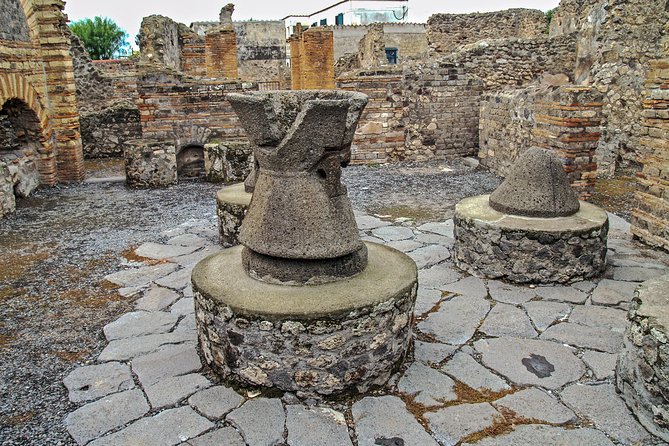
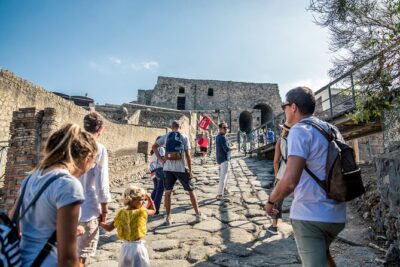
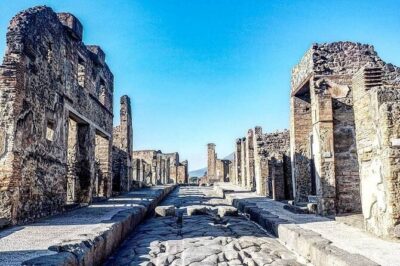
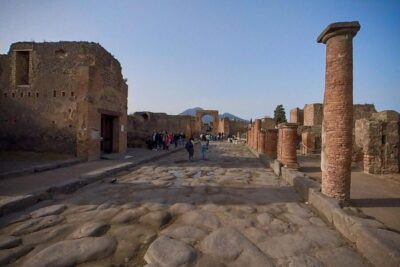
The heart of this experience is a guided walk through Pompeii Archaeological Park. You’ll look at houses, baths, theaters, and key public spaces, plus notable sights tied to daily life—like the fast-food-type stops and the bakery areas mentioned in the tour description.
This is where the guide earns their fee. Pompeii’s streets and buildings can look like scattered stone until someone explains how the city worked—what people did there, where they ate, how public life moved through the Forum, and what those rooms were for.
What you’ll notice once someone points it out
Even if you’ve seen photos, the guide helps you spot details that photos can’t capture:
- How baths weren’t just for cleanliness; they were social space.
- How theater spaces connected Roman culture to Greek traditions.
- How everyday food scenes weren’t casual side-quests; they were part of a full urban system.
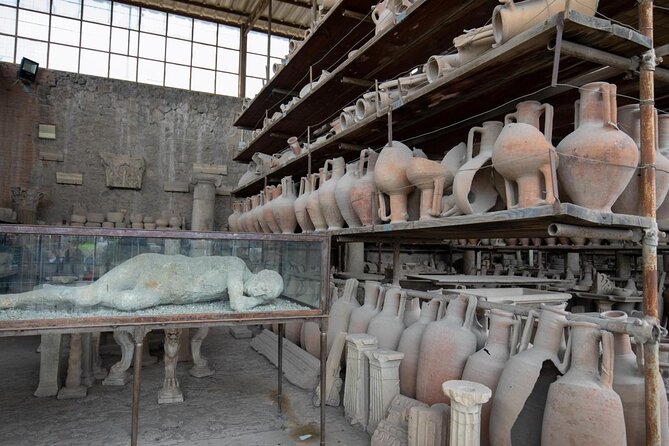
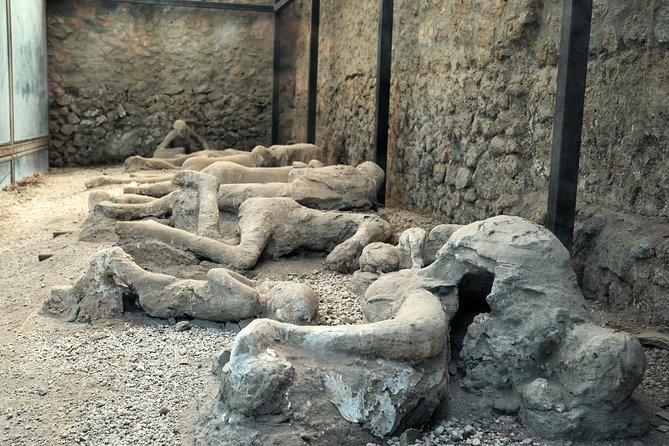
And yes, you may also see references to plaster death casts. Seeing them in context makes the story harder to ignore, but also clearer. It turns the eruption from a headline into a lived event that shaped the whole city.
More of the old town on foot





Foro de Pompeya: the main square where politics and business met
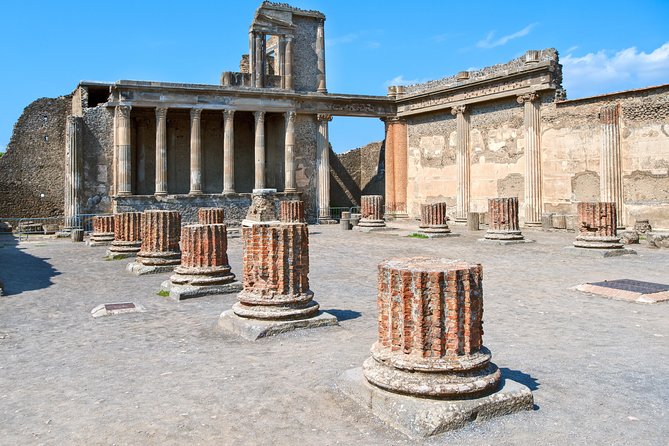
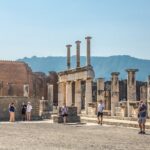
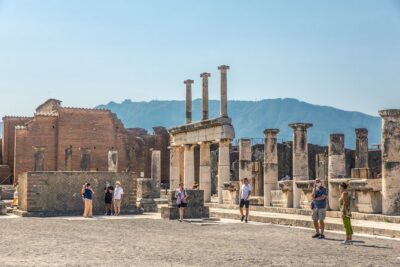
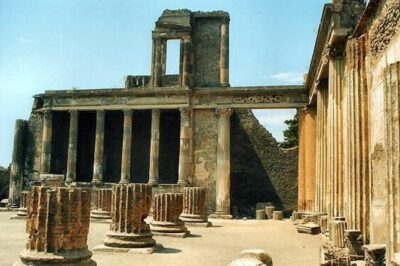
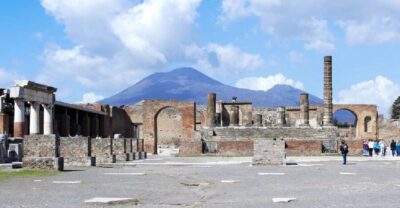
The Forum (Foro de Pompeya) is one of those places where a few minutes can teach you a lot. It served as the town’s main square and hub—commercial, political, and religious all at once.
Here’s the value for your time: when you understand the Forum, you understand the rest of Pompeii better. You start to see which buildings and streets mattered most, and why so many life-and-death civic decisions would have played out in a public space like this.
Teatro Grande: Greek-Roman theater you can walk through, not just look at
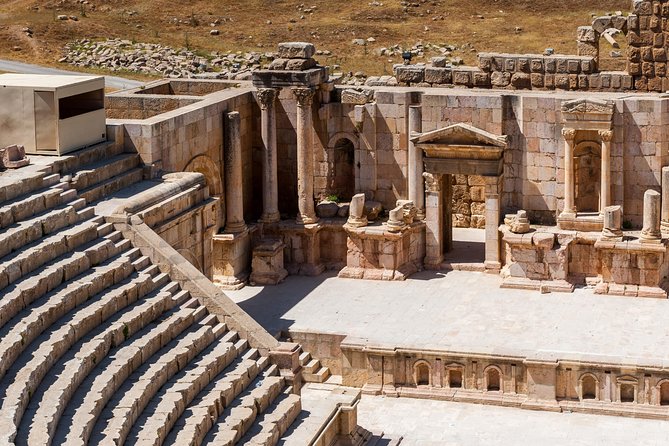
The Teatro Grande is the main theater in Pompeii. Plays came from the Greek-Roman tradition, and the setting is part of the point. You’re not just seeing ruins—you’re standing in a place built for sound, performance, and social gathering.
A short stop here still works, because a guide can connect form to function. For example, seating layout and stage orientation explain how performances would have felt, even with everything collapsed into stone and emptiness.
Granai del Foro: the Forum granary and the thousands of surviving artifacts
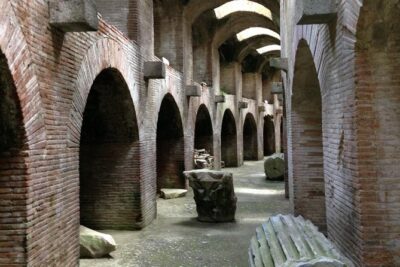
The Granary del Foro (Granai del Foro) is where the tour gives you something unexpected: scale. This area housed the fruit and vegetable market, and today it’s tied to a huge collection—more than 9,000 artifacts, including cooking tools, containers, and everyday items.
That’s more than a museum flex. It’s how you move from impression to evidence. Pompeii didn’t just freeze buildings; it preserved a snapshot of consumption, storage, and household needs. Seeing artifacts associated with the market makes daily life feel real instead of abstract.
This stop may also connect you with casts of victims, and even references to a dog and a tree tied to the eruption aftermath. Again, these details are heavy, but they make the site’s survival story more tangible.
Stabian Baths: Terme Stabiane and the logic of Roman bathing
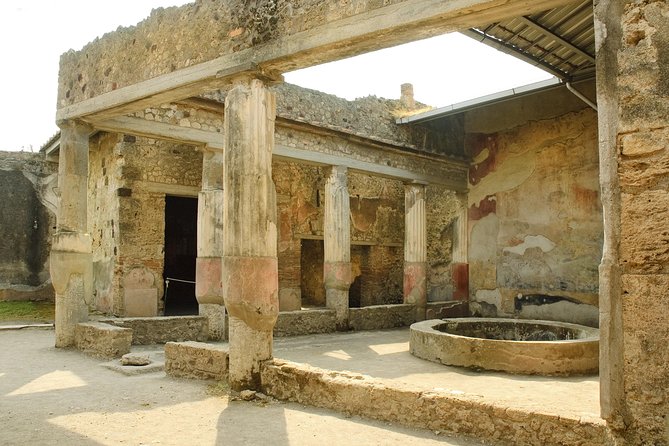
The Stabian Baths (Terme Stabiane) are among the oldest Roman baths known in the Roman world. This matters because baths weren’t a side attraction—they were a central piece of how Romans lived in public.
In practical terms, a guided stop helps you read the layout: where people would have moved, what the spaces were for, and why the design kept social life flowing. Even if you’re not a Roman architecture nerd, you’ll come away with a clearer sense of how the city’s routine worked.
Macellum: the shops along the main road and what everyday commerce looked like
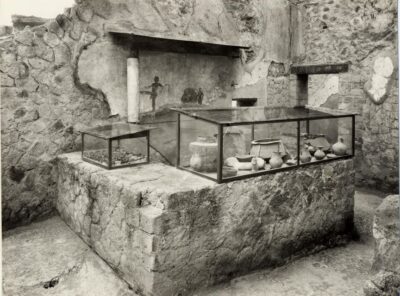
The Macellum stop focuses on the market-style shops along the main road. This is where Pompeii shifts from big civic spaces into daily routines: buying food, selling goods, and moving through a city that ran on regular commerce.
The tour’s timing here is short, but that’s actually smart. You’re learning how the city fed itself—then you move on before your attention gets too tired.
Lupanar brothel stop: erotic wall art and a bonus only if time fits
The Lupanar is the ancient brothel. The description notes that erotic paintings on the walls used to advertise services, and that some of that artwork is still visible.
There’s a key detail you should keep in mind: this stop is listed as time permitting. That doesn’t make it a gimmick—it makes it realistic. Pompeii is slow-going even for fit people, and a tour built around one fixed time window can’t guarantee every extra corner.
What guides like Paulo and Pierpaolo do well (and why that helps you)
Past experiences highlight a consistent theme: the best guides here do three things.
- They navigate with familiarity, even when conditions are messy.
- They keep the tone light when it can be light, and serious when it needs to be serious.
- They answer questions with detail instead of rushing past curiosity.
You’ll also see comments about humor and even photography help. That last part may sound minor, but it matters. Pompeii photos are hard because the scale is tricky. A guide who knows where to stand can save you from 50 blurry shots and a sore neck.
Group size (15 or fewer) and pacing in Pompeii
Pompeii ruins can feel chaotic because they’re open-air and visually dense. That’s exactly why 15 or fewer is a big deal. Small groups don’t just feel nicer; they make it easier to keep your footing, hear explanations, and stay together on uneven paths.
The tour also calls for moderate physical fitness. Don’t assume this is a casual stroll. Bring comfortable walking shoes and bottled water, and plan for stairs and uneven ground typical of archaeological parks.
Value check: is $112.35 worth it for Pompeii?
At $112.35 per person, this isn’t the cheapest way to see Pompeii. But it targets the most expensive part of a self-guided day: interpretation.
You’re paying for:
- Skip-the-line Pompeii entrance tickets
- An official guide who connects the dots across multiple categories of sights
- A small group that keeps the pace usable
If you love ruins but struggle with turning scattered rooms into a story, this kind of guided route tends to feel worth it fast. If you already know Pompeii well and want to control every minute on your own, you might feel the cost more. For most first-timers, the guide is the difference between seeing stone and understanding a city.
Practical tips to make your tour day smoother
Here are the small choices that can make or break your morning:
- Wear comfortable walking shoes you trust on uneven surfaces.
- Bring bottled water even if you think you’ll be fine.
- Keep an eye on time for the Lupanar stop since it’s listed as time permitting.
- Expect no food or drinks included, so plan a snack or meal around your arrival and departure.
And one more thing: Pompeii is dramatic. When you hit the heavier sections—like the casts—it’s easy to feel overwhelmed. Give yourself a moment to slow down instead of treating it like another photo stop.
Should you book this Pompeii guided walking tour?
I’d book it if you want a well-paced highlights route with tickets handled and a guide who can explain what you’re seeing as you walk. The small-group size is especially attractive if you don’t want to get lost in a big pack or feel rushed through key areas.
I’d think twice only if you’re very sensitive to walking time or you need a slow, stop-and-start rhythm. The tour is built for movement, and it aims to cover major areas within about 2.5 hours.
If you’re visiting Pompeii for the first time (or even the second), this is a smart way to turn scattered ruins into a coherent city—Forum life, theater culture, bath routines, market food, and the surprising corners like the brothel when time allows.
FAQ
How long is the Pompeii guided walking tour with ticket?
The tour lasts about 2 hours 30 minutes.
Where does the tour start, and where does it end?
It starts at Ristorante Bar Sgambati, Via Villa dei Misteri, 1, 80045 Pompei NA, Italy. It ends back at the meeting point.
What time does the tour begin?
The start time is listed as 10:30 am.
What’s included in the price?
The price includes skip-the-line Pompeii entrance tickets, an official Pompeii tour guide, and a small group of 15 people or fewer.
Are food and drinks included?
No. Food and drinks are not included.
Which areas in Pompeii will the tour cover?
You’ll visit Pompeii Archaeological Park and see stops such as Foro de Pompeya, Teatro Grande, Granai del Foro, Stabian Baths (Terme Stabiane), Macellum, and the Lupanar if time permits.
Is there a dress or packing recommendation?
You’re advised to wear comfortable walking shoes and to bring bottled water.
Is the tour physically demanding?
The tour is recommended for people with moderate physical fitness level.
Is the tour refundable or changeable?
No. It’s non-refundable and cannot be changed for any reason. If you cancel or request an amendment, the amount paid will not be refunded.
More Tour Reviews in Sorrento
- Sorrento Farm and Food Experience including Olive Oil, Limoncello, Wine tasting
★ 5.0 · 2,524 reviews





More Sorrento on Foot

Back to Pompeii
Just off the boat: newer Sorrento reviews



Pompeii from Sorrento, compared.
 ★ 4.8Skip-the-Line Pompeii Express Tour by TrainFrom $632,038 reviews
 ★ 4.5Priority Access Pompeii & Mt. Vesuvius Full day from SorrentoFrom $1391,376 reviews
 ★ 4.5Pompeii Express Guided Tour by Train from SorrentoFrom $65770 reviews
 ★ 4.7Pompeii Half-Day Guided Tour with Priority AccessFrom $84739 reviews
 ★ 4.5Skip-the-Line Pompeii Guided Tour from SorrentoFrom $90722 reviews
 ★ 4.0Pompeii Ruins Half-Day Tour from Sorrento with GuideFrom $97714 reviews
 ★ 4.8Pompeii and Vesuvius Guided Tour with LunchFrom $130683 reviews
 ★ 4.3Day Tour to Pompeii Ruins and Mount VesuviusFrom $130489 reviews
Browse the lists this tour appears in