
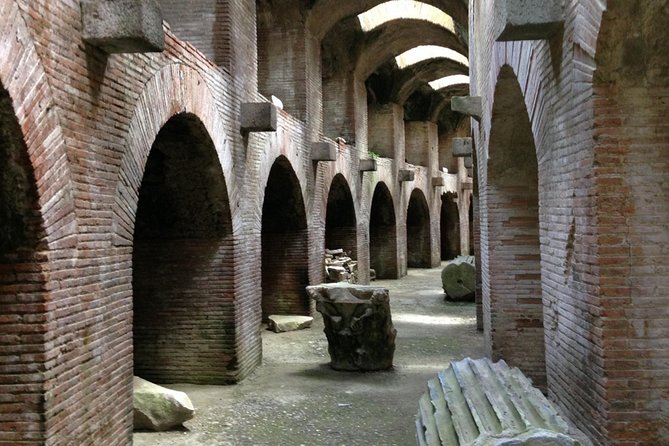
Review · SORRENTO WALKING TOURS
Phlegraean Fields: Pozzuoli Guided Walking Tour
Roman ruins get real in Pozzuoli. This private walking tour pairs the Flavian Amphitheater with the Macellum/Temple of Serapis, then walks you through Pozzuoli’s historic core with the sea always nearby. I like how the tour doesn’t treat archaeology like a museum object; it connects what you’re seeing to the living landscape of Campi Flegrei.
Two things I’d call out right away: you get the scale lesson from a major Roman arena that’s described as the third-largest in the Roman world, and you also get a clean storyline about how the market became known as the Temple of Serapis after a statue discovery in 1750. One possible drawback to plan for: because of bradyseism (the slow rise and fall of the ground), some viewpoints can be partially flooded, so you might be looking at certain remains from higher streets instead of right at ground level.
In This Review
- Key highlights worth marking on your map
- A private walk where the sea and Rome share the same page
- Flavian Amphitheater: why Roman scale took so long
- Macellum (Temple of Serapis): market life with an Egyptian twist
- Bradyseism in plain sight: when ruins meet flooding
- Pozzuoli historic center: ancient secrets, then sea views
- Price and what you really get for $289.65 per group
- Logistics that matter more than they look
- Who this Pozzuoli tour is best for
- Should you book the Phlegraean Fields: Pozzuoli Guided Walking Tour?
- FAQ
- Where does the tour meet?
- What time does the tour start?
- How long is the tour?
- How much does it cost?
- Is this tour private?
- What’s included in the ticket price?
- Are admission tickets included?
- Can I cancel for a full refund?
Key highlights worth marking on your map
- Nero’s arena at Campi Flegrei scale: the Flavian Amphitheater and the long timeline behind it
- Serapis has a backstory: named after an Egyptian god statue found in 1750
- Real geology affects real sightseeing: bradyseism can change what you can access and where you stand
- A private group up to 4: one guide, your pace, and less waiting around
- A finish at the seafront: big sea views that help everything click
- Tickets are separate for key sites: you’ll need to budget for admission where required
More of the old town on foot
- Walking Food Tour in Sorrento w/ Limoncello Factory Lemon Grove★ 4.5 · 821 reviews
- Sorrento: Guided Walking Tour & Limoncello Tasting★ 5.0 · 472 reviews
- Sorrento: Sunset City Walking Tour with Limoncello Tasting★ 5.0 · 274 reviews
- Sorrento Private Walking Tour with Guide and Limoncello Tasting★ 5.0 · 77 reviews
A private walk where the sea and Rome share the same page
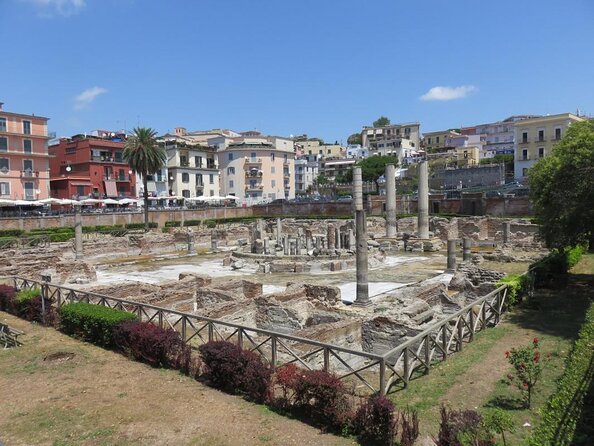
This is the kind of Naples-area tour I like because it doesn’t feel like a rushed stamp-collecting day. You meet the guide at the exit of the Pozzuoli metro station, then you head into the Archaeological Park of the Campi Flegrei and the historic center of Pozzuoli. From the start, the setting matters: Pozzuoli isn’t “ruins in a field” so much as an active coastal city with layers of Roman life under your feet and around your sightlines.
The tour is private, so you’re not sandwiched between strangers when the guide is trying to explain what’s going on. And it’s built around a tight arc of places that make sense together: spectacle (the amphitheater), daily life (the market area), then the broader city with the waterfront views that put the whole scene into context.
Timing-wise, plan on about 2 hours for the walking and stops, since the stated stop durations add up that way. At the same time, the tour story is sometimes described as longer (closer to 3 hours) depending on pace and conditions, especially if access is affected by flooding. Either way, you’ll come away with a more coherent picture than you’d get by visiting each site solo.
Flavian Amphitheater: why Roman scale took so long
The Flavian Amphitheater is the first big stop, and it’s where the tour starts doing its best work: making you understand why Roman construction wasn’t just “big,” it was stubbornly slow, and for a reason.
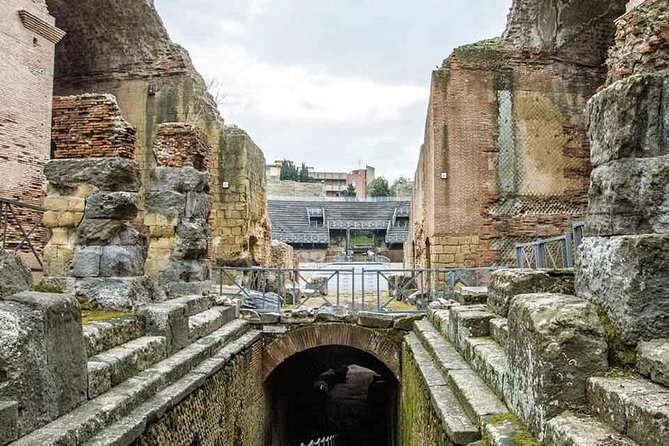
You’ll learn it’s described as the third-largest arena in the Roman world, and that it hosted games connected to Tiridates, King of Armenia. The guide explains the logic behind the building—what a project like this demanded and why it took so long to reach completion. Even if you’ve seen the famous arenas elsewhere, this one is valuable because it gives you a different angle on Roman ambition: not just the final object, but the scale problem and the time it took to solve it.
Practical tip: the stop includes the site visit, but admission tickets are not included. So if you want everything smooth, factor in a little extra time and money for entry.
Also, keep your expectations flexible. This area can feel calm—one of the notes I picked up is that it often isn’t jammed—yet it can still be weather- and ground-condition dependent. If you’re the type who likes photographing details, arrive ready to slow down rather than sprint.
Macellum (Temple of Serapis): market life with an Egyptian twist
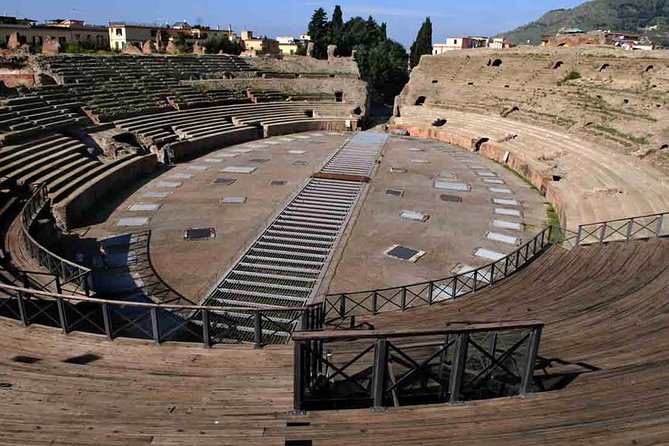
Next comes the Macellum, described as the public market of Roman Puteoli. This is where the tour shifts gears from spectacle to everyday Rome—food, trade, crowds moving through shared spaces.
The key hook is the name. It’s also known as the Temple of Serapis, tied to a discovery made in 1750: the statue of the Egyptian god. That detail matters because it shows you how names and identities can be layered onto a place long after the original function was established.
What I like about this stop is that it doesn’t treat the Egyptian connection like a random side quest. The guide ties it back to how the market worked and why it became important enough to be remembered. When you understand what a macellum meant in daily Roman life, the ruins start feeling less like “leftover stone” and more like a real civic machine.
Here too, admission tickets are not included, and the visit is about 30 minutes. If you enjoy short, focused explanations that change how you look at a ruin, this pacing tends to work well.
Bradyseism in plain sight: when ruins meet flooding
This is the part of Campi Flegrei that you can’t fully appreciate from photos. The area is affected by bradyseism, a phenomenon tied to the slow rise and fall of the ground. In practical sightseeing terms, that can mean you’ll be viewing remains from the upper street rather than from exactly where you’d normally expect.
One note you should take seriously before you go: parts of the Temple of Serapis area can be partially underwater, especially around the piazza, because of sea influence linked to bradyseism. That doesn’t make the visit pointless. It changes your perspective—and the guide can help you read what you’re seeing: what’s exposed, what’s submerged, and why the layout of viewpoints matters.
If you’re driving, you may also find that certain paths and access areas aren’t open or are awkward to reach. The practical advice is to plan to look from above when needed, and don’t assume every angle is accessible at ground level. Bring grippy shoes and accept that “best photo spot” might not match “most convenient access spot.”
And yes, it can feel a bit odd at first—like you walked into a coastal city where the shoreline writes the captions for the ruins. But that’s the point. You’re seeing archaeology in dialogue with an active landscape.
Keep looking: more Sorrento trips along the same coast




Pozzuoli historic center: ancient secrets, then sea views
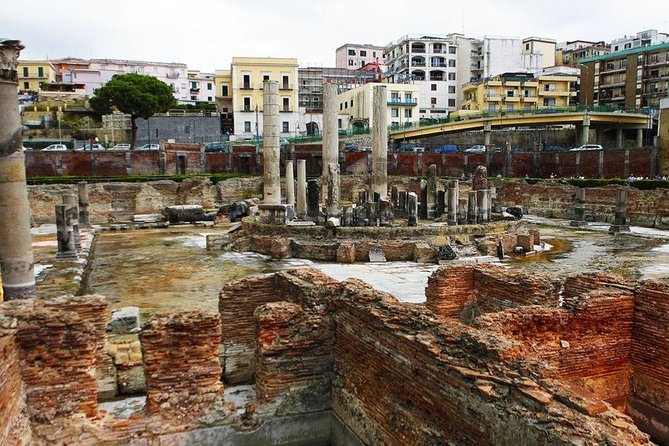
After the archaeology stops, you spend about an hour in Pozzuoli’s historic center, and this portion is listed as free admission. This is where the tour earns its “walking” label, because you’re not just ticking off monuments—you’re getting your bearings in a real neighborhood.
The guide frames the city’s ancient secrets in a way that helps you connect the earlier stops to what you see around you. Instead of treating the amphitheater and the macellum like isolated showpieces, you start noticing how they fit into a broader urban pattern: civic space, commercial space, and the waterfront all tied together by geography.
Then comes the payoff: the seafront with immense sea views. This isn’t just a scenic finish. It helps you understand why the Roman world chose these locations—and why the modern world still lives in the shadow of that same coastline.
If you have even a mild interest in photography, give yourself a moment to step back and take the view in without framing first. Once you’ve heard the bradyseism explanations and the market story, the sea becomes part of the interpretation, not background noise.
Price and what you really get for $289.65 per group
The price is $289.65 per group for up to 4 people. That’s the kind of pricing that can be a great deal—or not—depending on your group size.
If you’re traveling as a couple or small family, it can work out well because the cost is grouped, not per person. You’re essentially paying for a private guide experience with a focused route that doesn’t try to cover everything in Naples. You also get a professional guide, and if your group is larger (the tour includes “whispers” rental from 6 participants and on), you may receive receiver equipment so you can hear clearly on longer stretches.
What isn’t included: admission tickets where required. Based on the stop details, the Flavian Amphitheater and the Macellum/Temple of Serapis need tickets, while the historic center portion is free. So when you estimate your full cost, add those admissions.
Value-wise, I’d call this a solid pick if you want:
- a Roman site tour with a smaller feel than the headline mass-tour circuits
- a guide who connects ruins to the living landscape
- a route that stays short enough to keep the story coherent
Logistics that matter more than they look
This tour starts at 10:00 am, meeting at the exit of the Pozzuoli metro station. That’s helpful: you’re not forced into complicated car logistics just to begin. And the tour ends back at the meeting point, so you’re not stuck figuring out a new transport puzzle.
You’ll also have a mobile ticket. That’s one less thing to keep track of when you’re walking in a coastal city.
If you’re driving, keep in mind the practical access notes: some areas may be closed or harder to reach, and you might need to drive uphill or look from higher streets. It’s not a reason not to go—it’s a reason to keep your plans flexible and wear shoes you trust.
In the mood for an easy walking day? This is generally a doable route, and it’s listed as suitable for most people. Service animals are allowed, and it’s near public transportation—good signs for a smoother day if you don’t want to wrestle with long transfers.
Who this Pozzuoli tour is best for
I think this tour fits best if you like Roman history but you also enjoy real-world context. If your ideal day is a mix of big monuments plus “how does this place work” explanations, you’ll enjoy it.
You’ll probably get a lot out of it if:
- you’ve already done the big Naples-area classics and want something quieter and more local
- you enjoy guided context (names, dates, and how clues connect)
- you like coastal settings and want the sea to be part of the story
- you appreciate seeing how geology (bradyseism) changes what you can access
If you’re the type who hates any chance of wet or partially flooded viewpoints, you should go in with eyes open. The tour can still be rewarding, but conditions can shape where you stand.
Should you book the Phlegraean Fields: Pozzuoli Guided Walking Tour?
Yes, I’d book it if you want a high-quality, small-group way to experience Campi Flegrei without turning the day into a rushed checklist. The combination of the Flavian Amphitheater, the Macellum/Temple of Serapis story tied to a 1750 discovery, and the waterfront finish is a smart arc. You’ll come away with a clearer understanding of Roman scale and daily life, plus a real explanation for why the ground and sea matter here.
I would hesitate if you’re only interested in fully accessible, dry, ground-level ruins every time. With bradyseism affecting access and flooding, you should be ready for alternate viewpoints and a bit of weather reality.
If you’re going with a small group (up to 4), the pricing also makes more sense, since you’re paying per group rather than per person. For me, that’s when this tour stops being “just another walking tour” and becomes a good value way to see Pozzuoli the way it’s meant to be seen.
FAQ
Where does the tour meet?
The tour starts at 80078 Pozzuoli, Metropolitan City of Naples, Italy, meeting at the exit of the Pozzuoli metro station.
What time does the tour start?
The start time is 10:00 am.
How long is the tour?
The duration is approximately 2 hours.
How much does it cost?
It costs $289.65 per group, up to 4 people.
Is this tour private?
Yes. It’s a private tour/activity, and only your group participates.
What’s included in the ticket price?
The price includes a professional guide and whisper rental (from 6 participants and on). You also get a mobile ticket.
Are admission tickets included?
No. Admission tickets where required are not included (the amphitheater and the Macellum/Temple of Serapis need tickets, while the Pozzuoli portion is free).
Can I cancel for a full refund?
Yes. You can cancel up to 24 hours in advance for a full refund.
More Tours in Sorrento




More Tour Reviews in Sorrento
- Sorrento Farm and Food Experience including Olive Oil, Limoncello, Wine tasting
★ 5.0 · 2,524 reviews



More Sorrento on Foot





Just off the boat: newer Sorrento reviews



Sorrento Walking Tours, compared.
 ★ 4.5Walking Food Tour in Sorrento w/ Limoncello Factory Lemon GroveFrom $125821 reviews
 ★ 5.0Guided Walking Tour & Limoncello TastingFrom $41472 reviews
 ★ 5.0Sunset City Walking Tour with Limoncello TastingFrom $29274 reviews
 ★ 4.6Walking Tour with Local GuideFrom $55171 reviews
 ★ 5.0Sorrento Private Walking Tour with Guide and Limoncello TastingFrom $9077 reviews
 ★ 4.5Sorrento Walking Tour with a Local GuideFrom $5976 reviews
 ★ 4.8Walking Tour in Lemon Garden w/ Food TastingFrom $8172 reviews
 ★ 5.0Sorrento Walking Tour & Limoncello TastingFrom $3059 reviews
Browse the lists this tour appears in