
Review · LIMONCELLO & LEMON GROVES
Sorrento: Guided Walking Tour & Limoncello Tasting
Sorrento tastes better with a guide. In two hours, I love how Mario (born and raised in Sorrento) gets you oriented without a map, taking you to standout spots like the panoramic Vallone dei Mulini and the historic buildings that make the center feel lived-in. One possible drawback: the route is walkable, but it includes hills and steps, so comfy shoes and good timing matter.
I also like the payoff at the end: a lemon garden explanation and a real limoncello tasting built around certified organic Amalfi Coast lemons, plus options like limoncello cream, pistachio cream, and cantaloupe melon cream.
In This Review
- Key highlights to pay attention to
- Piccadilly Pub and the start: how you’ll know what to look for
- Vallone dei Mulini: the viewpoint that makes Sorrento’s shape make sense
- Via San Cesareo and Sant’Antonino Square: small streets, big stories
- Chiostro di San Francesco: the 13th-century pause you’ll remember
- Sedil Dominova: Sorrento’s ancient parliament and an iconic facade
- Villa Comunale and the Bay of Naples: where the photos actually happen
- Sorrento inlay: how the city’s art follows you after the tour
- Lemon garden and organic limoncello production: the tasting makes more sense
- Limoncello tasting: what you sample and how much to expect
- Food and olive oil tasting option: when it’s worth adding
- Price and value: what $41 buys you in real terms
- Who should book this tour, and who should skip it
- Should you book the Sorrento walking tour with limoncello tasting?
- FAQ
- How long is the Sorrento guided walking tour?
- Where do I meet the guide in Sorrento?
- What’s included in the $41 per person price?
- What should I bring for the walk?
- Is the walk difficult?
- What exactly do I taste at the end?
Key highlights to pay attention to
- Vallone dei Mulini: a mill valley viewpoint with a story behind the terrain
- Via San Cesareo: the city’s oldest street with narrow lanes and artisan shops
- Sant’Antonino Square: patron saint history and miracle tales
- Chiostro di San Francesco: a 13th-century Franciscan convent stop for architecture lovers
- Sedil Dominova: Sorrento’s ancient parliament and one of its most iconic facades
- Lemon garden + tasting: learn the production ideas, then sample organic limoncello and creams
Deeper into the lemon terraces
- Sorrento Farm and Food Experience including Olive Oil, Limoncello, Wine tasting★ 5.0 · 2,524 reviews
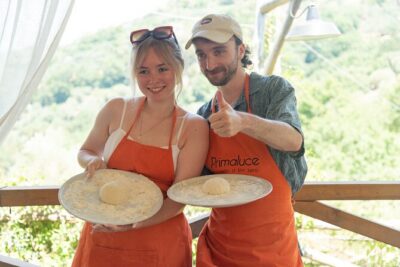
- Sorrento: Pizza Lesson, Wine, and Limoncello at a Local Farm★ 5.0 · 1,513 reviews
- Pizza School with Wine and Limoncello Tasting in a Local Farm★ 5.0 · 845 reviews
- Authentic Farm Tour with Pizza, Cheese, Wine & Limoncello Tasting★ 5.0 · 698 reviews
Piccadilly Pub and the start: how you’ll know what to look for
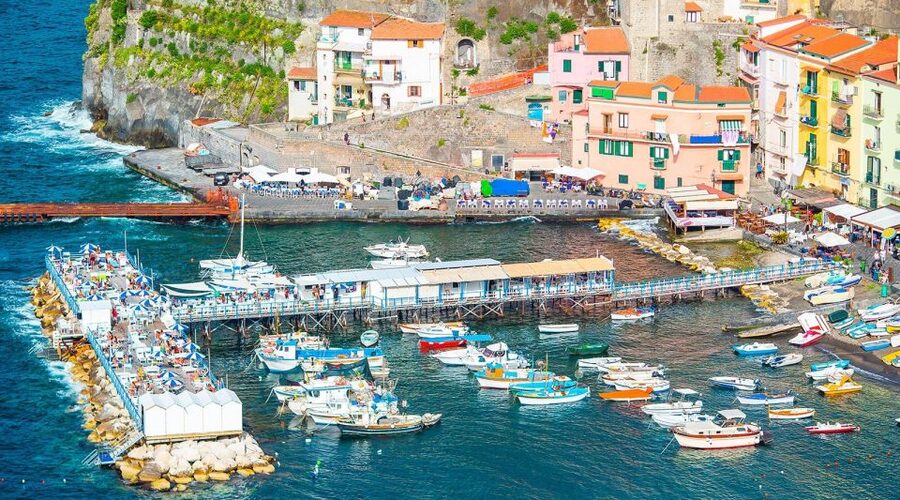
Most walking tours start with a “follow me.” This one starts with orientation, and that’s the smart part. You meet at Piccadilly Pub, right in front of the entrance on Via Fuorimura 1. The guide stands there in a red sports cap, and they’re strict about the exact start time, so show up a few minutes early.
The big value here is that you don’t just get a checklist of sights. You get context while you walk, which means you’ll notice details on your own later. The guide also builds in pauses, so you’re not constantly rushing to keep up.
Expect a slow, steady pace over about 3 km, with breaks for explanations and photo stops. Bring water and an umbrella. If the weather is rough, the tour can be adjusted, and you might get a message if conditions are too unsafe.
Vallone dei Mulini: the viewpoint that makes Sorrento’s shape make sense
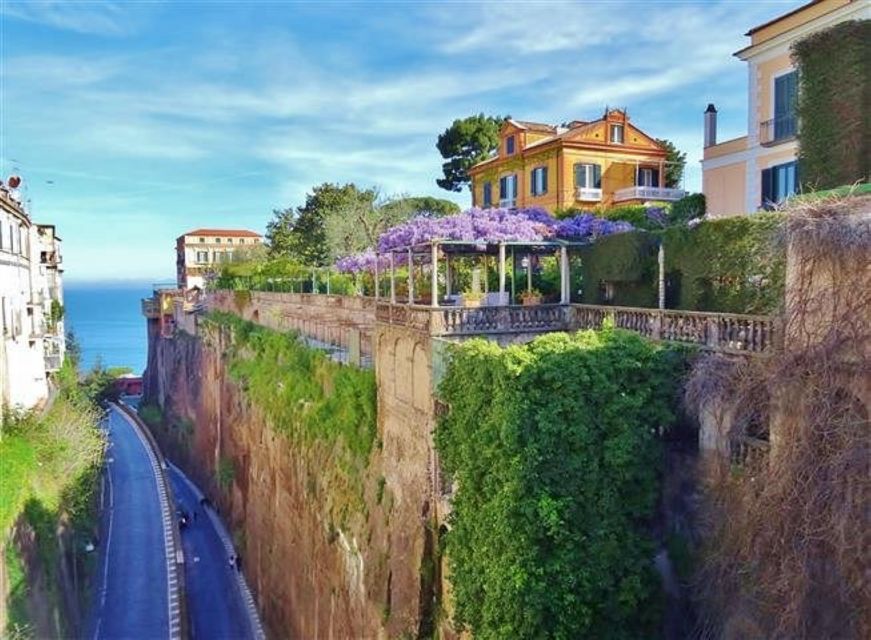
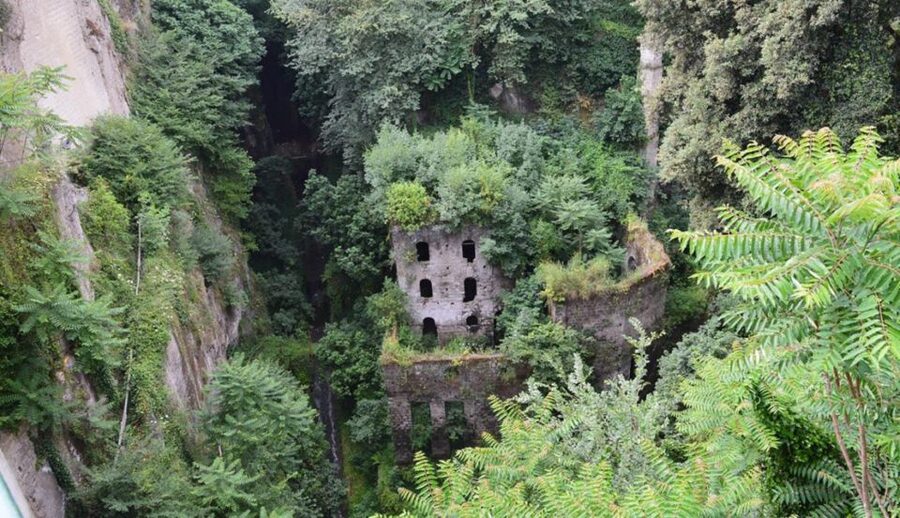
One of the first true “wow” moments is the Vallone dei Mulini, often described as a panoramic valley tied to old milling activity. Even if you’re not a history buff, this stop helps you understand why Sorrento looks the way it does from street level: the terrain, the slopes, and the way older life worked around what the land offered.
The guide points out what’s easy to miss on your own. That includes ancient traces tied to the valley’s milling past. You’re basically learning how to read the town in real time, which is a skill you’ll use all trip long.
Photo-wise, this is a solid early stop. The light can be dramatic, and the view gives you a sense of scale before you get pulled into the tight streets and churches of the historic center.
Via San Cesareo and Sant’Antonino Square: small streets, big stories
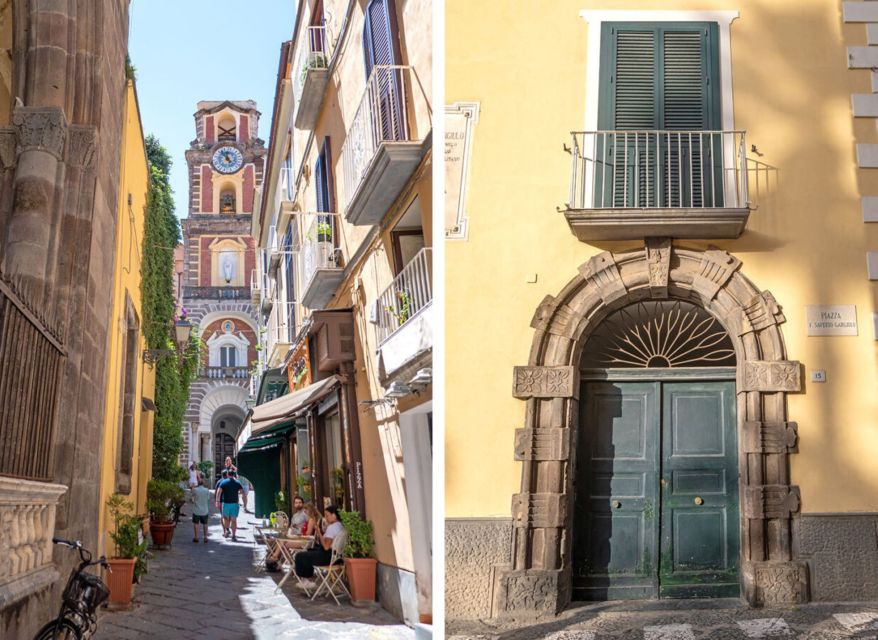
After the valley viewpoint, you move into the heart of the old town. A highlight here is Via San Cesareo, Sorrento’s oldest street. The appeal is practical: you see the narrow lanes, you spot local artisan shops, and you get a feel for the kind of shopping street that has fed daily life for generations.
Then comes Sant’Antonino Square, named for the city’s patron saint. Instead of treating the square like a photo backdrop, the guide shares the saint’s life and stories of miracles. It’s the kind of detail that changes how you see a place, because you start noticing symbols and references you’d otherwise ignore.
This is also where you learn the rhythm of Sorrento. You’ll see how people move, where residents linger, and which corners feel like community space rather than just tourism space. If you plan to explore later on your own, this part helps you mentally map the center.
Chiostro di San Francesco: the 13th-century pause you’ll remember
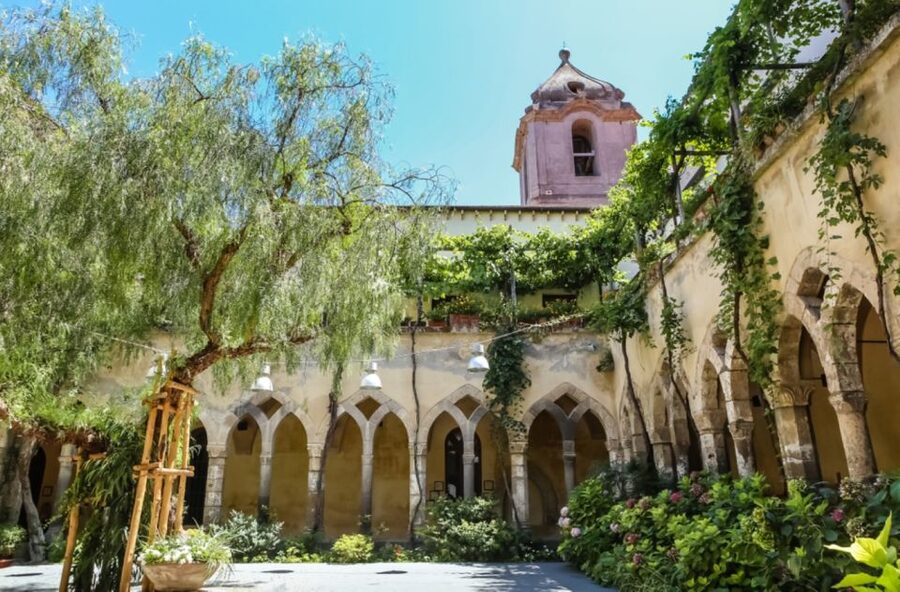
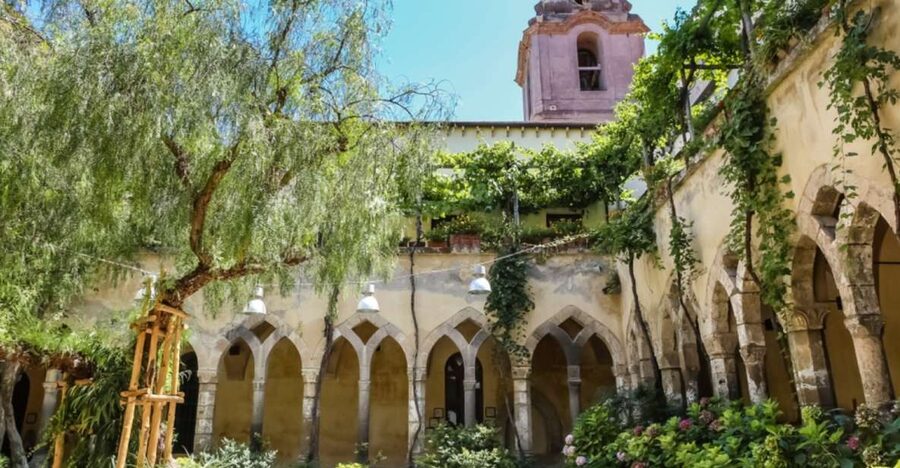
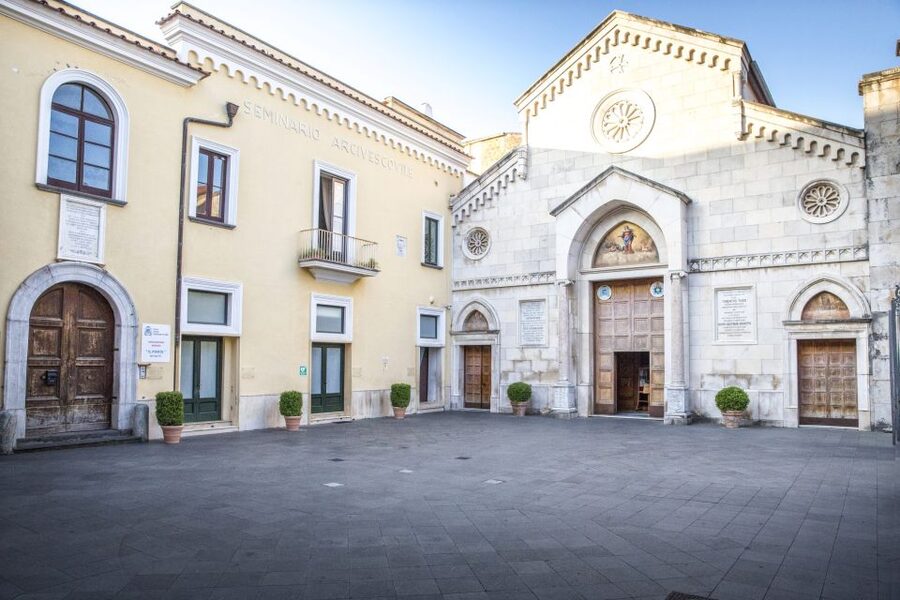
When the tour gets to the Chiostro di San Francesco, it shifts gears from streets to architecture. You’re stepping into the mood of a much older Sorrento with this 13th-century Franciscan convent cloister. Even if you’re not into religious buildings, cloisters have a way of making you slow down.
This stop is valuable because it’s an actual structure with weight and age, not just a viewpoint. You get a guided explanation of what you’re seeing, and then you have time to take it in without the tour turning into a sprint.
If you like places where stonework and layout matter, this is one of the best moments. The pacing here tends to feel comfortable, not rushed.
More of the old town on foot





Sedil Dominova: Sorrento’s ancient parliament and an iconic facade
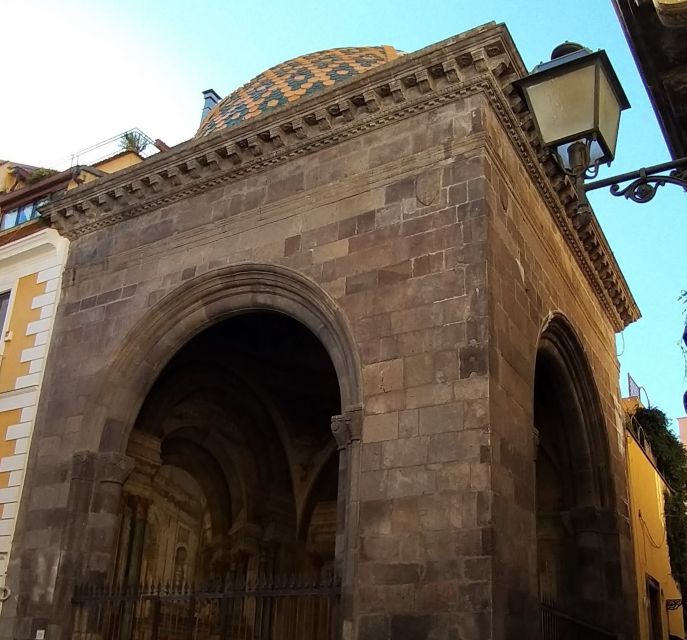
The Sedil Dominova is one of those stops where you might think, I’ve seen this type of building before, until you learn what it actually was. This site is Sorrento’s ancient parliament and one of the city’s oldest and most iconic buildings.
The guide’s job is to connect the building to the city’s people and civic life, not just date it. That’s why this stop works well even for casual travelers: you end up understanding why the facade is so prominent and what it represented for the community.
After this, the walk feels less like moving between attractions and more like tracing the logic of the city center. You’re starting to see the same pattern again and again: power, faith, daily life, and art all layered into the same streets.
Villa Comunale and the Bay of Naples: where the photos actually happen

Then the tour swings toward the sea view from Villa Comunale, the public park overlooking the Gulf. This is built for photos, plain and simple, and it’s one of the best spots to frame the Bay of Naples.
This is also a useful break. You’re moving from old-town monuments into open air, and you can reset your legs while you take in the view. If you’re the kind of traveler who wants one great panorama without hunting for it later, you’ll appreciate that the guide brings you straight to this point.
One nice touch: the guide tends to keep the pace relaxed, so you’re not stuck grabbing shots while everyone else barrels ahead.
Sorrento inlay: how the city’s art follows you after the tour

A fun part of this walk is what happens in between the big monuments: you learn about Sorrento inlay, the city’s typical art form. The tour includes an explanation of its history and the production method, so you know what you’re looking at when you spot it later in shops or on decorative details.
Even if you don’t buy anything, this knowledge changes your walk. Decorative patterns stop looking random. You start noticing craftsmanship and the idea behind the work.
I like this kind of stop because it connects souvenirs to culture. Instead of buying for the sake of buying, you can buy (or skip) with some real understanding.
Lemon garden and organic limoncello production: the tasting makes more sense
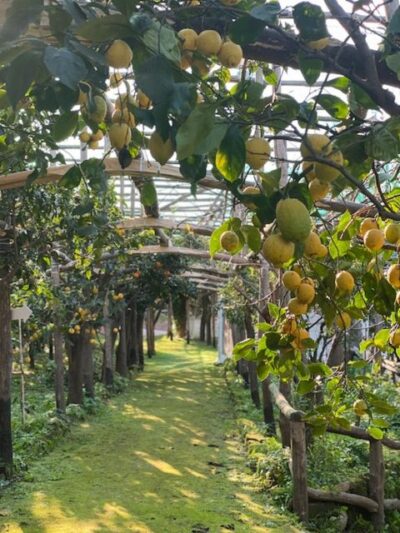
The route ends with a stop at a small lemon garden, where you get the story behind Sorrento lemons and the production technique of limoncello. This matters, because the tasting isn’t treated like a casual bonus. It’s presented as the end result of what you just learned.
The tour also emphasizes using certified organic lemons from the Amalfi Coast, which gives the tasting a clearer sense of place. You’re not just trying a drink. You’re trying something tied to local agriculture and a specific method.
Even if you’ve had limoncello before, this portion gives you better words for what you like. And if you’ve never had it, the explanation makes the flavor feel less random and more intentional.
Limoncello tasting: what you sample and how much to expect
The tasting happens at a partner shop, and it’s designed to help you understand the organoleptic quality, meaning how it tastes and feels to you. You get about half the amount normally served in a bar. That’s because limoncello is high alcohol, and the tour also includes a variety of liqueurs and cream flavors.
In addition to standard limoncello, you can try limoncello cream, pistachio cream, and cantaloupe melon cream. You should expect it to feel like a pleasant break, not the main event of the two hours.
It’s worth knowing this if you booked thinking you’d leave with a heavy-duty party vibe. This tour treats tasting as education plus a treat, not a long drinking session.
Food and olive oil tasting option: when it’s worth adding
The tour includes food and olive oil tasting if you select that option. If you’re already planning to eat in Sorrento, this can be a good way to sample local flavors without turning your afternoon into a full meal hunt.
If you’re not sure, you can also treat the limoncello tasting as your main edible focus. Either way, the walk stays centered on the historic sights.
Price and value: what $41 buys you in real terms
At $41 per person for two hours, the value comes from the mix. You’re paying for a local guide, a structured walk through key historic sites, and an included tasting tied to Sorrento’s lemon culture.
If you try to do this on your own, you might still hit the highlights. But you’ll miss the connective tissue: the why behind the valley of mills, the context around Sedil Dominova, the explanations of inlay, and the production story that makes the tasting meaningful.
Could the limoncello portion feel small? A few people have flagged that the tasting is light relative to the price, and the tour itself says the tasting amount is reduced. That’s a fair trade-off for staying safe and keeping the walk enjoyable. The tour isn’t trying to replace a full bar stop.
Who should book this tour, and who should skip it
This is a great fit if you want to get your bearings fast and learn Sorrento from ground level. It works well when you’re short on time, arriving for the first time, or planning to do independent exploring afterward. The guide’s local background shows, especially in the way stories connect to places.
It’s also ideal if you like a calm pace and clear explanations. Many people come away saying Mario makes the town feel understandable and gives good local recommendations.
Skip it if any of these are true:
- you struggle with steps and hills, since the route can be challenging even though it’s described as easy and slow
- you need mobility accommodations, since it isn’t suitable for people with mobility impairments
- you have heart issues or hearing needs, since it isn’t listed as suitable for those situations
Also, if you hate crowds, plan your timing. One helpful tip from the guide style of advice: consider avoiding very busy days like Fridays and Saturdays, which can feel packed with cruise visitors.
Should you book the Sorrento walking tour with limoncello tasting?
Book it if you want a guided walkthrough of Sorrento’s historic center that ends with a lemon-themed tasting you can actually place in context. The strongest reason to go is the blend of civic monuments, religious architecture, craft knowledge (inlay), and a lemon story you finish by tasting.
Skip it if your goal is only scenic strolling or beach time. This tour is built around the idea that the historic center is an open-air museum, and if you’re not into the architecture and art side, you might feel like the tasting is the only part that matters.
FAQ
How long is the Sorrento guided walking tour?
The tour lasts about 2 hours, including the guided walk and the limoncello tasting.
Where do I meet the guide in Sorrento?
Meet at Piccadilly Pub, in front of the entrance on Via Fuorimura 1. The guide will be wearing a red sports cap. The guide arrives exactly at the scheduled start time.
What’s included in the $41 per person price?
The tour includes a local guide, the walking tour, and a limoncello tasting. There may also be a food and olive oil tasting if you choose that option.
What should I bring for the walk?
Bring comfortable shoes, an umbrella, water, and rain gear if weather looks questionable.
Is the walk difficult?
It covers about 3 km and is described as easy and rather slow, with pauses for explanations. Still, be ready for hills and steps, so it may not feel comfortable for everyone.
What exactly do I taste at the end?
You’ll taste limoncello and other offered liqueurs, plus limoncello cream, pistachio cream, and cantaloupe melon cream. The servings are smaller (about half a bar pour) because of the high alcohol content and the variety offered.
More Tour Reviews in Sorrento
- Sorrento Farm and Food Experience including Olive Oil, Limoncello, Wine tasting
★ 5.0 · 2,524 reviews





More Sorrento on Foot


More Lemon Grove Afternoons
- Sorrento Farm and Food Experience including Olive Oil, Limoncello, Wine tasting
★ 5.0 · 2,524 reviews




Just off the boat: newer Sorrento reviews




Limoncello & Lemon Groves, compared.
 ★ 5.0Sorrento Farm and Food Experience including Olive Oil, Limoncello, Wine tastingFrom $1142,524 reviews
 ★ 5.0Pizza Lesson, Wine, and Limoncello at a Local FarmFrom $941,513 reviews
 ★ 5.0Pizza School with Wine and Limoncello Tasting in a Local FarmFrom $96845 reviews
 ★ 4.5Walking Food Tour in Sorrento w/ Limoncello Factory Lemon GroveFrom $125821 reviews
 ★ 5.0Authentic Farm Tour with Pizza, Cheese, Wine & Limoncello TastingFrom $97698 reviews
 ★ 5.0Sorrento Farm by Tuk Tuk: Cheese, Limoncello & Hands-On PizzaFrom $211628 reviews
 ★ 4.6Lemon Garden Tour with Marmalade TastingFrom $47405 reviews
 ★ 5.0Lemon, Olive Oil and Wine Tasting Tour with LunchFrom $115300 reviews
Browse the lists this tour appears in