
Review · POMPEII FROM SORRENTO
Sorrento: Pompeii Half-Day Guided Tour with Priority Access
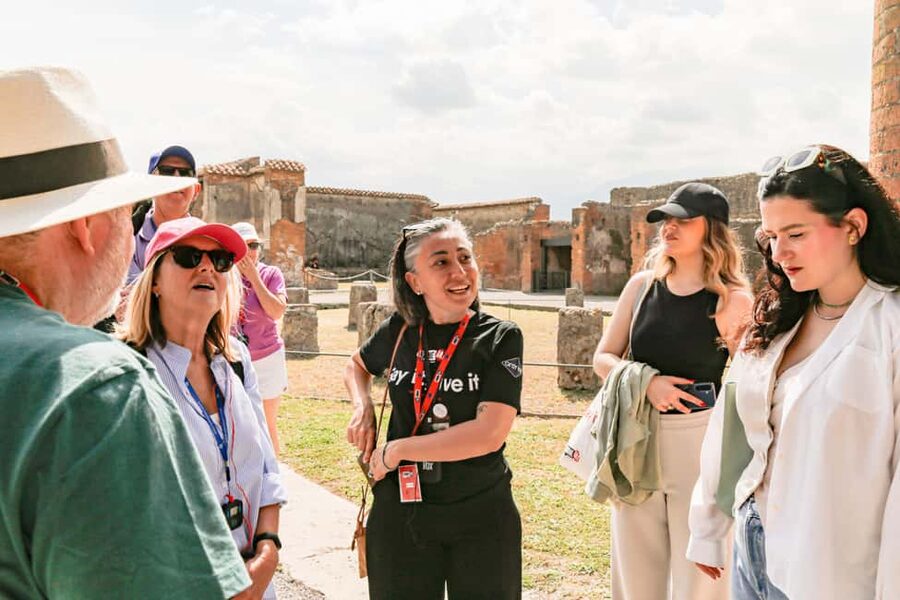
Pompeii is louder when someone explains it. I like the priority access and early departure that help you start near Porta Marina before the big rush, and I also enjoy how the guide turns standout sights like the Alexander Mosaic into real stories about Roman life. The trade-off is simple: there’s moderate walking on uneven ground, so rainy weather can make things a bit more work.
This is a 4-hour half-day format that’s built for people who want the best highlights without spending the whole day lost in the stones. You’ll ride from Sorrento by air-conditioned coach, then get a 2.5-hour guided walk through key areas like the Civil Forum, Via dell’Abbondanza, the Theatre District, and major domestic spaces.
Most people come away impressed by the guiding style. Names like Michele, Mimi, Luigi, and Louise pop up often in others’ accounts, and the common thread is clear, story-driven context (not just dates). If you hate following a schedule or you’re sensitive to pace, this format may feel a touch tight at times.
In This Review
- Key things I’d circle before you go
- Leaving Sorrento Early: the real secret is timing
- Priority access at Pompeii: what it changes for your day
- Porta Marina and the Civil Forum: power, law, and commerce in one zone
- Via dell’Abbondanza: the street that makes Pompeii feel real
- Theatre District highlights: Large Theater and public culture
- Street food stops: Thermopolium and Pistrinum
- House of the Faun: wealth, mosaics, and Roman style
- Lupanare and the Macellum: social life, trade, and uncomfortable history
- The 4-hour format: how to plan your day with realistic expectations
- Cost and value: is $84 a good deal for Pompeii highlights?
- Who should book this Pompeii half-day tour
- Should you book this tour?
- FAQ
- How long is the tour from Sorrento to Pompeii?
- Where do I meet the guide in Sorrento?
- Does this tour include priority access to Pompeii?
- What language is the Pompeii guide?
- Is transportation included?
- Are audio headsets provided?
- How much walking is involved?
- What’s not included in the price?
- Are hotel pickup and drop-off included?
- Are backpacks allowed?
Key things I’d circle before you go
- Priority entrance plus an early start means Pompeii feels calmer and easier to enjoy.
- Official-style, English-speaking guiding helps you make sense of what you’re seeing as you walk.
- Alexander Mosaic at the House of the Faun gives you a memorable anchor point for Roman art and wealth.
- Street life stops like the Thermopolium and Pistrinum help you picture everyday meals, not just big monuments.
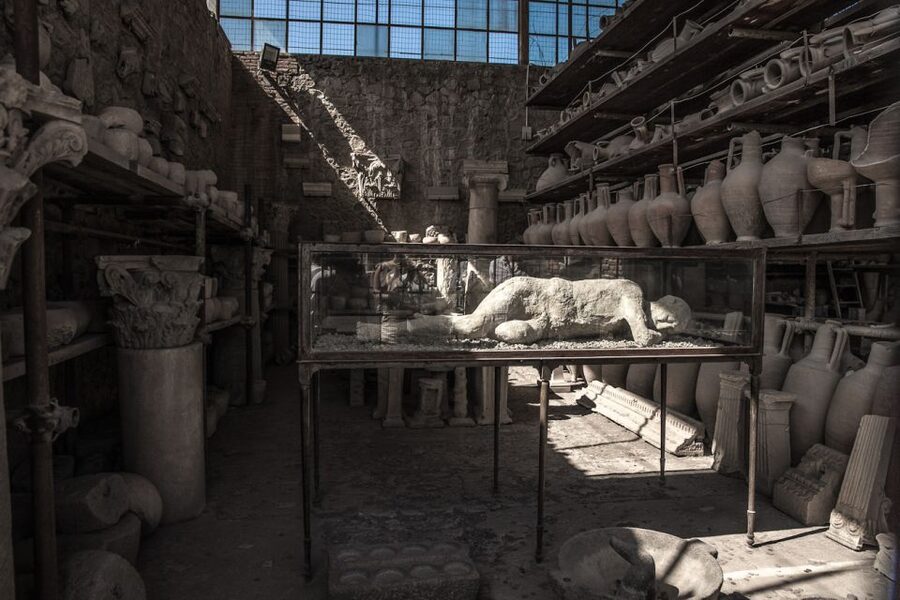
- Victim plaster casts deliver a heavy, human moment that lands more than you’d expect from ruins.
- Audio headsets (when groups are large) help you actually hear the guide while moving.
Other ways to walk into Pompeii
- Sorrento: Skip-the-Line Pompeii Express Tour by Train★ 4.8 · 2,038 reviews
- Priority Access Pompeii & Mt. Vesuvius Full day from Sorrento★ 4.5 · 1,376 reviews
- Pompeii Express Guided Tour by Train from Sorrento★ 4.5 · 770 reviews
- Sorrento: Pompeii Half-Day Guided Tour with Priority Access★ 4.7 · 739 reviews
Leaving Sorrento Early: the real secret is timing
Pompeii is big. Even with a half-day tour, you’ll cover a lot, so the schedule matters. This one starts early from Sorrento so you hit the site when it’s quieter and the light is better for photos. It’s also a smart way to dodge the crush that builds later in the morning.
The logistics are straightforward. You meet at the IAMME IA! Gray Line Amalfi Coast office at Piazza Torquato Tasso nr. 16, behind the statue of Torquato Tasso, next to the shop Fattoria Terranova. Arrive about 10 minutes early so you’re not rushing through check-in.
Then you’re on a comfortable, air-conditioned bus for the ride toward Pompeii. The total transit portion is listed as about 40 minutes each way, so the timing is pretty predictable. That predictability is part of the value: you spend your limited hours on-site instead of sitting in long lines.
If you get motion sick or you simply hate traffic, you’ll still want to be patient. Campania roads can be chaotic, but having a professional driver helps keep things calm. In past departures, drivers like Lisa and Luigi have been specifically praised for smooth handling.
Priority access at Pompeii: what it changes for your day
Here’s what priority access really means in practice: you lose less time to entry bottlenecks. You can get moving toward the core areas faster, and that gives you something rare at Pompeii—breathing room.
Instead of feeling like you’re stuck waiting while everyone else crowds the same first few streets, you get to start the walking route with momentum. That matters because once you’re inside, Pompeii’s layout can be confusing if you don’t have a plan.
You’ll begin near Porta Marina, one of the city’s original gates. That’s a good entry point because it quickly frames Pompeii as a real city you would’ve walked into—borders, streets, and movement—rather than a museum you drift through.
Once the tour starts, the guide keeps a steady flow: photo stop, short visits, and then guided time for the big story moments. It’s not a free-for-all, but it’s also not a lecture with no movement. You’re moving while you’re learning, which is the fastest way to avoid the main Pompeii problem: seeing a lot and remembering little.
Porta Marina and the Civil Forum: power, law, and commerce in one zone
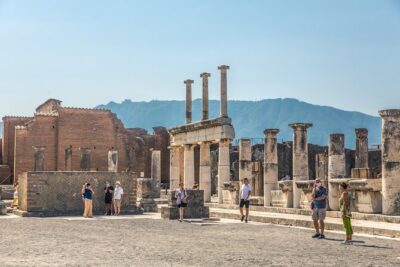
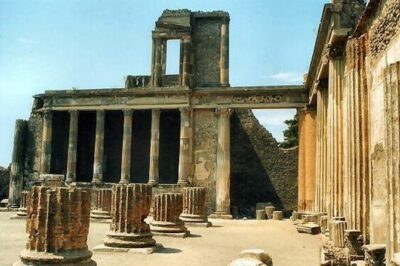
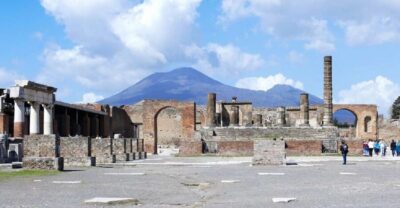
After you enter near Porta Marina, your walk centers on the Civil Forum, Pompeii’s political, religious, and commercial heart. This is where the city’s daily rhythm becomes obvious. You’re not just looking at buildings; you’re watching the idea of Roman public life take shape.
The stops here include major structures like the Basilica, which was used for legal affairs and business dealings. Even if you don’t read Roman architecture like a textbook, your guide will translate the clues: who would gather, where disputes were handled, and how public space worked as a social tool.
A helpful detail is how the tour anchors all of this under the shadow of Mount Vesuvius. The mountain isn’t just scenery—it’s the reason the entire city “froze” in time. When you see the forum and then remember what that volcano meant, Pompeii suddenly feels less like an archaeological project and more like interrupted life.
If there’s a drawback here, it’s the obvious one: this is where you’ll take some short pauses and listen. If you’re someone who loves wandering independently, you might wish for more unstructured time. But the guided pacing is also what keeps a half-day itinerary coherent.
Via dell’Abbondanza: the street that makes Pompeii feel real
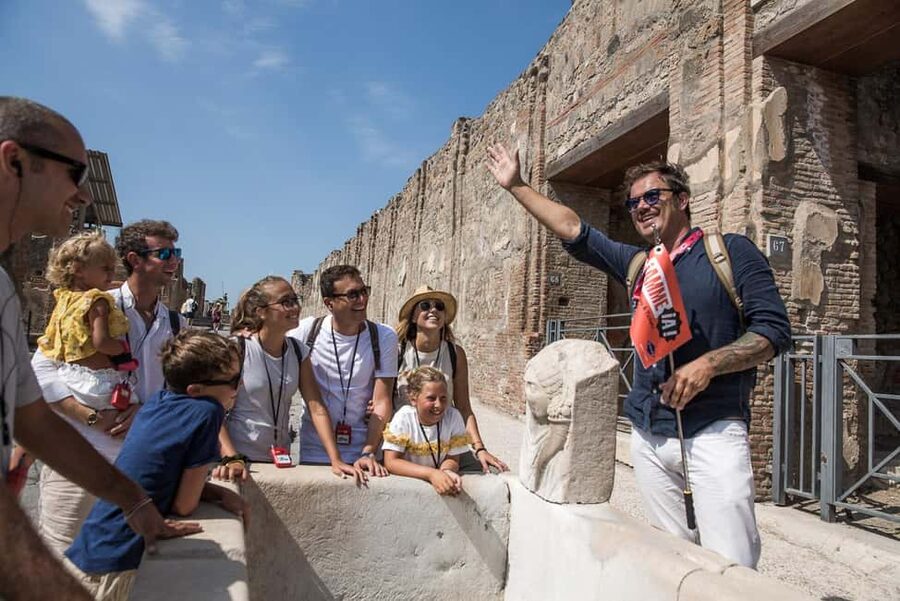
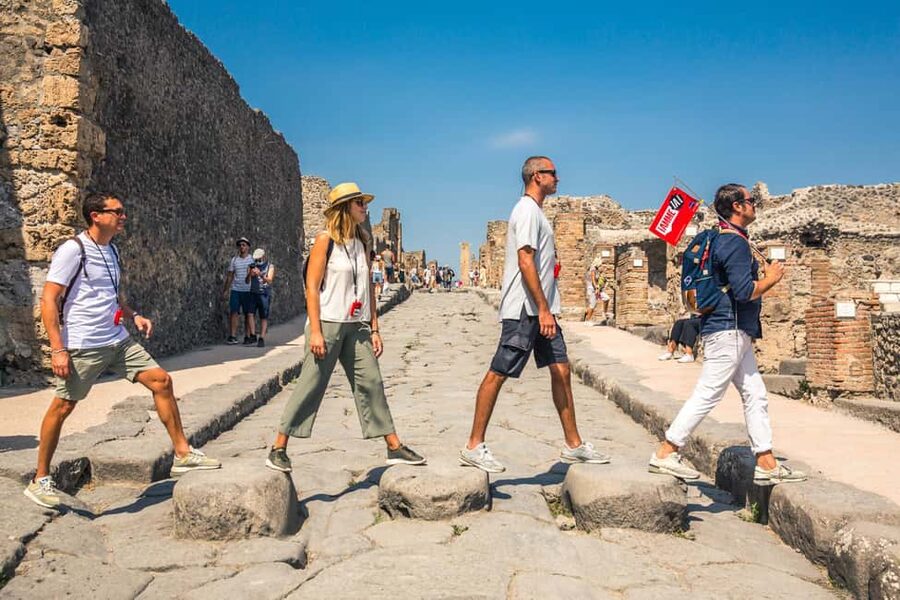
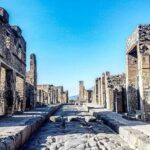
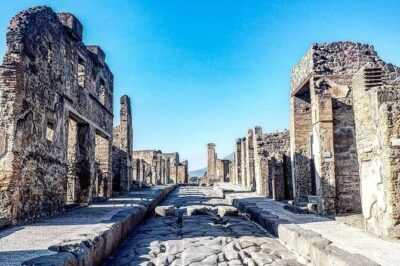
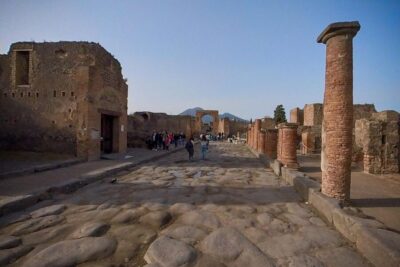
Next comes Via dell’Abbondanza, Pompeii’s main street. This is the kind of stop that changes your mental picture of the site. You start noticing practical details—shop fronts, homes, and even deep chariot grooves etched into stone. Those grooves are a small thing, but they’re a huge reminder: people and carts moved here every day.
The guide’s storytelling is what makes this feel alive. Without that context, you’d mostly see “old street.” With it, you can imagine the traffic, the sounds, and how people used the road.
This segment also sets you up for the Theatre District. Pompeii’s cultural life wasn’t only in grand temples. It was also in performance spaces where people went to be entertained and to show social status.
So if you’re worried about Pompeii feeling cold and distant, this street-to-theatre sequence helps you connect daily life to public culture without needing to know Latin or Roman history.
Keep looking: more Sorrento trips along the same coast


Theatre District highlights: Large Theater and public culture
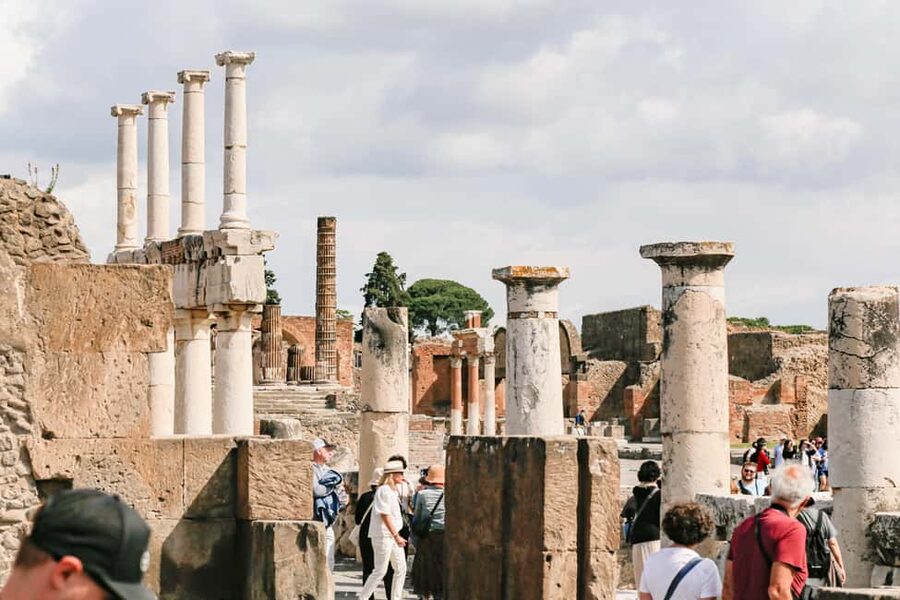
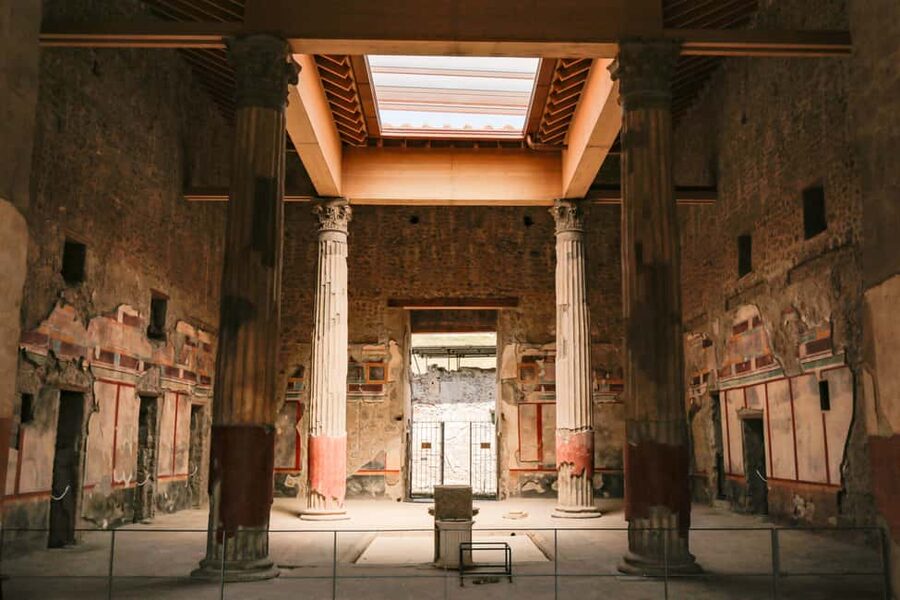
In the Theatre District, you’ll see the Large Theater, an open-air venue where audiences gathered for comedies, dramas, and musical performances. Standing in the space, it’s easy to understand why theatres mattered: they weren’t a rare event. They were a regular part of community life.
Your guide will explain how this venue fit into the city’s social structure. That’s the difference between seeing seating and understanding why people filled it. You’ll also get photo stops that help you capture the geometry of the place before you move on.
Nearby, the tour also includes a bath complex stop (the Stabian Baths area). This is one of my favorite kinds of Pompeii stops because it’s about routine. Romans weren’t only building monuments. They were also relaxing, socializing, and taking care of daily needs.
One practical note: bath areas and theatre areas can feel hot in full sun. That’s why early departure is so valuable. If you hit Pompeii later, you’re walking these same routes in higher heat and less comfort.
Street food stops: Thermopolium and Pistrinum
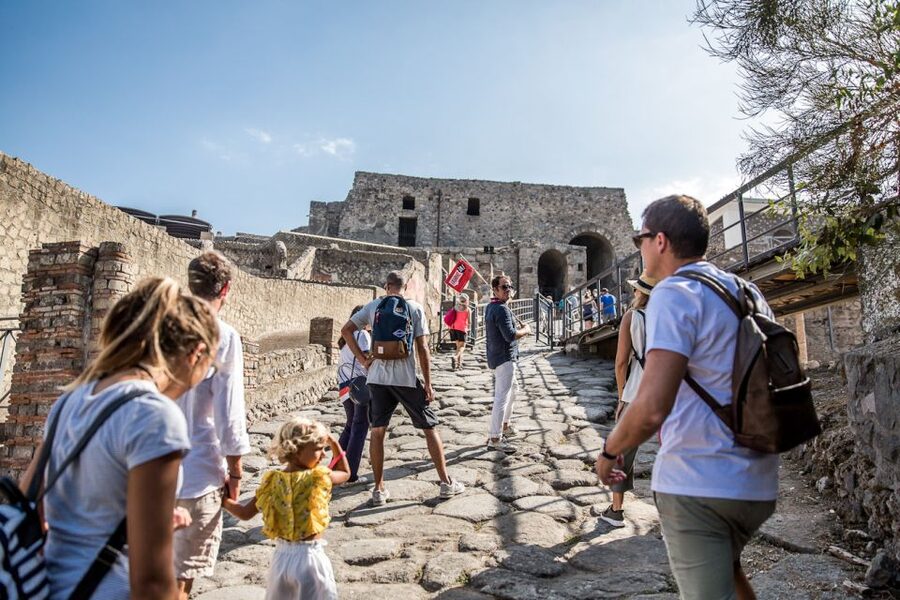
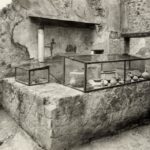
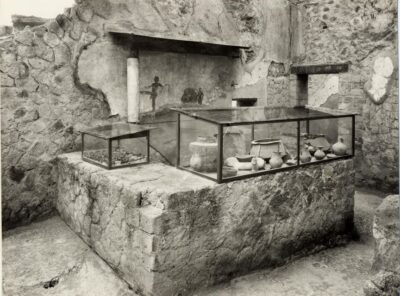
Pompeii has a lot of big-name sites, but the small functional stops are what make the city feel modern. This tour brings you to a Thermopolium, the ancient street food shop, and a Pistrinum, or bakery.
These are the places where you can almost smell what the day might have been like. You’ll see the practical setup: millstones for grinding, ovens, and counters used for serving hot meals to people on the go.
Even if you don’t eat much street food today, this part of the tour helps you understand how food economy worked in the Roman city. It also helps you connect the ruins to regular human behavior: grab something fast, keep moving, and eat where you can.
A small caution: the Pistrinum and Thermopolium stops can be tight in terms of space. If you’re tall or your group moves slowly, you might find it harder to photograph without stepping back. But the time spent here is usually short enough to stay pleasant.
House of the Faun: wealth, mosaics, and Roman style
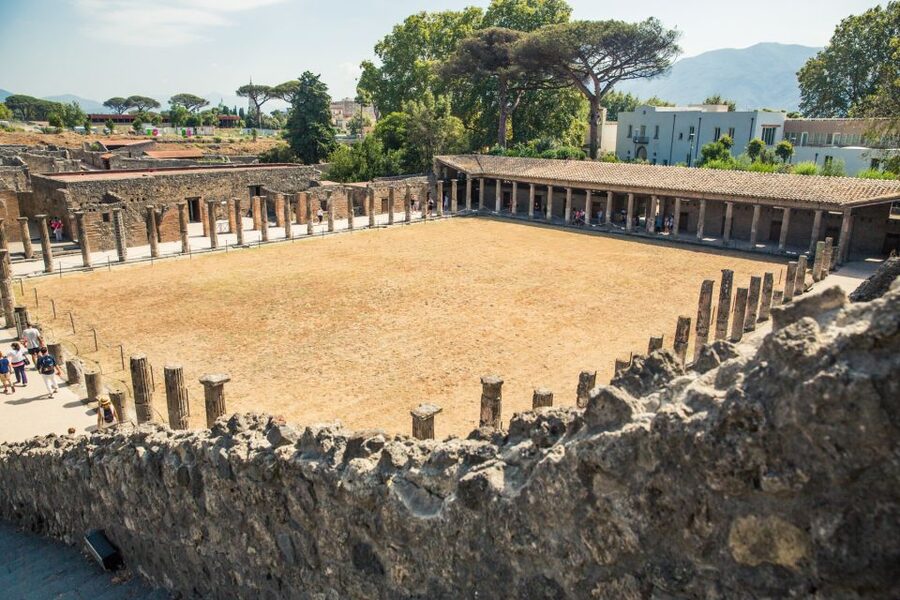
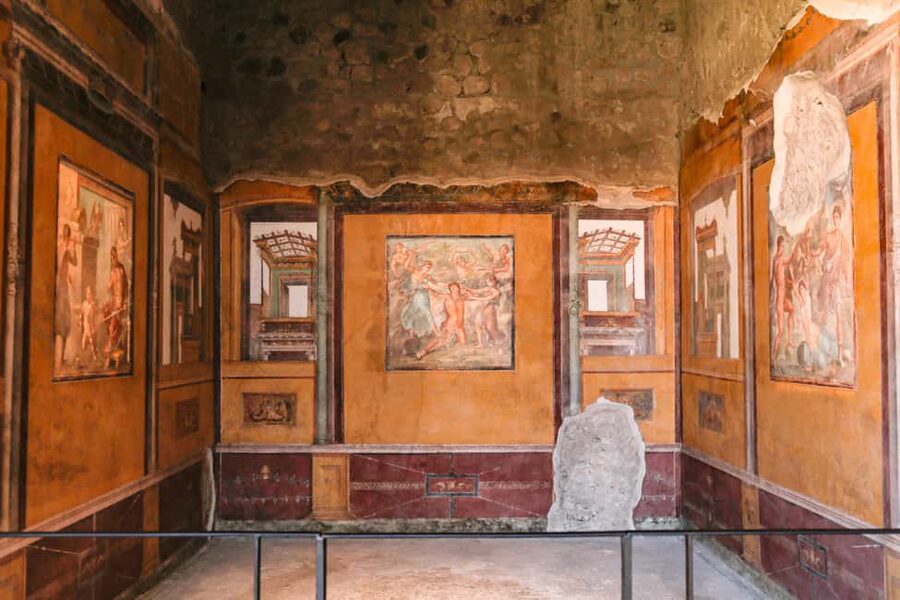
Then you hit the big “wow” moment: the House of the Faun. This is a grand Roman villa known especially for its mosaics, including the famous Alexander Mosaic. If you only remember one artistic moment from Pompeii, make it this one.
The guide’s job here is crucial. The mosaic isn’t just a pretty floor. It’s a statement about wealth and taste—and it reflects how Romans consumed culture. Seeing it in context helps you understand why elite homes were more than living spaces.
This stop also helps with interpretation. When your guide connects the mosaic to the broader idea of Roman power and identity, the rest of the tour clicks better. Suddenly the forum, theatres, and even street life all feel like parts of one system.
If there’s a potential drawback, it’s that villa stops can attract extra attention. People cluster for photos and for the same angles. The guided flow keeps things organized, but if you’re the type who needs long solo time for photos, you’ll want to use your photo stops well.
Lupanare and the Macellum: social life, trade, and uncomfortable history
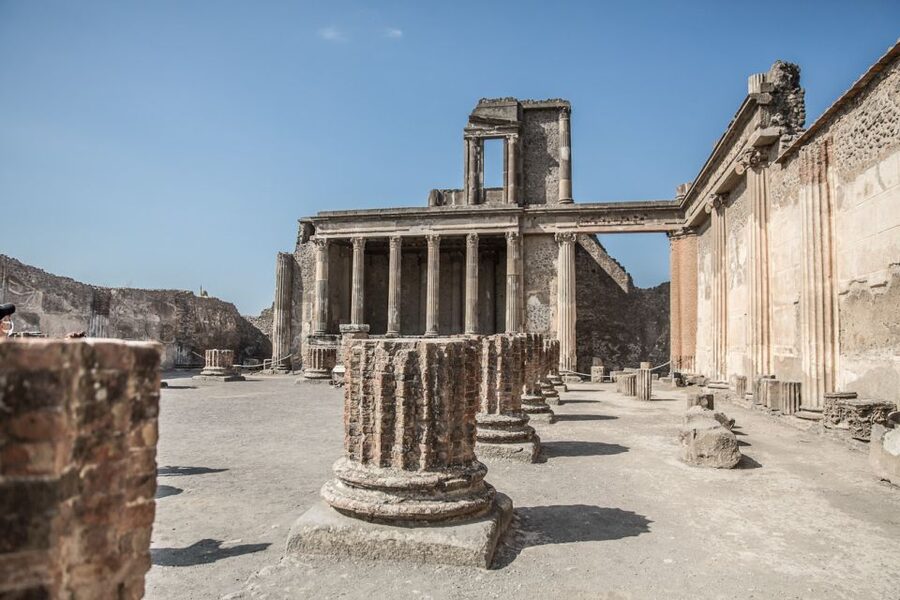
Two of the tour’s most talked-about stops cover sides of Pompeii that aren’t “postcard ancient.” First is the Lupanare, Pompeii’s ancient brothel. You’ll see vivid frescoes and the compact stone rooms.
This is where you should expect an emotional shift. Not because the tour is sensational, but because the subject is direct. A good guide will keep it factual and connected to Roman society rather than turning it into gossip.
Next comes the Macellum, Pompeii’s food market. This is a warmer, more everyday scene: the place where people would shop, exchange news, and carry on routine trade. The contrast between the market energy and the Lupanare’s small rooms makes the city feel fully human.
And then comes one of the most powerful endings: the plaster casts of Pompeii’s victims. Standing in front of the forms of men, women, and children—frozen in their final moments—hits harder than most people expect. It’s the point where Pompeii stops being “a visit” and turns into a reminder of what disaster really interrupts.
If you’re sensitive to heavy subjects, take it slowly here. You don’t need to rush past it to “finish.” This is one of the few stops where lingering actually helps.
The 4-hour format: how to plan your day with realistic expectations
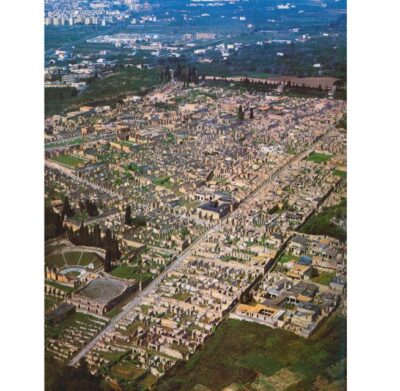
This tour runs 4 hours total, with about 2.5 hours at Pompeii. That means you’ll see a lot, but it’s still a highlights route, not a full-city walkthrough.
That’s also why early departure is so important. You’re getting the best combination of time and comfort: fewer crowds, better photos, and a smoother walking rhythm.
You should plan for moderate walking. Surfaces can be uneven, and the route includes historical areas with natural stone ground. A few reviews specifically mention that uneven surfaces require focus—so wear shoes with solid grip. If you arrive in sandals because it’s summer, you’ll feel it by the second half.
Rain is also a factor. One rain-affected morning can turn some outdoor stops into a shorter-feeling experience, especially on open routes like the theatre area. If the weather looks shaky, a light rain layer can make the difference between miserable and tolerable.
Cost and value: is $84 a good deal for Pompeii highlights?
At $84 per person, you’re paying for three main things: guided interpretation, priority access, and transportation from Sorrento by air-conditioned coach.
If you tried Pompeii on your own, you’d still need to solve the biggest problem: picking what to see and making sense of it while you walk. Here, the guide route covers the high-impact areas—forum, street life, theatres, baths, villas, markets—without you having to build an itinerary from scratch.
You’re also buying time. Priority access can be the difference between starting your walk feeling fresh and starting feeling drained by waiting. And having a professional driver matters on busy roads, especially when traffic shifts can stretch the day.
This is also why the 2.5-hour guided block is the core value. A lot of people come to Pompeii expecting it to be a quick photo stop. It isn’t. Pompeii becomes meaningful when someone ties the spaces together with human context—and that’s what you’re buying here.
Who should book this Pompeii half-day tour
This tour fits best if you want:
- Pompeii’s top sights in one clear route
- a guided explanation while you walk (so you don’t get lost in the ruins)
- priority access and an early start from Sorrento
It may not fit if you:
- have back problems or mobility limitations (walking on uneven ground is part of the plan)
- use a wheelchair (this tour isn’t suitable for wheelchair users per the activity details)
- prefer long free time for independent wandering
If you want Pompeii at a slower pace, you may want a different format. But if you’re working with limited time in Campania, this half-day approach is a practical win.
Also, quick note on what not to bring: backpacks aren’t allowed, and pets aren’t allowed either. Light day bags only—keep it simple.
Should you book this tour?
I’d book it if Pompeii is a must-do and you want more meaning than a self-guided stroll. The priority access plus the structured route gives you a strong payoff within 4 hours, and the stops cover Roman public life, daily routine, elite wealth, and the human tragedy at the end.
Skip it if you need lots of unstructured time, if uneven ground is tough for you, or if you’re hoping for a no-walking sightseeing day. Otherwise, it’s one of the most sensible ways to get Pompeii working for your brain—not just your camera.
FAQ
How long is the tour from Sorrento to Pompeii?
The total duration is 4 hours, with about 2.5 hours spent on the Pompeii guided walking portion.
Where do I meet the guide in Sorrento?
Meet at the IAMME IA! Gray Line Amalfi Coast office in Piazza Torquato Tasso nr. 16, behind the statue of Torquato Tasso and next to the shop Fattoria Terranova. Arrive about 10 minutes early.
Does this tour include priority access to Pompeii?
Yes. It includes priority access so you can skip the line through a separate entrance and spend more time inside.
What language is the Pompeii guide?
The tour is available in multiple languages, including English, Spanish, French, and German (the Pompeii guide may be multilingual depending on operation).
Is transportation included?
Yes. The tour includes round-trip transportation by comfortable air-conditioned bus, with a professional driver.
Are audio headsets provided?
Audio headsets are included for groups of 8+ to help you hear the guide more clearly.
How much walking is involved?
Expect a moderate amount of walking on uneven surfaces.
What’s not included in the price?
Food and beverages are not included.
Are hotel pickup and drop-off included?
Hotel pickup and drop-off are not included. The tour has meeting and drop-off locations in Sorrento.
Are backpacks allowed?
No. Backpacks are not allowed, and pets are also not allowed.
More Tours in Sorrento




More Tour Reviews in Sorrento
- Sorrento Farm and Food Experience including Olive Oil, Limoncello, Wine tasting
★ 5.0 · 2,524 reviews



Back to Pompeii
Just off the boat: newer Sorrento reviews



Pompeii from Sorrento, compared.
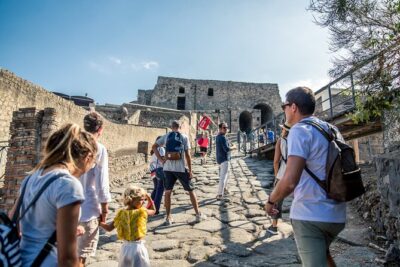
 ★ 4.8Skip-the-Line Pompeii Express Tour by TrainFrom $632,038 reviews
 ★ 4.5Priority Access Pompeii & Mt. Vesuvius Full day from SorrentoFrom $1391,376 reviews
 ★ 4.5Pompeii Express Guided Tour by Train from SorrentoFrom $65770 reviews
 ★ 4.5Skip-the-Line Pompeii Guided Tour from SorrentoFrom $90722 reviews
 ★ 4.0Pompeii Ruins Half-Day Tour from Sorrento with GuideFrom $97714 reviews
 ★ 4.8Pompeii and Vesuvius Guided Tour with LunchFrom $130683 reviews
 ★ 4.3Day Tour to Pompeii Ruins and Mount VesuviusFrom $130489 reviews
 ★ 4.5Skip-the-line Pompeii Ruins All-inclusive TourFrom $42374 reviews
Browse the lists this tour appears in