
Review · SORRENTO WALKING TOURS
Sorrento Walking Tour with a Local Guide
You’ll see Sorrento in a compact, walkable sweep. I like the small-group pace and clear local storytelling, and I like the way the tour mixes street-life stops with artisan craft (like inlaid wood) and lemony bites. The main trade-off: this is more history-and-sights than a full-on food tour, so come hungry in the right way and expect lots of walking.
You meet in the center, start with Piazza Tasso, then work your way through cathedrals, cloisters, gardens, and down toward Marina Grande. Along the way, you get viewpoints for photos and a short break with fresh orange or lemon juice or lemon gelato. If you want a gentle stroll with minimal steps, plan for your feet to do some work.
In This Review
- Key Things I Think Are Worth Your Attention
- Piazza Torquato Tasso Meet-Up: The Best Start Point for Orientation
- Piazza Tasso and Saint Antonino: The Square That Sets the Tone
- Il Vallone dei Mulini: Mills, Tufa, and a Surprisingly Deep Timeline
- Corso Italia Walk: Where Sorrento Shows Its Everyday Face
- Cattedrale di Sorrento (Santi Filippo e Giacomo): A Cathedral With Layers
- Chiostro di San Francesco: Columns, a Pepper Tree, and Mixed Eras
- Villa Comunale di Sorrento: Palm Gardens and Gulf Views With Vesuvius
- Marina Grande and the Greek Gateway: Where Sorrento Feels Most Local
- Food and Craft Stops: What’s Included and What to Expect
- How Much Walking You’re Really Doing (Steps, Uneven Pavement, and Timing)
- Price and Value: Is $59.13 Worth It for 3 Hours?
- Who Should Book This Sorrento Tour (and Who Might Skip It)
- Should You Book This Sorrento Tour?
- FAQ
- FAQ
- How long is the Sorrento Walking Tour with a Local Guide?
- Where do I meet the guide, and where does the tour end?
- How much does it cost?
- What food is included in the tasting?
- Is hotel pickup included?
- Is the tour in English, and how big is the group?
- Are there any ticket costs during the tour?
Key Things I Think Are Worth Your Attention
- Small group (max 15) keeps the tour personal and easier to follow through Sorrento’s tight streets
- Top sights plus quieter corners like Il Vallone dei Mulini and the San Francesco cloister
- Real craft focus on traditional wood inlay (and artisan items like leather sandals)
- Snack-sized street food (sugar-coated lemon slices, salami and cheese, deep-fried seafood) instead of a long meal
- Views that matter from Villa Comunale over the Gulf and Vesuvius
- Marina Grande at the Greek gateway for the most “old Sorrento” feel of the day
More of the old town on foot
- Walking Food Tour in Sorrento w/ Limoncello Factory Lemon Grove★ 4.5 · 821 reviews
- Sorrento: Guided Walking Tour & Limoncello Tasting★ 5.0 · 472 reviews
- Sorrento: Sunset City Walking Tour with Limoncello Tasting★ 5.0 · 274 reviews
- Sorrento Private Walking Tour with Guide and Limoncello Tasting★ 5.0 · 77 reviews
Piazza Torquato Tasso Meet-Up: The Best Start Point for Orientation
The tour kicks off near the action, in/around Piazza Torquato Tasso, at the Iamme Ia! Gray Line Amalfi Coast office. This is a smart choice because it puts you in the right headspace immediately: Sorrento is made for walking, but it can feel like a maze until you learn the main anchors.
You’ll be on a guided route for about 3 hours, in English, and the group is capped at 15 people. That matters because smaller groups mean fewer bottlenecks at doorways, viewpoints, and photo stops—especially in old stone lanes where everyone naturally slows down.
One practical tip: if you’re arriving from the train or ferry station, give yourself enough buffer to find the meeting spot. Sorrento’s streets can look similar, and starting on time helps you enjoy the full sequence rather than rushing between stops.
Piazza Tasso and Saint Antonino: The Square That Sets the Tone

The first “anchor” stop is Piazza Tasso, Sorrento’s central square. It’s named for Torquato Tasso, and you’ll also see the statue of S. Antonino Abbate, the city’s patron saint. This is one of those places where you can learn the city’s vibe quickly: Sorrento balances grand symbols (saints, poets) with everyday life.
The practical value here is orientation. Piazza Tasso helps you understand where you are relative to the uphill streets and the path toward the coast. Once you’re standing in the square, the rest of the walk makes more sense.
Admission is listed as free for this stop, so you’re not “paying to look,” which keeps the tour feeling like a guided experience rather than a lineup of ticketed attractions.
Il Vallone dei Mulini: Mills, Tufa, and a Surprisingly Deep Timeline
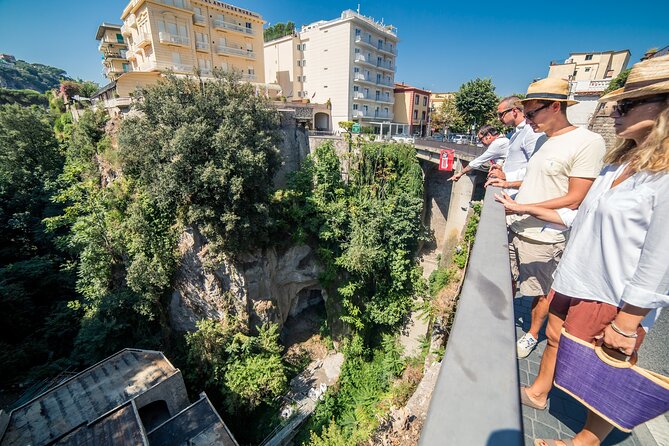
Next comes Il Vallone dei Mulini (Valley of the Mills), a historic valley tied to Sorrento’s industrial past. You’ll hear how the flour mills were built from stone as far back as the 13th century, grinding grain using water power.
What I find interesting is the long backstory tied to geology and time. The valley’s waters originate from releases into a tufa plain following the eruption of the Campi Flegrei (about 37,000 years ago). That’s the kind of detail you wouldn’t guess just by looking at a valley path.
The timeline keeps moving: the mills were in operation until the beginning of the 10th century, then later changes to the town (including the establishment of Piazza Tasso in 1866) affected the mill and the surrounding sea. The buildings closed and were abandoned in the 1940s.
This is a free stop, so it’s great value—short, visual, and full of context.
Corso Italia Walk: Where Sorrento Shows Its Everyday Face
Between big stops, you’ll walk along Corso Italia, Sorrento’s main street. This stretch is important because it’s where the town’s rhythm shows up: shops, street life, and the “real Sorrento” energy you’ll carry into the rest of the day.
For me, this is one of the best parts of a guided walking tour. You’re not only collecting landmarks—you’re learning how people actually move through town. Once you’ve walked Corso Italia with a guide, it’s easier to later navigate on your own.
Keep an eye out for craft and souvenir areas you might want to revisit. The tour includes artisan moments later, but the main street walk helps you spot what’s worth a second look after the official route ends.
Keep looking: more Sorrento trips along the same coast





Cattedrale di Sorrento (Santi Filippo e Giacomo): A Cathedral With Layers
You’ll visit Cattedrale di Sorrento, also known as Santi Filippo e Giacomo. It’s described as a smaller stop just off Corso Italia, which means it’s a different experience than seeing the cathedral as a lone monument from the street.
The building story is a highlight: originally built in the 11th century, reconstructed in the 15th century, with a Neo-Gothic facade added in 1924. Then inside, you get the Baroque side of things, including precious Baroque decorations and local marquetry (intarsia).
There’s also a literary connection that you’ll hear about: Torquato Tasso was baptized in the font here. Even if you’re not a poetry person, this kind of detail makes a religious building feel personal and specific to Sorrento.
Admission is listed as free for this stop, which is a nice bonus for a cathedral visit.
Chiostro di San Francesco: Columns, a Pepper Tree, and Mixed Eras
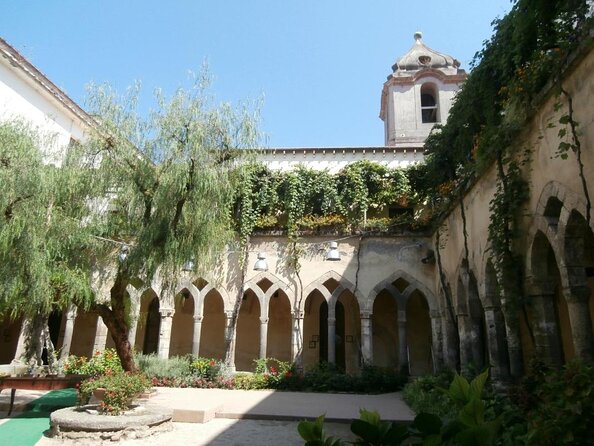
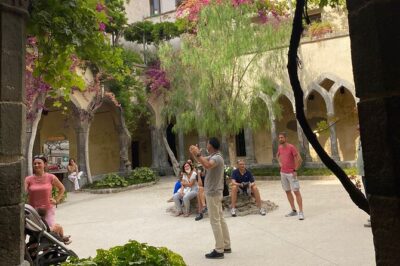
Then you slip into the calm of Chiostro di San Francesco, the cloister tied to St. Francis of Assisi. The cloister is built on remains of a 7th-century monastery and dates to the 14th century. It’s peaceful in the way only a hidden courtyard can be—shaded, quiet, and removed from the street noise.
What makes it memorable is the architectural range: the cloister unites religious complex elements spanning pre-Roman through Arabic to medieval styles. You’ll have a chance to spot the columns, each differently decorated, and there’s also a pepper tree in the middle that’s hard to miss once you see it.
Admission isn’t included for this stop. That’s worth knowing so you don’t get surprised. Still, it tends to be a great “pause” after busier streets—an easy win if you like places where history shows up in materials and layout, not just plaques.
Villa Comunale di Sorrento: Palm Gardens and Gulf Views With Vesuvius
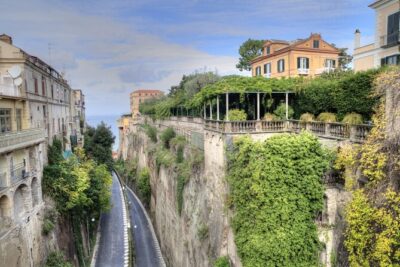
From the cloister’s quiet, you move to Villa Comunale di Sorrento, a garden overlooking the sea. It’s located on the gardens connected to the Franciscan friars, and it’s full of palms, holm oaks, and century-old pines—plus the kind of view you’ll want to photograph from multiple angles.
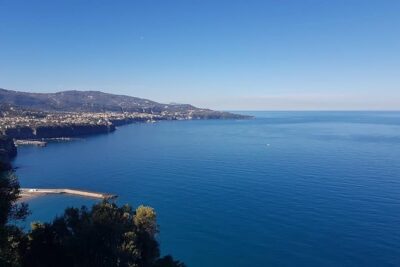
The big payoff here is the sightline over the Gulf dominated by Mount Vesuvius. This is the moment where Sorrento’s geography clicks: you’re not just walking through pretty streets, you’re getting a front-row view of the region’s dramatic setup.
This stop is listed as free, so you’re getting scenery value without extra tickets.
Marina Grande and the Greek Gateway: Where Sorrento Feels Most Local
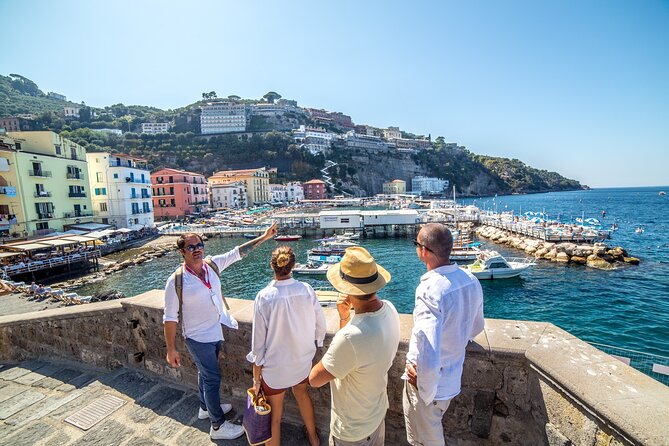
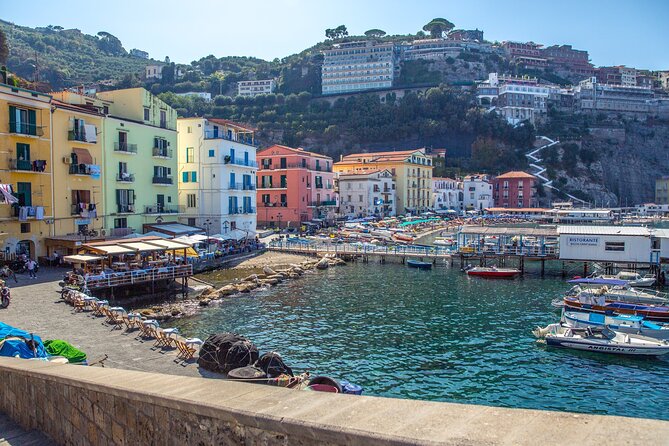
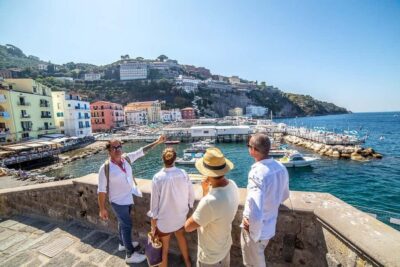
The tour ends by exploring Marina Grande, Sorrento’s older fishing village. You’ll hear that it’s separated from the main town by a dramatic stone gateway built by the Greeks, and the atmosphere feels different right away.
This is where you’ll see colorful wooden boats, pastel-colored houses, and nets drying in the sun—details that help Marina Grande feel like a functioning harbor rather than just a backdrop. The area is also known for family-run restaurants serving fresh seafood, and it gained film fame as the setting for the 1954 movie Scandal in Sorrento, starring Sophia Loren.
Admission is free for this stop. You’re walking and soaking up the harbor, which is the point.
If you’re hungry after the tour, this is a good place to pivot into dinner planning. Just remember: the tour includes tastings, not full meals.
Food and Craft Stops: What’s Included and What to Expect
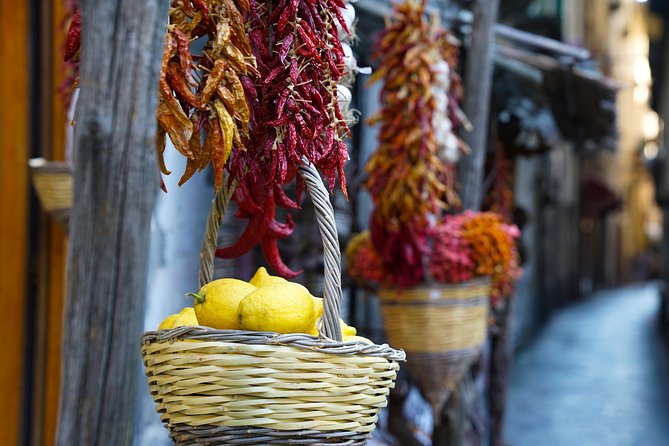
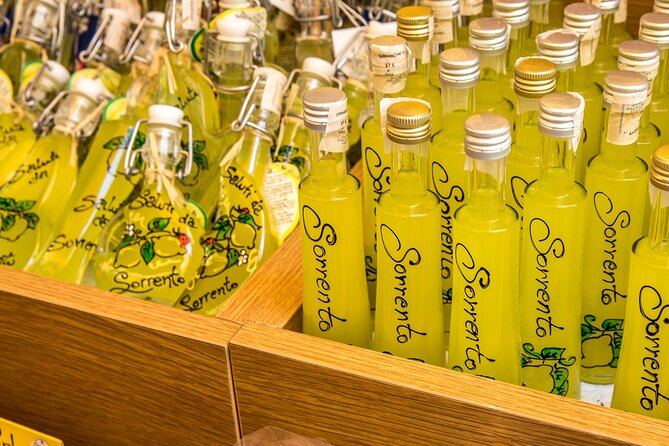
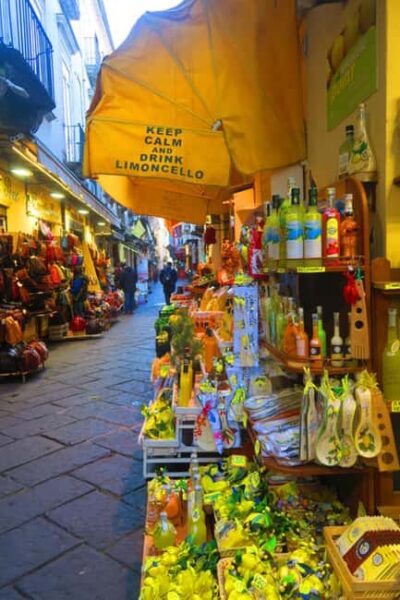
The “street food tasting” is part of what makes this tour fun. You may try sugar-coated lemon slices, salami and cheese, and deep-fried seafood. You’ll also get a break with fresh orange or lemon juice or lemon gelato.
Here’s the fair expectation I’d set: the food is more like a snack parade than a full meal. Several people appreciated the added bites, but some felt the overall pacing stays focused on sights, with food as the light accent.
That doesn’t mean it’s not worth it—it just means you should plan accordingly. I recommend eating a little before you go, especially if you start earlier in the day. If you prefer a tour where food is the main event, you may want to pair this with a dedicated food experience later.
On the craft side, the tour includes traditional artisan learning—especially wood inlay. The highlights also mention local leather sandals, so you may get a chance to see how these souvenirs are made and why they’re so tied to Sorrento-style craftsmanship.
How Much Walking You’re Really Doing (Steps, Uneven Pavement, and Timing)
This is a walking tour, and Sorrento delivers stairs. In the reviews, people called out a lot of steps and uneven pavement, so wear shoes you trust. If your feet get sore easily, this matters more than you think.
Timing can also affect your comfort. The itinerary itself is about 3 hours, but some outings finish late enough that you might be ready for dinner sooner than planned. If you’re the type who gets cranky without a meal, bring the right mindset: treat the tastings as a bonus, not your whole plan for the day.
Weather also matters. Even in shoulder season, the Italian sun can be a lot when you’re moving between viewpoints. I’d bring water and sun protection, and consider a hat.
Price and Value: Is $59.13 Worth It for 3 Hours?
At $59.13 per person for roughly 3 hours, this tour is priced like a solid “orientation + highlights” experience rather than a ticket-based attraction day. The value comes from what’s wrapped into the guide-led package:
- a licensed local guide with practical context
- several major Sorrento landmarks plus quieter spots
- viewpoint photo moments
- craft time focused on wood inlay
- snack tastings with lemon-forward flavors and a drink or gelato
You’re not getting hotel pickup, and meals aren’t included. That’s typical for central-city walking tours, but it does mean you should show up prepared. The best “bang for your buck” is taking this early in your trip—so you later know where to return on your own for dinner and shopping.
The group size (max 15) also supports value. You’re more likely to get personal attention and clear explanations, which makes the time feel more efficient.
Who Should Book This Sorrento Tour (and Who Might Skip It)
I’d book this if you want a guided way to understand Sorrento fast. It’s especially good for first-time visitors because you cover the key anchors (Piazza Tasso, cathedral, cloister, garden viewpoints, then Marina Grande). It also works well if you like history that connects to real places—mills with a geological backstory, a cathedral tied to Tasso, and a cloister where architecture spans multiple eras.
I might skip it if your main goal is a full food-focused tour. The tastings are tasty, but they’re snack-sized and the day leans heavier on churches, streets, and viewpoints than on multiple dining stops.
Should You Book This Sorrento Tour?
Yes—if you treat it like an intro-to-Sorrento walk with thoughtful extras. Plan to wear comfortable shoes, eat a light meal beforehand, and go in expecting street food bites rather than a long restaurant route.
If you want, add one “follow-up” block to your day: after Marina Grande, choose a seafood dinner nearby based on what you saw during the harbor walk. This tour helps you decide where to go next, not just what to look at today.
FAQ
FAQ
How long is the Sorrento Walking Tour with a Local Guide?
It’s listed as about 3 hours.
Where do I meet the guide, and where does the tour end?
You meet at Iamme Ia! – Gray Line Amalfi Coast Office near Piazza Torquato Tasso (meeting point listed at Piazza Torquato Tasso, 16). The tour ends back at the meeting point.
How much does it cost?
The price is $59.13 per person.
What food is included in the tasting?
The highlights list street food tasting that includes sugar-coated lemon slices, salami and cheese, and deep-fried seafood, plus a break with fresh orange or lemon juice, or lemon gelato.
Is hotel pickup included?
No. Pick up and drop off at the hotel are not included.
Is the tour in English, and how big is the group?
It’s offered in English, and the maximum group size is 15 travelers.
Are there any ticket costs during the tour?
Most stops list free admission, but Chiostro di San Francesco is listed as not included.
More Tours in Sorrento





More Tour Reviews in Sorrento
- Sorrento Farm and Food Experience including Olive Oil, Limoncello, Wine tasting
★ 5.0 · 2,524 reviews



More Sorrento on Foot





Just off the boat: newer Sorrento reviews



Sorrento Walking Tours, compared.
 ★ 4.5Walking Food Tour in Sorrento w/ Limoncello Factory Lemon GroveFrom $125821 reviews
 ★ 5.0Guided Walking Tour & Limoncello TastingFrom $41472 reviews
 ★ 5.0Sunset City Walking Tour with Limoncello TastingFrom $29274 reviews
 ★ 4.6Walking Tour with Local GuideFrom $55171 reviews
 ★ 5.0Sorrento Private Walking Tour with Guide and Limoncello TastingFrom $9077 reviews
 ★ 4.8Walking Tour in Lemon Garden w/ Food TastingFrom $8172 reviews
 ★ 5.0Sorrento Walking Tour & Limoncello TastingFrom $3059 reviews
 ★ 4.5Sorrento Food Walking TourFrom $11639 reviews
Browse the lists this tour appears in