
Review · POMPEII FROM SORRENTO
Vesuvius,Herculaneum,Pompeii from Naples or Sorrento
Vesuvius changes everything fast. One minute you’re riding toward Naples’s skyline, the next you’re standing close to a crater that once erased whole neighborhoods, then you spend hours walking ancient streets and villas that still feel shockingly real. I like the mix of volcanic views plus two major Roman sites in a single day, and I also like how the guides focus on what daily life looked like, not just dates and dates. A key consideration: Vesuvius tickets are not changeable and not refundable, so you’ll want your timing to be tight.
This is a well-built 8-hour day trip out of Sorrento that pairs big sights with a manageable schedule. You get a drive and a short hike on volcanic gravel, then guided time at Herculaneum and Pompeii, plus enough structure that you’re not wandering around lost in crowds. The day moves quickly, so if you want long stops for photos and slow museum-style reading, plan for a lighter pace.
In This Review
- Key Things to Know Before You Go
- Why This Day Trip Works: Volcano, Then Two Roman Cities
- Starting in Sorrento: Morning Setup and How the Group Runs
- Vesuvius National Park: The Crater View and the Short Gravel Hike
- The Vesuvius Ticket Trap (Read This Part)
- Herculaneum in 2 Hours: Villas, Frescoes, and the Kind of Preservation You Can See
- What to Look For (So Time Feels Rewarding)
- Pompeii Archaeological Park: Streets, Ash, and What Stayed Visible
- How the Guide Helps You Not Get Lost
- Price and Value: What You Pay, What You Still Owe
- Timing, Packing, and Comfort Tips for a Volcano + Ruins Day
- Who Should Book This Tour (And Who Might Want a Different Plan)
- Should You Book Vesuvius, Herculaneum, and Pompeii From Sorrento?
- FAQ
- What time does the tour start?
- How long is the experience?
- Are the entrance fees included in the tour price?
- Do I need to pre-purchase a ticket for Vesuvius?
- What’s the difference in guide service for small versus large groups?
- Are children able to get free entry?
- What is the cancellation policy?
Key Things to Know Before You Go
- A real crater visit plus a hike: you’ll climb about 25 minutes on volcanic gravel after a drive partway up
- Two very different ruins: Herculaneum is smaller and better preserved; Pompeii is larger and more sprawling
- Entrance fees are extra: Pompeii €19, Herculaneum €18, Vesuvius €12, and you must handle Vesuvius tickets carefully
- Guide coverage depends on group size: smaller groups get Pompeii/Herculaneum guide time; larger groups have a guide for the whole excursion
- Max 19 people: not a huge cattle-car, which helps you actually hear the explanation
- Free entry for kids at the sites: children under 18 enter free at Pompeii and Herculaneum with valid ID
Other ways to walk into Pompeii
- Sorrento: Skip-the-Line Pompeii Express Tour by Train★ 4.8 · 2,038 reviews
- Priority Access Pompeii & Mt. Vesuvius Full day from Sorrento★ 4.5 · 1,376 reviews
- Pompeii Express Guided Tour by Train from Sorrento★ 4.5 · 770 reviews
- Sorrento: Pompeii Half-Day Guided Tour with Priority Access★ 4.7 · 739 reviews
Why This Day Trip Works: Volcano, Then Two Roman Cities
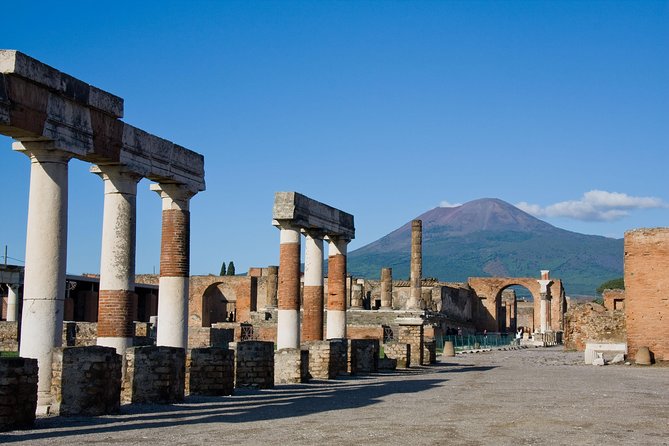
If you’re choosing between a volcano day and a ruins day, this tour is smart because it gives you the “cause and effect” story in one block. Vesuvius isn’t just a view stop. It’s the reason Pompeii and Herculaneum look the way they do today—one site shows mass burial by ash, the other shows extreme preservation from volcanic flows.
I also like the rhythm. You start with the big nature moment while your energy is still high, then you shift into history that rewards slower looking. Pompeii gives you the broad city picture, while Herculaneum zooms in on details like mosaics, frescoes, and the kind of villas that make Roman life feel personal.
The value piece is the logistics. You’re not coordinating two separate transports, and you’re not trying to line up timed tickets across multiple sites on your own.
Starting in Sorrento: Morning Setup and How the Group Runs
The tour starts at 8:00 am and runs about 8 hours, ending back at the meeting point. It’s built for a full day without turning into a long, exhausting ordeal. You’ll ride in a minibus with your driver, and you’ll have English guide support in the ruins—how much guide time you get depends on your group size.
Here’s the practical difference:
- For groups of 6–8, you get an English-speaking guide for Pompeii and Herculaneum
- For groups of 9–19, you get an English-speaking guide for the entire excursion (including Vesuvius)
That matters. If you’re the type who wants explanations while the scenery rolls by, the larger-group option usually feels smoother.
Max group size is 19, and the minimum is 6, so you’re not stuck in a mega-lineup. Also, you’ll use a mobile ticket, which makes check-in simpler.
Vesuvius National Park: The Crater View and the Short Gravel Hike

This is the part of the day that feels like a movie set—until you’re standing there in real volcanic ground.
Your visit begins with a drive up through the area of the old crater, then you take the final 25-minute hike to the summit. The path is described as zigzagging along volcanic gravel, so treat it like a short uphill walk, not a casual stroll. If you have knee issues or dislike uneven footing, wear supportive shoes and consider going slower than you think you need to.
At the top, you peer into the crater. The numbers they give are big: about a 700 ft deep crater and roughly 2000 ft wide. That scale helps you understand why this volcano changed the course of history so brutally.
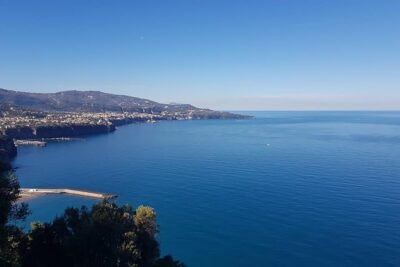
The view is a bonus that makes the climb worth it. On a clear day, you look over the Bay of Naples and can see Capri, Ischia, and Procida.
The Vesuvius Ticket Trap (Read This Part)
One thing to take seriously: Vesuvius tickets are not changeable and not refundable, and they must be pre-purchased online. The entrance fee is €12 per person, and the time depends on where you’re starting:
- 10:00 am from Sorrento
- 9:30 am from Naples
So what’s your best move? Confirm your start location and double-check your ticket time. If your plan shifts, you can’t easily swap the ticket.
Also, keep expectations realistic: Vesuvius can be weather-and-demand sensitive. A good driver can help you stay on track, and one example you can learn from is Corrado, who has a reputation for staying calm and working hard when ticket timing gets messy.
More trips up to the crater


Herculaneum in 2 Hours: Villas, Frescoes, and the Kind of Preservation You Can See
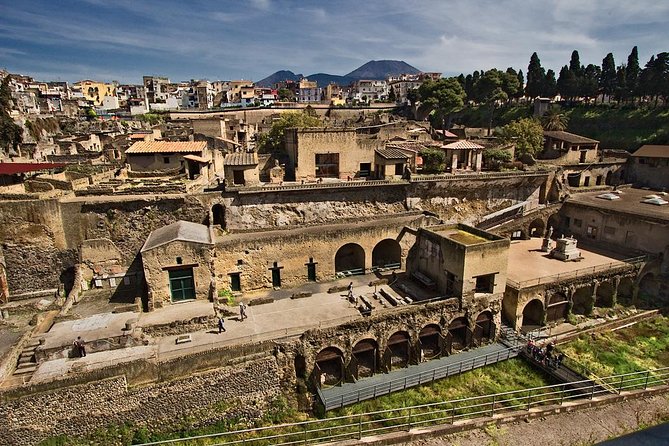
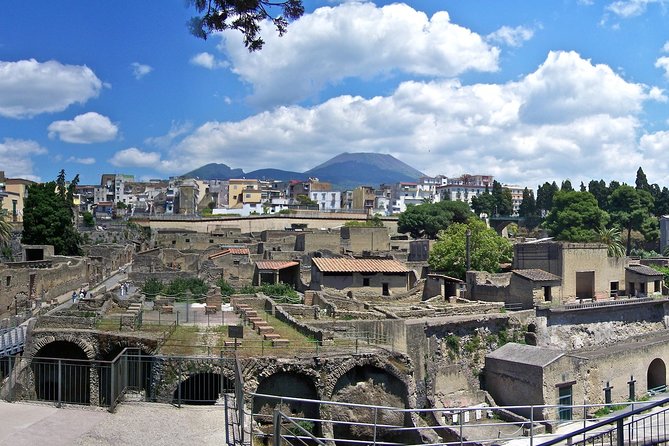
After Vesuvius, you head to Herculaneum (Parco Acheologico di Ercolano) for about 2 hours. If Pompeii is the big stage, Herculaneum is the more intimate room where you can actually notice the craftsmanship.
The standout here is preservation. Herculaneum is described as the smaller sister of Pompeii, but it often feels more personal because you can see intact patrician villas. Even details like wood and ropes from about 2,000 years ago are on display, along with brickwork and decoration like mosaics and frescoes.
That’s the jaw-drop factor. You’re not only looking at ruins—you’re looking at surfaces and fragments that survived with unusual detail. The reason matters, and the tour data gives it clearly: the city faced violent volcanic flows—described around 500°C—yet the evidence left behind is still vivid.
What to Look For (So Time Feels Rewarding)
In two hours, you won’t see every corner like a slow, stand-and-read museum visit. So aim for understanding the “Roman life” angle:
- Focus on villa spaces and what suggests wealth and routine
- Take a moment with mosaics and frescoes rather than rushing past them
- Let the guide point out what makes Herculaneum different from Pompeii, because the tour is built around that comparison
If you want a model for how the guides work, Andrea is an example of someone who brings an attentive, safety-minded pace, with explanations designed for how people actually lived day to day.
Pompeii Archaeological Park: Streets, Ash, and What Stayed Visible
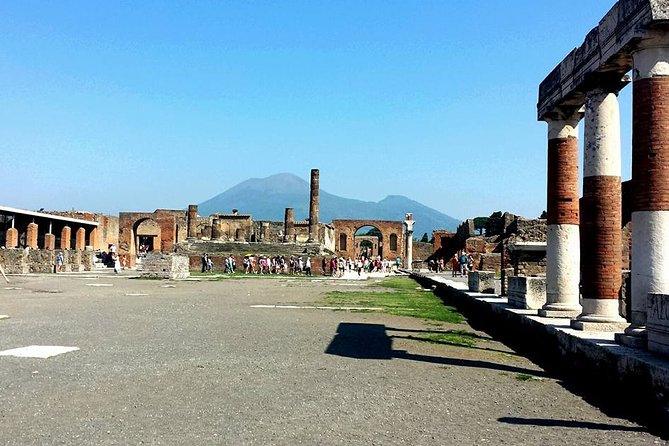
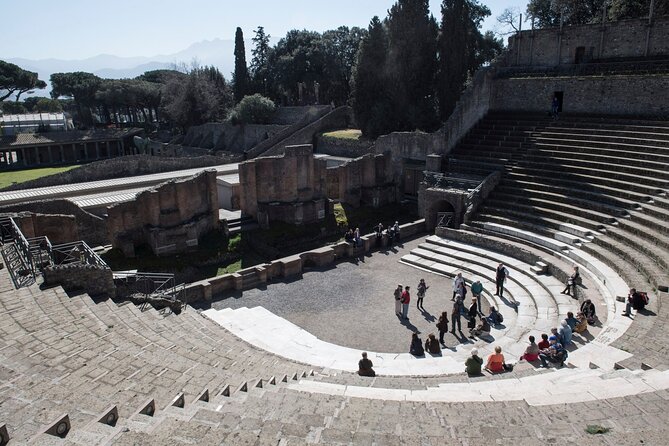
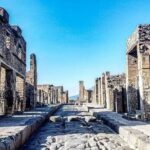
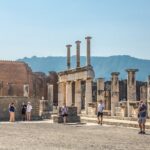
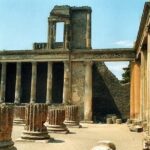
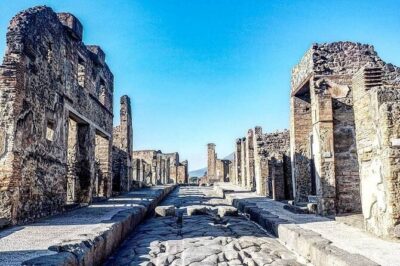
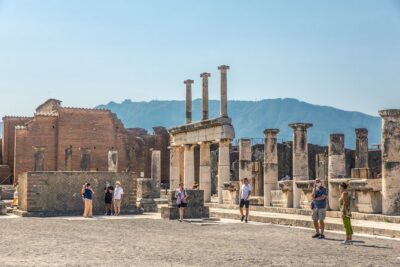
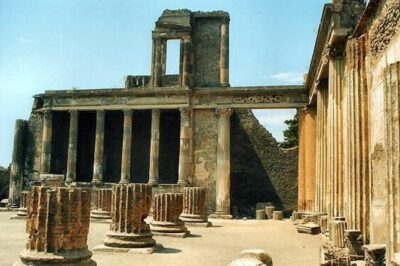
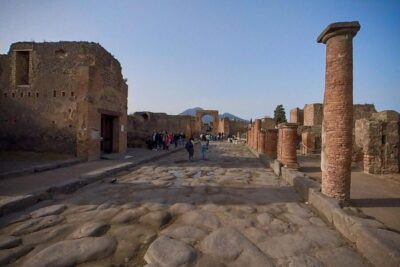
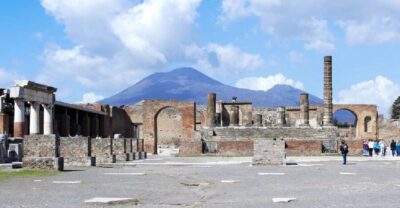
Then it’s Pompeii Archaeological Park for about 2 hours. Pompeii is the bigger, louder site, and it’s easy to get swept up in the scale. What helps is knowing what you’re looking at: this is an open-air city, built from the streets and building foundations that remained after eruption burial.
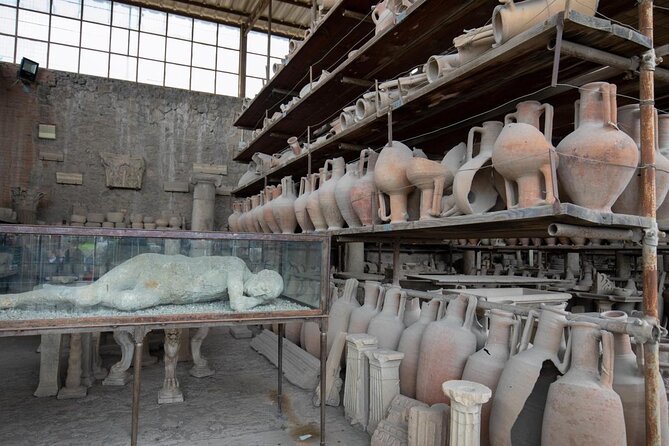
You’ll hear the core story: the city was buried in ash until 1748, and the streets and buildings were preserved for over 2,000 years. That timeline is why Pompeii can feel oddly immediate—you’re walking near structures that people built and used long ago.
Pompeii’s “best use” in a guided format is that you get more meaning per footstep. Instead of memorizing names, you learn what the layout and features suggest about daily life—markets, movement through neighborhoods, and the kinds of spaces Romans considered important.
How the Guide Helps You Not Get Lost
Pompeii can turn into a long walk with scattered landmarks if you don’t have structure. That’s where the guide shines, especially if they explain daily life in practical terms. Dario is one example of a guide who focuses on what Pompeii looked like day to day, not just impressive architecture.
And if you’re in a group where Tiziana or Floriana is leading, you can expect a lot of site interpretation with clear, engaging pacing. That matters because Pompeii rewards attention, and two hours can either fly by or feel overwhelming—depends on how well you’re guided.
Price and Value: What You Pay, What You Still Owe
The tour price is $246.68 per person for an 8-hour day from Sorrento (or Naples, depending on your departure). That base cost includes the heavy lift: transportation, parking, tolls, gasoline, and guide/driver service per group size.
What’s not included are entrance fees and your meals:
- Pompeii entrance fee: €19
- Herculaneum entrance fee: €18
- Vesuvius entrance fee: €12
- Food and drinks: not included
So your “all-in” day cost is roughly the tour price plus about €49 in sites (before any exchange-rate adjustments). That’s why I like this setup: you’re buying one organized day with transport and guide time, and you’re paying separately only for the official site entries.
Also note the Vesuvius ticket condition. Even if the rest is smooth, the Vesuvius ticket requirement can be the difference between a calm morning and a stressful one. Plan ahead.
Timing, Packing, and Comfort Tips for a Volcano + Ruins Day
This is an early start with active time. The tour includes a hike (about 25 minutes) on volcanic gravel, plus walking between ruins.
Pack for comfort, not just photos:
- Wear shoes with good grip for gravel
- Bring water and something light to eat (food isn’t included)
- Have a layer ready because weather on a volcano can feel different than the coast
- If you’re sensitive to crowds, recognize that Pompeii is one of the most visited sites, so use your guide time and pick your photo moments carefully
The good news: the tour notes that most travelers can participate, but that hike is still a real physical step. Pace yourself and don’t try to “power through” just to be first in line at the crater.
Who Should Book This Tour (And Who Might Want a Different Plan)
This is a strong match if you want:
- One day that connects Vesuvius to Pompeii and Herculaneum with explanations
- A guided visit that helps you make sense of what you’re seeing
- A manageable total time at each site (about 2 hours each at Herculaneum and Pompeii, plus the Vesuvius climb)
It may be less ideal if you:
- Want long, slow stays without time pressure
- Have trouble with uneven uphill ground due to the short gravel hike
- Prefer a trip built mostly for museum reading rather than walking
Still, for most people doing a first trip to the area, this day hits a sweet spot. You’re not missing the main heavyweights, and you’re not spending your vacation “planning the plan.”
Should You Book Vesuvius, Herculaneum, and Pompeii From Sorrento?
If you’re going for big impact, yes. The combination is the whole point: crater views first, then the ruins that tell you what the eruption left behind. Add in a guide-led focus at Pompeii and Herculaneum, and you get far more than check-the-box sightseeing.
My final recommendation hinges on one thing: your Vesuvius ticket timing. If you can handle pre-purchasing and keeping that schedule straight, this tour is a solid way to see a lot in one day without the stress of running between sites on your own.
FAQ
What time does the tour start?
The tour starts at 8:00 am.
How long is the experience?
It runs about 8 hours.
Are the entrance fees included in the tour price?
No. Pompeii is €19 per person, Herculaneum is €18 per person, and Vesuvius is €12 per person.
Do I need to pre-purchase a ticket for Vesuvius?
Yes. Vesuvius tickets must be pre-purchased online, and they are not changeable or refundable.
What’s the difference in guide service for small versus large groups?
For groups of 6–8, you get an English-speaking guide in Pompeii and Herculaneum. For groups of 9–19, you get a driver and English-speaking guide for the entire excursion.
Are children able to get free entry?
Yes. Children under 18 enter for free at Pompeii and Herculaneum with valid ID.
What is the cancellation policy?
You can cancel for a full refund up to 24 hours before the experience’s start time.
More of Herculaneum




More Days on Vesuvius

Back to Pompeii

Just off the boat: newer Sorrento reviews



Pompeii from Sorrento, compared.
 ★ 4.8Skip-the-Line Pompeii Express Tour by TrainFrom $632,038 reviews
 ★ 4.5Priority Access Pompeii & Mt. Vesuvius Full day from SorrentoFrom $1391,376 reviews
 ★ 4.5Pompeii Express Guided Tour by Train from SorrentoFrom $65770 reviews
 ★ 4.7Pompeii Half-Day Guided Tour with Priority AccessFrom $84739 reviews
 ★ 4.5Skip-the-Line Pompeii Guided Tour from SorrentoFrom $90722 reviews
 ★ 4.0Pompeii Ruins Half-Day Tour from Sorrento with GuideFrom $97714 reviews
 ★ 4.8Pompeii and Vesuvius Guided Tour with LunchFrom $130683 reviews
 ★ 4.3Day Tour to Pompeii Ruins and Mount VesuviusFrom $130489 reviews
Browse the lists this tour appears in