
Review · POMPEII FROM SORRENTO
Pompeii, Herculaneum and Winery on Vesuvius with an Archaeologist
Pompeii and Vesuvius in one full day. This private route pairs Pompeii and Herculaneum with a guided lunch and wine tasting at an organic winery in the Vesuvius National Park. It’s built for people who want more than walking on their own and more than just the postcard stops.
I especially like the pacing with a pro archaeologist guide (27 years guiding in Pompeii) who adjusts the plan to your group and tries to steer you away from crowds. I also love the lunch break at Cantina del Vesuvio, with a vineyard stroll and wine pairing that turns the day into something more than ruins on repeat.
The main consideration is that it’s a long day, 8 to 9 hours, with lots of walking over uneven stone. This tour asks for moderate physical fitness, and the heat can be real.
In This Review
- Key things to know about this Pompeii + Herculaneum + Vesuvius day
- Pompeii and Herculaneum, done right: private pacing plus an archaeologist
- Pompeii highlights from Porta Marina to the Antiquarium
- Piazza Porta Marina: your modern-to-ancient entry point
- Temple of Apollo: Greek-to-Roman layers and a Vesuvius view
- The Forum: where politics, religion, and commerce collide
- Casa dei Vettii: restored fresco drama for house-level detail
- Insula dei Casti Amanti: elevated walkways and active excavation views
- Teatro Grande: acoustics, hierarchy, and a still-used venue
- Antiquarium di Pompei: the emotional context museum that changes the ruins
- Winery lunch on Vesuvius: Cantina del Vesuvio views plus 5 paired wines
- Herculaneum’s stops: museums, the boat pavilion, and the reopened Ancient Beach
- Antiquarium di Ercolano: organic survival you won’t see elsewhere
- Boat Pavilion: carbonized maritime life at the shoreline
- Ancient Beach of Herculaneum: reopened in 2024 and deeply moving
- Casa dei Cervi: an inverted villa layout with seaside design
- Casa di Nettuno e Anfitrite: mosaic color and a preserved ancient grocery shop
- Women’s Baths (Terme Femminili): mosaics, stucco ceilings, and heating design
- Palestra: a gymnasium space built for the Mediterranean routine
- Ad Cucumas: a wine-seller advertisement
- What this full day feels like in real time (and how to plan for it)
- Price and value: what $861 per group really covers
- Who should book this private Pompeii + Herculaneum + winery day?
- Should you book this tour?
- FAQ
- What’s included in the tour price?
- What extra costs should I budget for?
- Will we reach the top of Mount Vesuvius?
- Where does pickup happen?
- Is this tour okay for families and kids?
- Is cancellation flexible?
Key things to know about this Pompeii + Herculaneum + Vesuvius day
- Private, small group (up to 7): your guide can slow down, speed up, or swap priorities mid-day.
- Real context before the ruins: Pompeii’s Antiquarium casts and Herculaneum’s museum displays help you understand what you’re seeing.
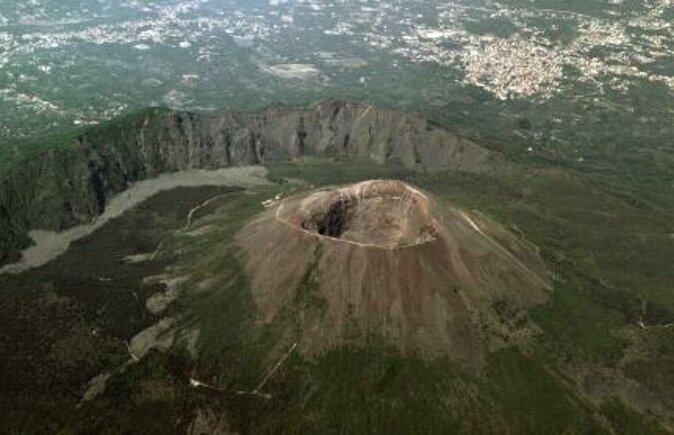
- Vesuvius views without summit hiking: the winery is in the National Park, and you do not go to the top of the mountain.
- Herculaneum’s preservation hits harder: carbonized wooden objects, boat remains, and the reopened Ancient Beach create a strong emotional read.
- Winery lunch with set menu + wine pairing: 5 local wines are included with the add-on lunch option.
Other ways to walk into Pompeii
- Sorrento: Skip-the-Line Pompeii Express Tour by Train★ 4.8 · 2,038 reviews
- Priority Access Pompeii & Mt. Vesuvius Full day from Sorrento★ 4.5 · 1,376 reviews
- Pompeii Express Guided Tour by Train from Sorrento★ 4.5 · 770 reviews
- Sorrento: Pompeii Half-Day Guided Tour with Priority Access★ 4.7 · 739 reviews
Pompeii and Herculaneum, done right: private pacing plus an archaeologist
This is a private day trip from Sorrento or Naples (pickup offered anywhere in those areas) with air-conditioned transport, water and Wi-Fi on board, and a guide who’s there to explain what matters. The tour runs about 8 to 9 hours total, so you’ll feel like you’re seeing a lot—but it’s not random sightseeing. The plan is designed to hit major highlights while keeping the group moving at a pace your guide can manage.
A key plus is how the guide works inside Pompeii itself. The route starts with Pompeii’s modern-to-ancient gateway feel, then moves into classic sacred and civic spaces, then into houses where you can see what daily life looked like up close. The whole point is that you don’t just spot ruins—you learn how they functioned.
Also worth noting: there’s a family-friendly upgrade. If you’re traveling with kids, this is the kind of tour where the guide can keep them engaged instead of letting them melt into boredom.
Pompeii highlights from Porta Marina to the Antiquarium
Pompeii is vast, and without a plan you can waste time. Here, you get a guided sequence that starts fast and gives you mental anchors so the site makes sense as you move.
Piazza Porta Marina: your modern-to-ancient entry point
The day begins at Piazza Porta Marina, right by the Porta Marina gate embedded in the city walls. It’s a practical start because you transition immediately from street-level reality into the archaeological park experience. You’re also positioned near the Antiquarium area and key nearby spaces that shape how you’ll understand what comes next.
If you’ve ever felt overwhelmed by Pompeii’s layout, this is a good way to get your bearings fast. You’re not wandering—you’re being guided to a logical starting line.
Temple of Apollo: Greek-to-Roman layers and a Vesuvius view
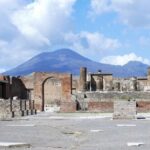
At the Temple of Apollo, you’ll see one of Pompeii’s oldest sacred sites and get the story of how religious practice shifted from Greek to Roman hands. The remains include surrounding columns (48 are mentioned in the tour details), and the open-air setting makes it easy to grasp the physical space.
Practical payoff: you can view bronze replicas of Apollo and Diana, check an original sundial column, and stand on the elevated podium. The bonus is the perspective toward Mount Vesuvius, so the disaster story isn’t just text—it becomes part of your line of sight.
More trips up to the crater
The Forum: where politics, religion, and commerce collide
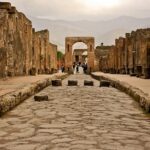
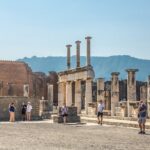
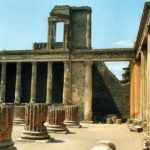
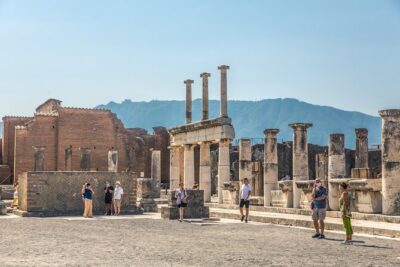
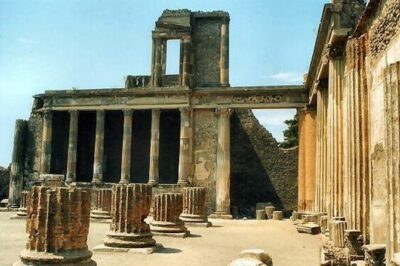
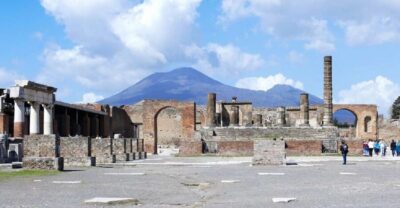
Next comes the Forum of Pompeii, described as the epicenter where major parts of Roman life met. The tour walks you across original travertine paving stones and points to major structures like the Temple of Jupiter and the Basilica.
This stop is also where the commercial pulse shows up. You’ll look at the Macellum market and the mensa ponderaria, the official weighing table. If you like the everyday angle—who bought what, who weighed it, who spoke publicly—this is a strong one.
Casa dei Vettii: restored fresco drama for house-level detail
The House of the Vettii is often where Pompeii turns from impressive to personal. The tour specifically highlights the recent restoration and the fresco program tied to the owners—two wealthy former slaves. You’ll see the iconic entrance painting of Priapus and the famed Fourth Style fresco look described as exceptionally vivid.
You’ll also get the Room of the Cupids and myth scenes, plus the central peristyle garden with fountain statues and plantings designed to recreate the original feel. The benefit here is that you’re not just looking at wall art; you’re seeing how a luxury house was organized around light, air, and social space.
Insula dei Casti Amanti: elevated walkways and active excavation views
At Insula dei Casti Amanti, the big draw is the modern way you experience an archaeological block. The tour mentions an innovative system of elevated walkways that lets you look down into an entire city block, including grand homes and a bakery area.
This stop also adds the human side of archaeology. You’ll see the tender couple fresco that inspired the house name and charcoal sketches of gladiators made by children long ago. Plus, you can watch archaeologists working from accessible ramps—so the day connects past life to present-day research.
Teatro Grande: acoustics, hierarchy, and a still-used venue
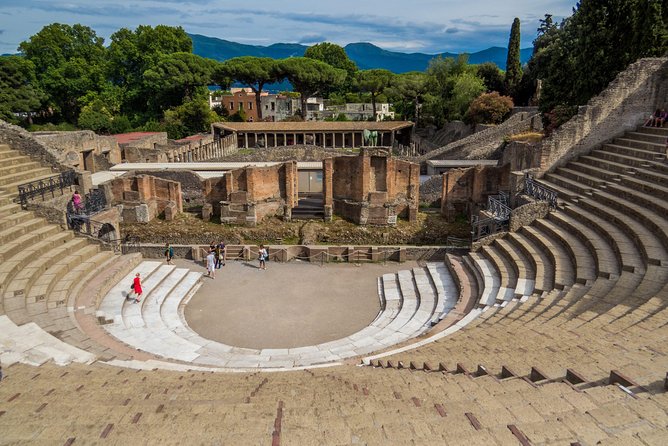
Teatro Grande brings Roman social life into focus. This is an old stone theater (dating to the 2nd century BC in the tour details), and you’ll explore the horseshoe arena and the seating hierarchy—elite marble seats near the top tiers.
The stop is famous for acoustics, including the note that you can hear even a whisper from the center of the stage to seats far up. And the tour says it’s still a living cultural venue, which makes it easier to imagine people returning here for performances, not just tragedy.
Antiquarium di Pompei: the emotional context museum that changes the ruins
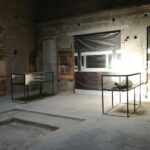
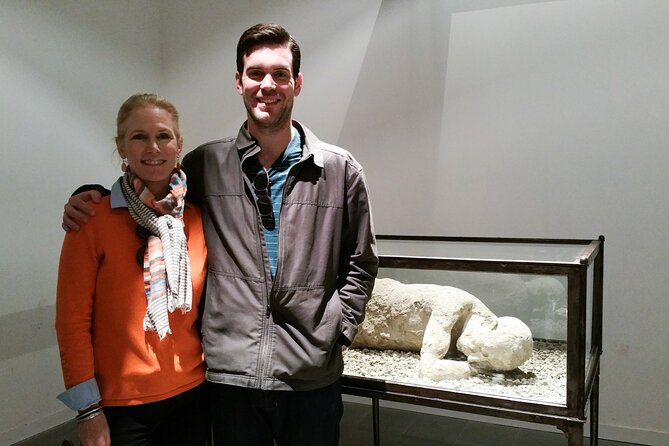
Before you move on, the Antiquarium di Pompei gives you the context that turns stone and silence into story. It’s located at the Porta Marina entrance and uses modern displays plus a gallery of plaster casts connected to the final moments of victims.
One striking detail called out in the tour materials is the plaster cast of a faithful guard dog. If you want your day to land emotionally without guessing, this museum does that job.
Winery lunch on Vesuvius: Cantina del Vesuvio views plus 5 paired wines
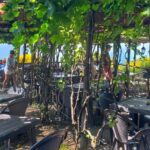
Between ruins stops, you get a real reset at Cantina del Vesuvio inside Vesuvius National Park. This is where the day stops feeling like a checklist and starts feeling like a Neapolitan food-and-wine break with crater views.
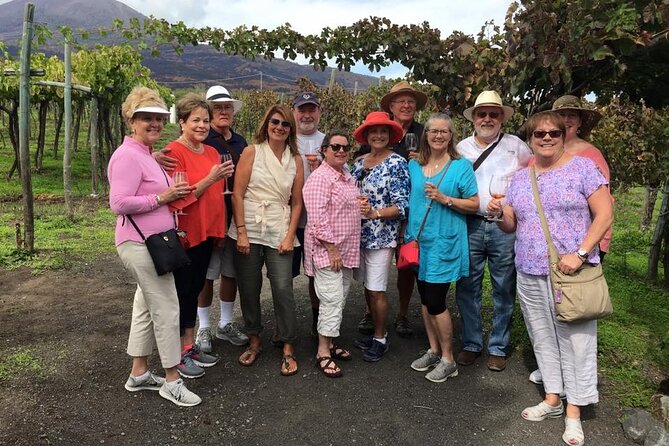
You start with a guided 15-minute stroll through vineyards, then learn the secrets behind the Lacryma Christi wines. The tour details emphasize that the winery is organic and run by the Russo family since 1930—so this isn’t some quick tasting room stop.
Lunch is a set menu paired with 5 local wines. The menu described includes appetizers like bruschetta, cheeses, and cured meats; spaghetti with Vesuvius cherry tomatoes; and Pastiera for dessert, with vegetarian and gluten-free options available. This lunch is listed as a paid add-on: about €50 per person for the all-inclusive menu, or €60 for a superior wine upgrade.
Two practical notes you’ll like: Fabrizio handles the booking, and you pay on-site by card or cash. The winery also offers the option to ship favorite wines and olive oils home, which helps if you don’t want to pack bottles.
And to avoid surprises: the tour does not go to the top of Mount Vesuvius. You get the views and the park setting, but not the summit hike.
Herculaneum’s stops: museums, the boat pavilion, and the reopened Ancient Beach
If Pompeii is the big, dramatic name, Herculaneum is where the details can feel more complete. The tour’s approach is to build an insider route that takes you through the most meaningful highlights without dragging you through everything.
A strong start is Archaeological Park of Herculaneum, with opulent villas and remarkably preserved artifacts. Then the tour shifts into small-but-powerful stops that show you how people lived—and how the eruption froze that life in place.
Antiquarium di Ercolano: organic survival you won’t see elsewhere
The Antiquarium di Ercolano is a modern museum that complements the ruins outside. The standout here is the emphasis on extremely delicate finds, including carbonized wooden furniture and textiles, which the tour notes are rarely found elsewhere in the Roman world.
You’ll also hear about the Herculaneum Treasure, a shimmering collection found with victims at the ancient shoreline. It’s the kind of stop that helps you understand why Herculaneum feels different from Pompeii when you finally step back into the street-level remains.
Boat Pavilion: carbonized maritime life at the shoreline
At the Boat Pavilion, the emotional punch is immediate. The tour highlights the carbonized keel of a 9-meter-long boat, found upturned where it was by the force of pyroclastic flows, plus smaller artifacts like fishing weights, nets, and a carbonized rope.
The key detail is preservation conditions: the tour explains it’s tied to lack of oxygen in the volcanic mud. If you like seeing the science behind what you’re looking at, this stop delivers it in a direct way.
Ancient Beach of Herculaneum: reopened in 2024 and deeply moving
The Ancient Beach reopened to the public in 2024 after a major restoration. You walk along the shoreline where the eruption’s climax hit, and the tour notes the ability to stand on volcanic sand.
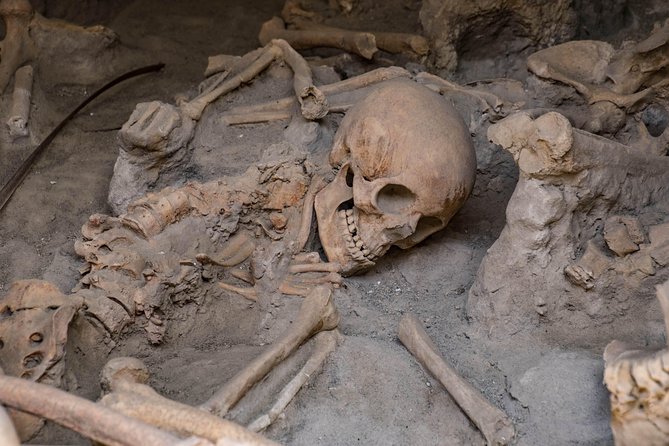
You’ll see the fornici (boat sheds) arches above you and the skeletal remains of over 300 residents discovered huddled in their final moments. It’s not comfortable sightseeing, but it’s one of the most honest ways to understand what happened, because you’re literally on the reshaped ground.
Casa dei Cervi: an inverted villa layout with seaside design
The House of the Stags (Casa dei Cervi) is highlighted for an inverted layout: a panoramic terrace and a garden designed to capture sea breezes and Gulf of Naples views. The house name comes from two world-famous marble stag statues being attacked by hounds found in the garden.
Even if you only care about one thing—design, art, or daily life—this is a stop that covers all three, without turning into a lecture.
Casa di Nettuno e Anfitrite: mosaic color and a preserved ancient grocery shop
Next is Casa di Nettuno e Anfitrite, featuring one of the Roman world’s most iconic mosaics: gods in shimmering gold and blue glass paste. The tour also calls out the outdoor summer triclinium decorated with shells and lava stone.
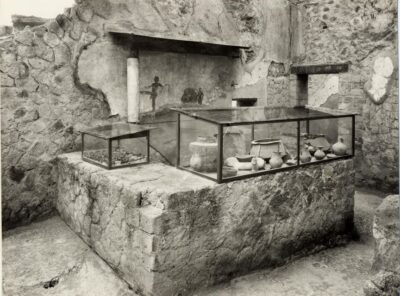
Right beside it is an attached shop widely considered the best-preserved grocery store from antiquity. You can still see original wooden shelves and carbonized storage bins that once held legumes and grain. It’s a strong example of why Herculaneum can feel more tangible than you expect.
Women’s Baths (Terme Femminili): mosaics, stucco ceilings, and heating design
The Women’s Baths are presented as exceptionally well-preserved and more complete than similar structures in Pompeii. The tour points to a black-and-white floor mosaic in the apodyterium depicting Triton surrounded by dolphins.
You’ll also see organic details like original wooden shelves used to store clothing, plus barrel-vaulted ceilings with elegant stucco decoration. The sequence includes tepidarium and caldarium, with mention of a hollow-wall heating system.
Palestra: a gymnasium space built for the Mediterranean routine
The Palestra is described as a spectacular look at Roman civic pride and physical culture. It includes a monumental cross-shaped swimming pool (natatio) and a fountain shaped like a five-headed hydra.
A practical reason to like this stop: it’s described as feeling like a grand, empty stage. That helps your brain picture the energy of athletes and youth organizations practicing before the eruption ended it.
Ad Cucumas: a wine-seller advertisement
The day closes with Ad Cucumas, an ancient wine advertisement from a wine-seller. It’s a quick stop, but it adds a commercial everyday flavor to balance out the grand villas and public buildings.
What this full day feels like in real time (and how to plan for it)
This is a packed day, and the order can matter. The tour design includes a lot of stops that range from outdoor ruins to museums, plus a structured winery lunch. You’ll want comfortable shoes, and you’ll want to pace yourself—your guide is explicitly meant to adjust the route around your group needs.
The big quality-of-life detail is included support: water and Wi-Fi on board, plus air-conditioned transport. When you’re bouncing between Pompeii and Herculaneum and stopping for lunch, that comfort makes the day easier to manage.
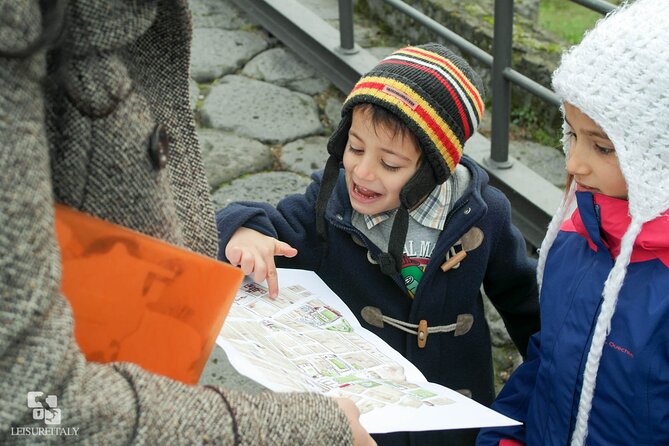
If you’re traveling with kids, the family-friendly upgrade is part of why this works. The goal is to keep them engaged while still hitting the core archaeological story without turning it into a bland walk through stone.
And for anyone who can’t do a lot of hiking: remember the winery is in the park, but the tour does not reach the top of Mount Vesuvius. You get crater views without the summit.
Price and value: what $861 per group really covers
The price is $861.07 per group (up to 7 people). That means you’re buying private transportation plus a two-site guided day with an archaeologist who’s guiding inside Pompeii and Herculaneum—not just driving you past the gates.
Within the tour inclusions, you get air-conditioned vehicle service, water and Wi-Fi on board, private guided tour in both Pompeii and Herculaneum, and private transportation. It’s the kind of setup that reduces stress: you’re not coordinating entry timing, figuring out where to start, or hunting for the best viewpoints.
Then add the items that cost extra:
- Admission fees: about €40 per adult for both sites, with under-18 free when showing valid ID.
- Lunch and wine experience: about €50 per person all-inclusive, or €60 with a superior wine upgrade.
That’s why I call this a value play for groups. If you’re traveling as a full party of 7, the per-person private guide and transport costs drop quickly. If you’re only 2 people, it’s still a smart move, but it’s more of a treat than a budget option—especially once you add admissions and lunch.
Who should book this private Pompeii + Herculaneum + winery day?
Book this if you want:
- A private archaeologist-led day where you see key Pompeii spaces and Herculaneum sites in one shot.
- A guide who adjusts pace and priorities based on your group, including kids.
- A lunch with real local wine time inside Vesuvius National Park (without going to the summit).
This may not be ideal if:
- You hate long days. You’re looking at 8 to 9 hours.
- You want just one site with tons of free wandering.
- You’re specifically aiming for a Mount Vesuvius summit climb.
Should you book this tour?
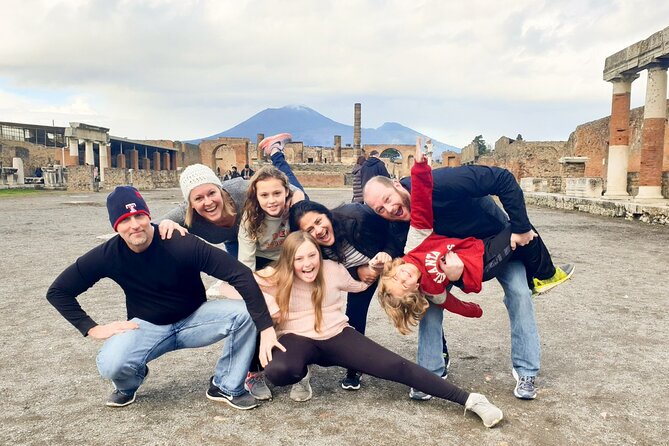
Yes, if you want the best version of a one-day Pompeii + Herculaneum visit: private pacing, strong context stops (Antiquarium museums), and a wine lunch that breaks the day in the right place. It’s also a great fit for families who want kids to stay engaged without sacrificing meaningful stops.
I’d hesitate only if your priority is a slow, minimal-effort museum stroll in one area, or if walking over uneven historic stone is a deal-breaker for your group. If you can handle the time and the walking, this is one of the most efficient ways to connect Pompeii’s civic life, Herculaneum’s preserved details, and Vesuvius wine country in a single day.
FAQ
What’s included in the tour price?
You get an air-conditioned vehicle, water and Wi-Fi on board, and a private guided tour in both Pompeii and Herculaneum, plus private transportation. The tour also offers pickup, uses mobile tickets, and is offered in English.
What extra costs should I budget for?
Admission fees are not included, and they are listed as about €40 per adult for both sites (under 18 is free with valid ID). Lunch and the wine tasting at the winery are also not included, listed at about €50 per person all-inclusive or €60 for a superior wine upgrade.
Will we reach the top of Mount Vesuvius?
No. The tour does not reach the top of Mt Vesuvius. It includes a winery visit within Vesuvius National Park with crater and bay views.
Where does pickup happen?
Pickup is offered anywhere in the Naples or Sorrento area. If you’re staying on the Amalfi Coast, you need to contact the provider.
Is this tour okay for families and kids?
There’s an upgrade designed to be family-friendly and keep children entertained. The tour requires only moderate physical fitness, which helps make it workable for families.
Is cancellation flexible?
Free cancellation is offered. You can cancel up to 24 hours in advance for a full refund.
More of Herculaneum

More Days on Vesuvius
Back to Pompeii
Just off the boat: newer Sorrento reviews

Pompeii from Sorrento, compared.
 ★ 4.8Skip-the-Line Pompeii Express Tour by TrainFrom $632,038 reviews
 ★ 4.5Priority Access Pompeii & Mt. Vesuvius Full day from SorrentoFrom $1391,376 reviews
 ★ 4.5Pompeii Express Guided Tour by Train from SorrentoFrom $65770 reviews
 ★ 4.7Pompeii Half-Day Guided Tour with Priority AccessFrom $84739 reviews
 ★ 4.5Skip-the-Line Pompeii Guided Tour from SorrentoFrom $90722 reviews
 ★ 4.0Pompeii Ruins Half-Day Tour from Sorrento with GuideFrom $97714 reviews
 ★ 4.8Pompeii and Vesuvius Guided Tour with LunchFrom $130683 reviews
 ★ 4.3Day Tour to Pompeii Ruins and Mount VesuviusFrom $130489 reviews
Browse the lists this tour appears in