
Review · POMPEII FROM SORRENTO
Pompeii and Herculaneum Small Group Excursion from Sorrento
Pompeii is loud in your head. This small-group outing is a smart way to see Pompeii and Herculaneum in one long day, with entrance tickets included and an archaeologist guide to answer your questions as you walk. One heads-up: it’s still a lot of walking on uneven ground, and the schedule is packed.
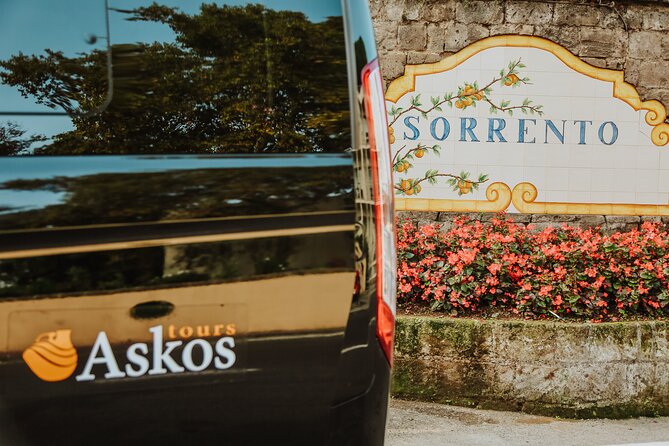
You’ll start in Sorrento at Piazza Angelina Lauro (by the red tulip sculpture), then ride in an air-conditioned minivan to Pompeii, with headset audio so you don’t miss the explanations. The day runs about 8 hours, and you’ll end back in the same Sorrento meeting spot.
In This Review
- Key things I’d zero in on before you book
- How This Small-Group Day Works From Sorrento
- Porta Marina: Getting Oriented in Pompeii Fast
- Pompeii’s Forum, Basilica, and the Daily-Life Stops
- Stabian Baths and Vicolo del Lupanare: Pompeii’s Human Scale
- The Big Houses and Theaters: House of Faun to Teatro Grande
- More Pompeii Homes and Honors: From Deer Stags to the Augustales
- Maximall Pompeii Break: Food Choices, Discount Card, and a Reset
- Herculaneum Park: Walking Into the More Intimate City
- Central Thermae and the House of the Black Salon
- Casa Sannitica, Bel Cortile, Grand Portal, and the House of the Skeleton
- Who This Tour Fits Best (and What to Watch For)
- Should You Book This Pompeii and Herculaneum Tour?
- FAQ
- How long is the Pompeii and Herculaneum excursion?
- What is the price per person?
- Is the tour offered in English?
- Are entrance tickets included?
- Is food and drink included?
- What is included besides the guides and tickets?
- Where do we meet in Sorrento?
- What is the maximum group size?
- Can I bring a dog on the minivan?
- Is it suitable for someone with visual impairment?
Key things I’d zero in on before you book
- Small-group format (max 15) plus headsets, which helps on narrow lanes
- All entrance tickets included for both ruins, so you’re not chasing lines
- Licensed archaeologist-led pace with time for Q&A on daily life, not just dates
- You see both cities, and Herculaneum’s charred details feel more intimate
- A real break at Maximall Pompeii with a welcome kit and discount card
Other ways to walk into Pompeii
- Sorrento: Skip-the-Line Pompeii Express Tour by Train★ 4.8 · 2,038 reviews
- Priority Access Pompeii & Mt. Vesuvius Full day from Sorrento★ 4.5 · 1,376 reviews
- Pompeii Express Guided Tour by Train from Sorrento★ 4.5 · 770 reviews
- Sorrento: Pompeii Half-Day Guided Tour with Priority Access★ 4.7 · 739 reviews
How This Small-Group Day Works From Sorrento
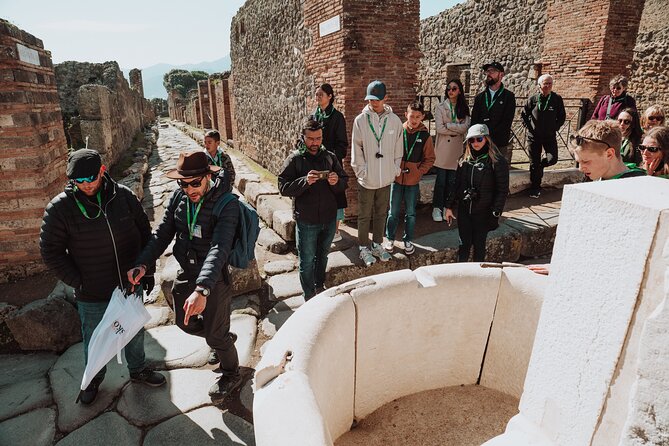
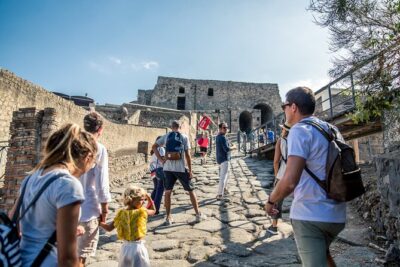
This is the kind of day trip that works best when you want structure. You meet in central Sorrento at Piazza Angelina Lauro, right by the red tulip sculpture, then the group heads out together. The tour is described as a small group and uses a headset system, which matters because Pompeii’s streets can feel like a maze once crowds and heat start to build.
The minivan part is also underrated value. If you’re traveling from Sorrento, doing Pompeii and Herculaneum on your own can turn into a timing puzzle—trains, walking, ticket queues, and the constant fear you’ll miss the next connection. Here, you’re carried between sites in comfort, with the driving time built into the day.
Expect a long day. Even with a guide and headsets, you’re moving through lots of sites, rooms, and outdoor lanes. If you’re sensitive to heat or have limited endurance, you’ll want to plan your pace and breaks.
Porta Marina: Getting Oriented in Pompeii Fast
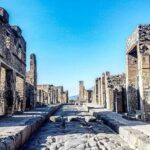
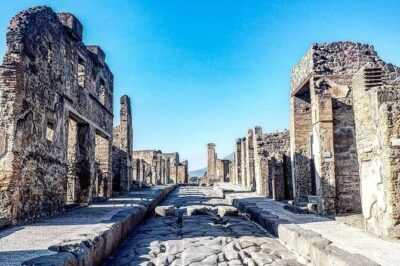
The day begins with your entry into Pompeii through the Porta Marina entrance—one of the major gateways into the ancient city. That orientation is a big deal. Pompeii can feel like you’re wandering until you understand the layout: where civic life happened, where people moved through markets, and which neighborhoods were more residential.
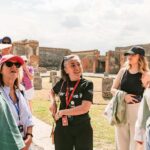
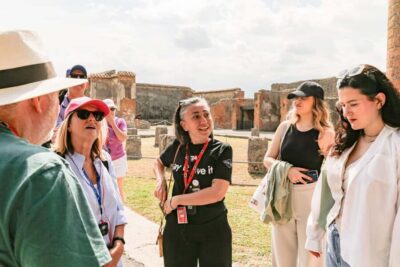
From there, the tour switches to a guided walkthrough that’s designed to turn the stone blocks into daily life. The guide is a licensed archaeologist, so you’re not only hearing what things look like—you’re getting context for why these streets, buildings, and public spaces mattered. I like this approach because it makes it easier to ask questions on the spot, instead of saving everything for later.
Headsets help here too. When you’re walking through open courtyards and then into narrower passageways, it’s easy to lose a guide’s voice if you’re close to the back. The headset setup keeps the guide’s explanations audible without you having to sprint to the front.
Pompeii’s Forum, Basilica, and the Daily-Life Stops
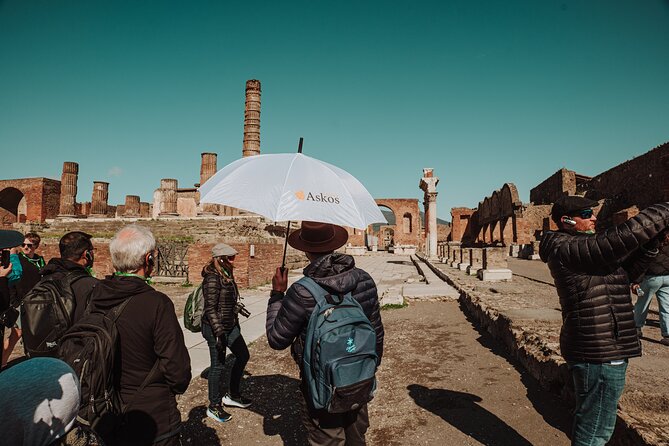
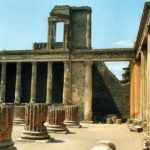
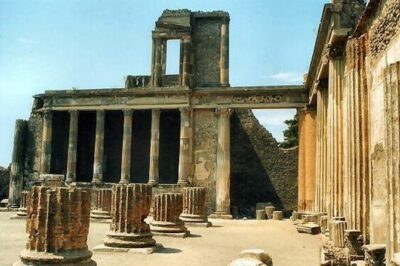
Early on, you’ll hit the civic core of Pompeii: the Basilica area and the Forum. The Basilica is described as an open portico that once sheltered merchants and other activities. Think of it as a covered social-and-business space—people stopping, trading, talking, and passing time under architecture that still feels sturdy even after centuries.
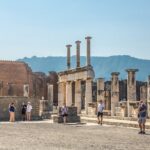
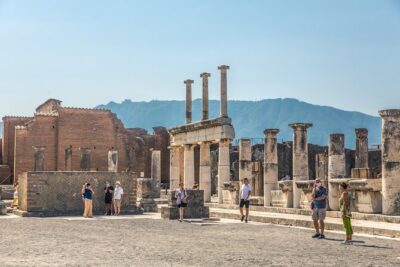
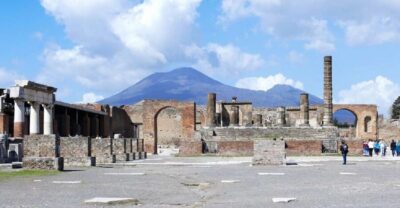
Then comes the Forum, the ancient main square. This is where the city’s rhythm becomes obvious: public announcements, gatherings, and the kind of movement you’d associate with a town center. Even if you’re not a history buff, it’s one of those places where the guide can point out how space shaped behavior.
Next, you move into the residential details that make Pompeii feel personal. One standout stop is the Insula dei Casti Amanti, known for frescoes that show intimate moments of daily life, including the famous affectionate couple. This is the kind of imagery that surprises people—in a good way—because it’s not what you expect when you picture Pompeii as only disaster ruins.
Right afterward, the Granaries of the Forum add a different flavor: marble tables, baths for fountains at house entrances, and casts connected to the eruption. You’ll also encounter the striking presence of casts tied to a dog and even a tree. Those details matter because they shift the story from architecture to the lived scene of what people and animals were doing, right up to the moment the city changed forever.
Stabian Baths and Vicolo del Lupanare: Pompeii’s Human Scale
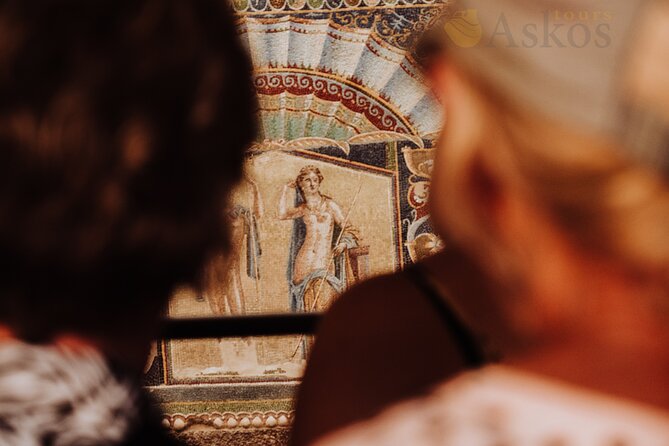
The Stabian Baths (Terme Stabiane) are next, and they’re not just a pretty stop. These baths are described as the oldest thermal complex in Pompeii. Bathtime was a major part of Roman life—socializing, cleaning, relaxing, and staying connected. In the baths you can see how public buildings served daily needs, not just big ceremonies.
After the baths, the tour goes to Vicolo del Lupanare, which is tied to Pompeii’s most famous brothel. This stop can feel edgy, but it’s also useful for understanding how people lived. The point isn’t shock value; it’s that ancient cities had spaces devoted to many kinds of social life, and Pompeii preserved evidence of that world.
If you’re traveling with kids, this is often where the questions start. In the narrow lanes and small rooms of places like this, the guide can explain what you’re seeing in a way that helps people keep perspective. Just keep in mind: it’s also one of the spots where you’ll be moving through cramped areas, so wearing something comfortable for tight spaces helps.
The quieter dig: more Herculaneum visits


The Big Houses and Theaters: House of Faun to Teatro Grande
Pompeii swings from street-level life to standout entertainment and elite homes. The House of the Faun is one of the largest private residences in the city, and it’s a great “scale check.” You can sense the difference between ordinary life and wealth through the sheer footprint and how spaces are arranged around courtyards.
Then you’ll see the entertainment side, first at the Odeon, also known as Teatro Piccolo. It’s smaller, but the design gives you a feel for how performances and gatherings shaped the city’s culture. After that, the Teatro Grande is the big one—the most important theater in Pompeii. This is where you get a sense of the public stage and how architecture was built to handle crowds and acoustics.
If you like visual storytelling, this is a nice stretch. The guide can connect how people watched, gathered, and celebrated with the physical layout of the theater spaces.
More Pompeii Homes and Honors: From Deer Stags to the Augustales
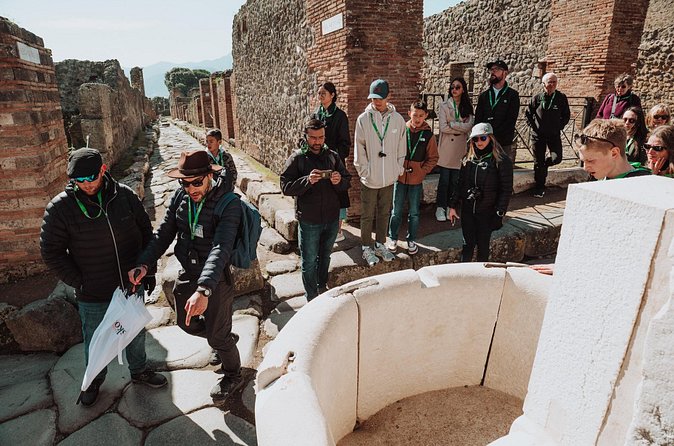
After the theaters, the itinerary keeps pressing into Pompeii’s residential and civic layers with a string of meaningful stops. House of the Deer takes its name from marble statues of stags or deer found in the peristyle. Even in ruins, the naming tells you what mattered aesthetically inside wealthy homes—art worked as status.
La Terrazza di M. Nonio Balbo introduces an individual story through an inscription. M. Nonius Balbus is described as the city’s major benefactor who restored and built public buildings. In Pompeii, people like this left marks that still function as clues: who funded what, and how they wanted to be remembered.
Next, you’ll visit the College of the Augustales. This building is thought to relate to the cult of Emperor Augustus and the Collegium Augustalium, possibly tied to local governance too. Places like this help you understand that Roman cities had religious and political layers operating side by side.
Casa del Rilievo di Telefo is another unusual home stop. It’s suggested it may have belonged to Marcus Nonius Balbus and is described as having private access to adjoining Suburban Thermae. That detail is the kind of thing that makes Pompeii feel like a system, not a random collection of ruins.
Then comes Partem Domus lignea, also noted as the Casa del Tramezzo di Legno. The highlight is the preserved wooden partition. This is exactly the sort of fragile survival you hope to see in Pompeii: not just stone walls, but traces of wood that give a more complete picture of how interiors worked.
Maximall Pompeii Break: Food Choices, Discount Card, and a Reset
Midway through the Pompeii portion, you get a break at Maximall Pompeii, described as the largest shopping center in southern Italy. This is where the logistics pay off: you step out of the sun and reset before the next section of ruins.
You’ll also receive an exclusive welcome kit and a discount card for Maximall Pompeii, with access to special deals in stores. Food and drinks are not included in the tour price, so this break is where you’ll likely buy your lunch and snacks. The advantage is simple: you’re not forced to grab something on the go in the heat near the ruins.
Use this time strategically. If you’re serious about photos, this is when to refill your energy and charge your phone. If you’re traveling with kids, this is where you prevent meltdown by combining a bathroom stop with snacks.
Herculaneum Park: Walking Into the More Intimate City
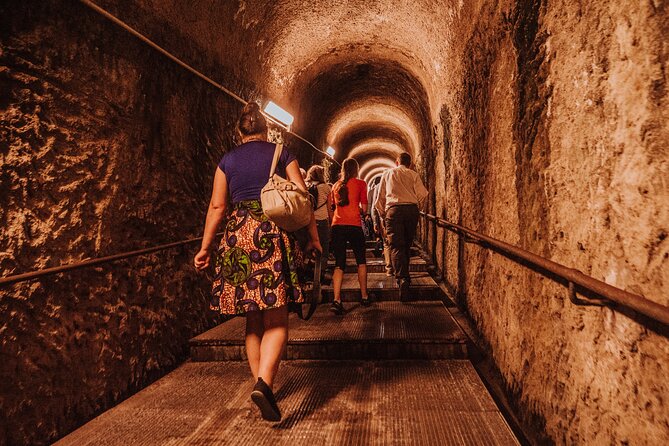
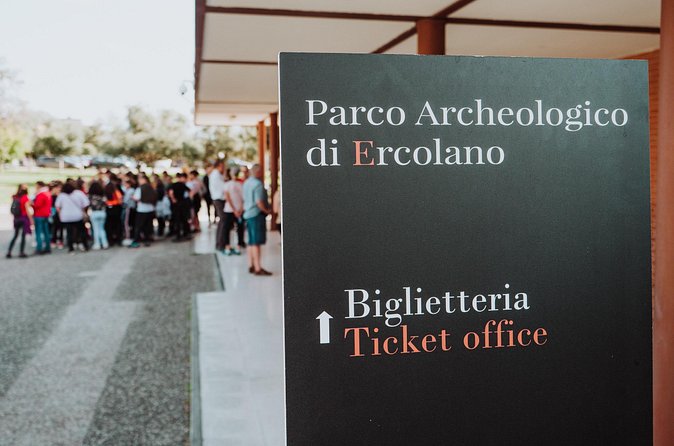
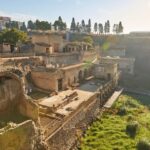
Herculaneum is the second half of the day, and it hits differently. The itinerary moves into the Archaeological Park of Herculaneum with a guided tour described as about two hours. The big takeaway is that Herculaneum tends to feel more preserved, and the interiors and charred elements often make the city feel closer to “real life” rather than distant ruins.
The guide’s role becomes even more important here because many details are not obvious unless someone explains what you’re seeing. You’re not just looking at walls; you’re seeing how rooms, doors, and public spaces functioned.
If you’ve ever felt Pompeii is too big to process, Herculaneum is a helpful follow-up. It gives you a chance to slow down and notice the small stuff: door remains, room arrangements, and the way homes were laid out.
Central Thermae and the House of the Black Salon
Central Thermae is a key early stop. The baths date to around the beginning of the 1st century AD and were divided into men’s and women’s baths with separate entrances. That’s a practical detail that changes how you interpret Roman bathing culture. It’s not one generic “bathhouse”—it’s designed around separation and movement.
Then the tour heads to the House of the Black Salon. This is one of Herculaneum’s more luxurious mansions, and the entrance is described as monumental with carbonised remains of the doorposts and lintel still visible. That charred threshold detail is one of those moments that sticks with you. It’s not just tragedy as a concept; it’s a physical, specific doorway that survived in a ruined city.
Casa Sannitica, Bel Cortile, Grand Portal, and the House of the Skeleton
Next, Casa Sannitica brings you to an atrium designed in a way typical of the Samnites. The atrium is lined with a gallery and Ionic columns, and rooms are decorated with frescoes. Even when frescoes are damaged, the layout and decoration tell you how people wanted their private space to feel.
Casa del Bel Cortile offers another architectural twist: a courtyard with a stairway and a stone balcony instead of an atrium. That difference matters because it shows how home design wasn’t one-size-fits-all. The city had variety, and families expressed that through their houses.
House of the Grand Portal is described as a beautiful domus in the center of the archaeological area, with various environments and collonnati, plus frescos and charred remains of wooden parts. Wooden elements are a recurring theme here because Herculaneum’s preservation often lets you see what Pompeii doesn’t always keep.
Finally, House of the Skeleton takes you to a name tied to a discovery from 1831, when human remains were found in a second-floor room. It’s a heavier stop, but it’s also part of why Herculaneum can feel hauntingly specific. The guide’s job here is important: keeping the focus on what the evidence means, not on spectacle.
Who This Tour Fits Best (and What to Watch For)
This works best for people who want a guided explanation without having to plan every transport step. If you like asking questions and hearing why certain buildings matter, the archaeologist-led style is a strong match. The headset setup is also a big help for keeping pace with the guide, especially in narrow lanes and small rooms.
It’s also a good choice if you want both cities in one day. Pompeii gives you scale—forums, theaters, big homes—while Herculaneum feels more intimate with the preserved interiors and door details. The contrast is real, and it’s one reason this combo makes sense.
What to watch for:
- Expect lots of walking over uneven surfaces.
- It’s long enough that you’ll want comfortable shoes and a heat plan, especially outside cooler months.
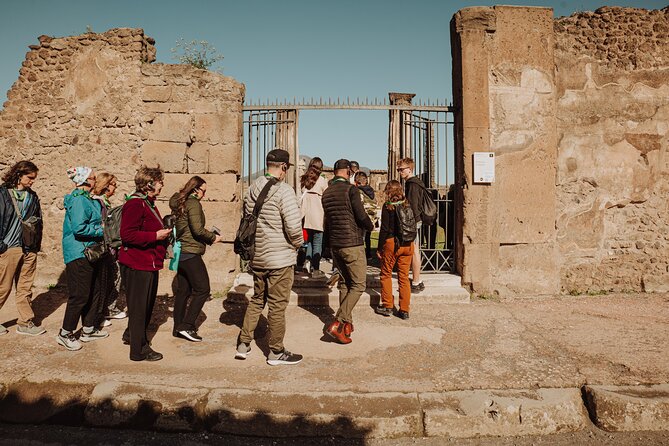
- With a group format, you’ll need patience at crowded steps and narrow areas.
- If you’re visually impaired, the tour is not recommended unless you have a dedicated personal assistant.
On the guide side, I’m glad to see names like Julia, Sergio, Amadeus, Roberta, and Diego showing up with praise for clear English and strong pacing. That kind of consistency is exactly what you want when you’re trying to process two major sites in one day.
Should You Book This Pompeii and Herculaneum Tour?
I’d book it if your goal is to see the highlights with structure and not lose time to ticket lines or transit juggling. The value is especially solid because the tour price includes entrance tickets for Pompeii Express and Herculaneum, plus air-conditioned transport, certified guidance, and headsets.
I wouldn’t book it if you want a slow, linger-all-day museum vibe, or if you know long walking days and cramped spaces are a problem for you. In that case, you’d probably be happier with a more flexible, site-by-site plan.
If you do book, pack for comfort: closed-toe walking shoes, sun protection, and some cash or card for your meals during the Maximall break (food isn’t included). Then show up ready to ask questions. This tour is built for that.
FAQ
How long is the Pompeii and Herculaneum excursion?
The tour is listed at about 8 hours, with travel time included and return transport back to the Sorrento meeting point.
What is the price per person?
The price is $139.37 per person.
Is the tour offered in English?
Yes, it’s offered in English.
Are entrance tickets included?
Yes. Entrance fee tickets are included for Pompeii Express and for Herculaneum.
Is food and drink included?
No. Food and drinks are not included in the tour.
What is included besides the guides and tickets?
You get transportation in an air-conditioned minivan, headsets, a certified guide, and a branded welcome kit plus a discount card for Maximall Pompeii.
Where do we meet in Sorrento?
You meet at Piazza Angelina Lauro, 80067 Sorrento, near the red tulip sculpture.
What is the maximum group size?
This option has a maximum of 15 travelers.
Can I bring a dog on the minivan?
No dogs are allowed in the vehicle for this option. Service animals are allowed.
Is it suitable for someone with visual impairment?
It is not recommended for visually impaired guests unless accompanied by a dedicated personal assistant.
More Tour Reviews in Sorrento
- Sorrento Farm and Food Experience including Olive Oil, Limoncello, Wine tasting
★ 5.0 · 2,524 reviews





More of Herculaneum
Back to Pompeii
Just off the boat: newer Sorrento reviews



Pompeii from Sorrento, compared.
 ★ 4.8Skip-the-Line Pompeii Express Tour by TrainFrom $632,038 reviews
 ★ 4.5Priority Access Pompeii & Mt. Vesuvius Full day from SorrentoFrom $1391,376 reviews
 ★ 4.5Pompeii Express Guided Tour by Train from SorrentoFrom $65770 reviews
 ★ 4.7Pompeii Half-Day Guided Tour with Priority AccessFrom $84739 reviews
 ★ 4.5Skip-the-Line Pompeii Guided Tour from SorrentoFrom $90722 reviews
 ★ 4.0Pompeii Ruins Half-Day Tour from Sorrento with GuideFrom $97714 reviews
 ★ 4.8Pompeii and Vesuvius Guided Tour with LunchFrom $130683 reviews
 ★ 4.3Day Tour to Pompeii Ruins and Mount VesuviusFrom $130489 reviews
Browse the lists this tour appears in