
Review · POMPEII FROM SORRENTO
Private Pompeii & Herculaneum Tour from Sorrento
A day in Roman ruins feels surreal. This one-day Pompeii + Herculaneum plan turns travel time into archaeology time, with skip-the-line entry and a guide who connects the stories across both sites. You’ll move inland in a private, air-conditioned vehicle, then spend the day focused on what actually makes these places unforgettable.
I really like the way the tour balances structure and freedom: you get two hours with a private guide in Pompeii, then another guided block in Herculaneum, with built-in time for lunch and for wandering afterward. I also appreciate that the stops track real city life—forums, baths, markets, homes—so you’re not just viewing stone piles.
One possible drawback: at this price point, you should expect a serious full-day commitment, plus a fair amount of walking on uneven ground. If you’re sensitive to heat or you hate planned pacing, you’ll want to start your day early and bring what you need (especially water and sunscreen).
In This Review
- Key highlights at a glance
- Private pickup from Sorrento: the small thing that matters
- Pompeii in 2 hours: how a guide helps you actually see the city
- The Forum stops: where politics, business, and worship mixed
- Market and baths: the place where daily routine happened
- The quieter shocks: Lupanar and domestic luxury
- Entertainment and justice: Teatro Grande and Basilica
- Lunch time: use your free window well
- Herculaneum’s guided hour: why preservation changes everything
- Casa dei Cervi, baths, and skeleton house: the rooms that feel personal
- A stop built for storytelling: House of the Skeleton
- Homes and the waiting clients idea: Partem Domus lignea
- Salone della Barca di Ercolano: the preserved port story
- The real value of a private guide across two sites
- Price and logistics: who this tour makes the most sense for
- FAQ
- FAQ
- How long is the Pompeii and Herculaneum day trip from Sorrento?
- Do I get pickup and drop-off in Sorrento?
- Are admission tickets included?
- How much guided time do I get at each site?
- Is lunch included?
- What language is the tour offered in?
- Where does the tour start?
- Should you book this Pompeii and Herculaneum tour?
Key highlights at a glance
- Skip-the-line entry for both Pompeii and Herculaneum saves real time
- Private guided blocks: 2 hours in Pompeii and about 2 hours in Herculaneum
- Two cities, one eruption story: AD 79 and what different burial conditions preserved
- Forum-to-street route in Pompeii, built around how people lived and traded
- Herculaneum’s mud-and-lava preservation makes rooms and details easier to “read”
Other ways to walk into Pompeii
- Sorrento: Skip-the-Line Pompeii Express Tour by Train★ 4.8 · 2,038 reviews
- Priority Access Pompeii & Mt. Vesuvius Full day from Sorrento★ 4.5 · 1,376 reviews
- Pompeii Express Guided Tour by Train from Sorrento★ 4.5 · 770 reviews
- Sorrento: Pompeii Half-Day Guided Tour with Priority Access★ 4.7 · 739 reviews
Private pickup from Sorrento: the small thing that matters
This tour is designed around one big advantage: you don’t waste your morning figuring out timing, tickets, and transfers. You meet your driver at a central hotel location in Sorrento around the agreed time, then ride inland in a private, air-conditioned vehicle. That matters because Pompeii and Herculaneum are huge, and the day goes fast.
From a value perspective, I like that pickup and drop-off are included in the experience price. You don’t have to add another layer of logistics, and you’re free to focus on the ruins instead of the commute.
Pompeii in 2 hours: how a guide helps you actually see the city
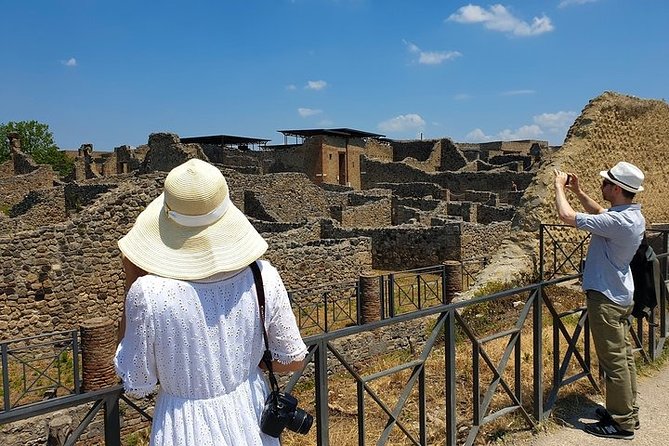
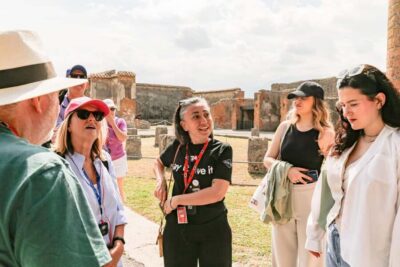
Pompeii is enormous, and without a guide you can end up walking in circles while missing the key “why this place mattered” details. With this format, you get about 2 hours of guided time inside the Archaeological Park of Pompeii, plus a route that hits major anchors rather than just random highlights.
You’ll learn how Mount Vesuvius’ AD 79 eruption buried the town under meters of ash and pumice, and why the site still feels startlingly preserved. Your guide doesn’t just point out ruins; you’ll hear the kind of daily-life context that turns buildings into a living snapshot—what people ate, where they shopped, how they gathered, and what public space looked like in real Roman life.
The Forum stops: where politics, business, and worship mixed
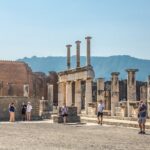
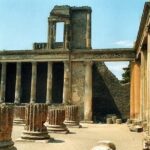
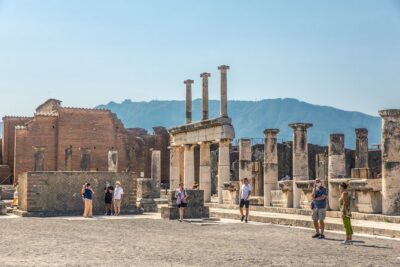
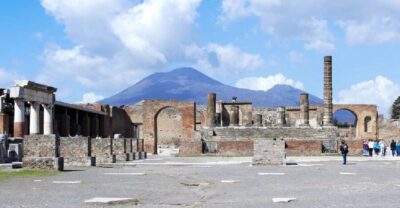
The route quickly leads you to the Civic Forum area, the city’s core. The Foro de Pompeya is the focal point for administration, justice, business, trade activity (including markets), and citizen worship. In plain terms: this is where the city ran.
A short walk from there takes you to the Tempio di Giove Capitolino (Temple of Jupiter), the dominant temple on the Forum’s north side. One useful detail you’ll hear is that when the colony was founded (80 BC) the temple underwent major renovation, becoming a Capitolium-style complex tied to cult statues of Jupiter, Juno, and Minerva. It’s the kind of detail that gives you context for why the Forum felt both political and religious.
These Forum stops also give you an easy “mental map.” Once you understand the north-south layout and what happened in the Forum square, you’ll start recognizing how the rest of Pompeii connects.
Market and baths: the place where daily routine happened
After the Forum, you move into commerce. The Macellum is the market complex, built around a tuff quadriporticus, with worship space elevated on one side. You can also spot how the area supported imperial cult themes, plus the idea that different zones had different functions—meeting rooms, counters that likely served food and sales, and spaces connected to the emperor’s presence in public life.
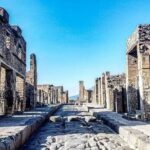
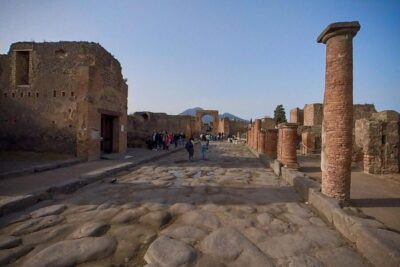
Then comes the Via dell’Abbondanza, Pompeii’s main commercial artery stretching from the Forum toward the Sarno Gate. Even if you only spend about 10 minutes here, it’s worth it because it’s the spine of daily movement. The basalt stones, raised stepping stones, storefronts, and election-style graffiti help you “see” the city as a place of footsteps and bargaining, not just a museum.
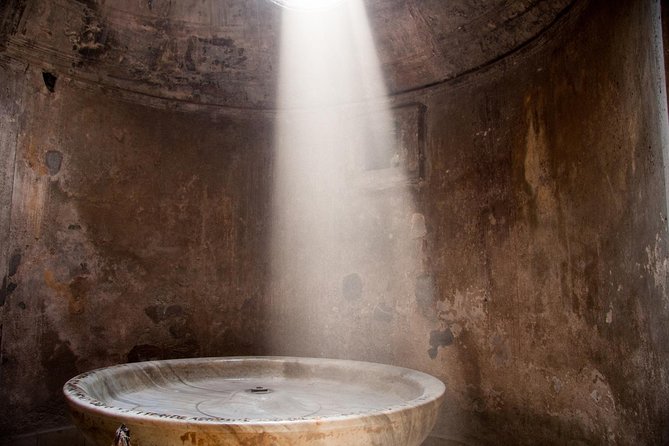
Right at the intersection sits the Stabian Baths (Terme Stabiane), the oldest and largest public bathing complex in Pompeii. This stop is a big payoff for visitors because it shows Roman engineering in an everyday setting: a hypocaust (underfloor heating), separated bathing zones, and the idea that baths weren’t only about hygiene—they were social life. You’ll also hear that visitors could admire stucco decorations, an open-air gymnasium area, and a large swimming pool. For many people, this is where Pompeii stops feeling abstract and starts feeling real.
The quieter dig: more Herculaneum visits

The quieter shocks: Lupanar and domestic luxury
Pompeii also has stops that are emotionally jarring in the best way—places that reveal how varied Roman society really was.
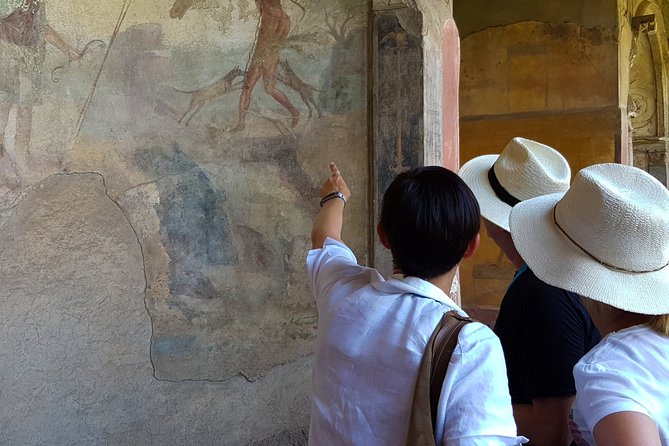
The Lupanar (the large brothel) is included for a reason: it shows how sexual commerce and wall art coexisted in public space. The name is Latin for brothel, and it’s known for the erotic paintings on its walls. Your guide may also explain the basic pay structure tied to asses and how common this kind of service economy was in the city.
Then you move into elite domestic life with Casa del Fauno (House of the Faun). This large residence was built in the 2nd century BC and is one of Pompeii’s most impressive homes. If you want to understand how wealth expressed itself, this is a strong stop: you’ll see how this aristocratic household reflects its era through major art pieces and luxury design choices.
Entertainment and justice: Teatro Grande and Basilica
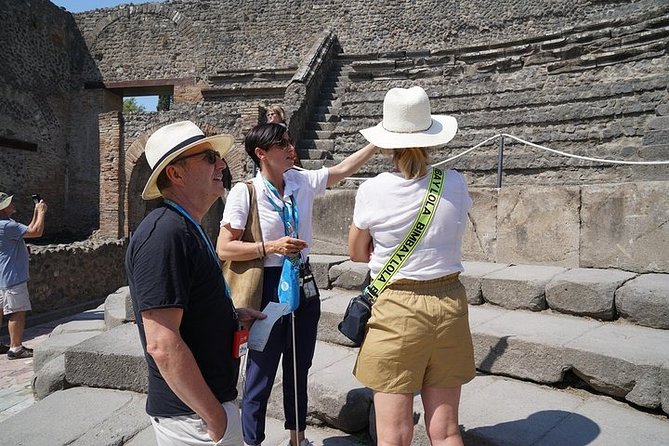
Next up is public entertainment. The Teatro Grande is horseshoe-shaped, built into a hillside, and designed for about 5,000 spectators. It dates back to the 2nd century BC and was the first Greek-style stone theater in Pompeii. Even a short visit helps you imagine how comedies, tragedies, and pantomimes pulled people together—regardless of social status.
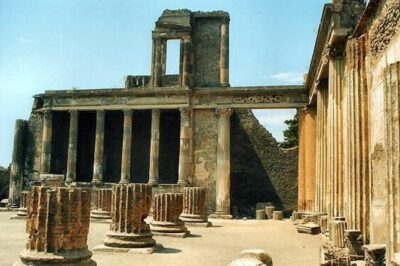
Finally, the Basilica gives you the justice-and-business side of the Forum world. With about 1,500 square meters of space, it was one of the most sumptuous Forum buildings and served business and administration of justice. Again, it’s a stop that makes the city’s “public system” feel structured instead of random.
Lunch time: use your free window well
After your Pompeii guide time, you get free time for lunch (food and drinks are not included, so plan on finding your own option). I like this setup because it prevents the day from turning into a rushed sprint. If you can, choose something close to where you’ll continue next, so you don’t waste energy on transport.
Herculaneum’s guided hour: why preservation changes everything
Once Pompeii is done, you travel to Herculaneum. This part of the day is where the concept of one eruption turns into two very different experiences.
Herculaneum was buried by volcanic pyroclastic flows in AD 79. Many visitors find it easier to “read” because the town was encased in mud and lava, which helped preserve structures in a different way than Pompeii’s ash and pumice. That preservation effect matters because it changes what you can understand when you stand in a room or look at a floor.
You’ll have about 2 hours for Herculaneum (including guided and the time to explore at leisure). The inclusion of a guided block helps you focus on the best-preserved sections rather than getting lost in the scale of residential streets.
Casa dei Cervi, baths, and skeleton house: the rooms that feel personal
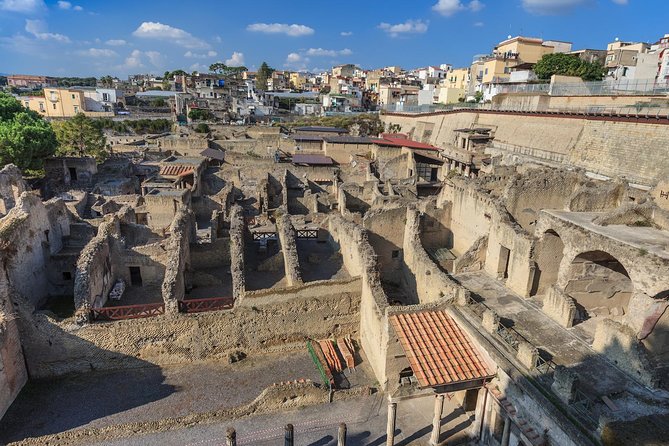
Herculaneum starts with a set of stops that make daily life tangible.
The Casa dei Cervi is a major noble family house that, before the volcanic mud slide, had a seafront address. The structure centers on a courtyard with two-storey rooms and murals and still-life paintings. Even if your time is short here, it gives you the sense that domestic spaces were built around light, layout, and visual statements.
Then you’ll move into spaces tied to public routine: the Central Thermae. Public baths were a social institution, and there were relatively few private baths for wealthy families only. The baths were divided into men’s and women’s sections, and you’ll see the sequence of changing room, cold bath room, tepid bath room, and hot bath room. This is one of those stops where it’s easy to picture the day-to-day schedule.
The tour also includes the College of the Augustales, which is linked to the cult of Emperor Augustus and the headquarters of the Collegium Augustalium (or possibly even the local curia). It’s a shorter stop, but it adds a layer of political-religious context, showing how worship and civic organization could overlap.
A stop built for storytelling: House of the Skeleton
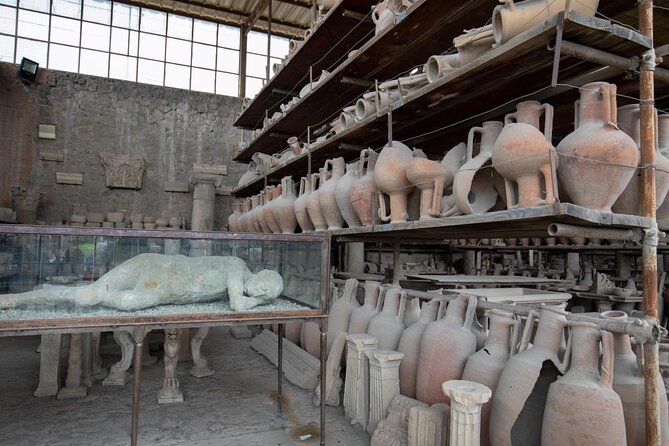
The House of the Skeleton is named after remains discovered in a second-floor room in 1831. The idea you’ll take away is intense: some inhabitants likely shut themselves in homes and died there, either from suffocation or from extreme heat of volcanic gases. This is not a long stop, but it gives the eruption story real human weight.
I find this kind of stop valuable because it keeps the visit from turning purely into scenery. Pompeii and Herculaneum are tourist-friendly, but the core story remains tragic, and a guide helps you hold onto that meaning without slowing the day.
Homes and the waiting clients idea: Partem Domus lignea
One of the more intriguing Herculaneum details is the Partem Domus lignea (the wooden folding door area), also called Casa del Tramezzo di Legno. The name comes from a folding wooden door discovered there, used to separate the atrium from the tablinium (the owner’s studio).
In front of the façade, you can admire benches where clients waited to be received by the host. This is the kind of domestic design element that makes you realize Roman life had rhythms and roles: you didn’t just live in these spaces—you used them for meetings, access, and social structure.
Salone della Barca di Ercolano: the preserved port story

Your final Herculaneum stop is the Salone della Barca di Ercolano, where you can see an ancient wooden boat recovered from the beach after the eruption. People fled for their lives and reached the shore; the men tried to protect women and children, but the volcanic fury destroyed the port and beach.
What’s special is how the boat survived. It was recovered and preserved with a resinous material, then brought back to life and put back in position in 1982. Even if you only have about 15 minutes here, it’s a powerful reminder that the eruption wasn’t only about burying towns—it also erased coastline life fast.
The real value of a private guide across two sites
Let’s talk about what you’re buying for the money. At $769.43 per person for an 8-hour day, this is not a casual add-on. You’re paying for two guided blocks, skip-the-line entry in both places, and private transportation with hotel pickup and drop-off.
The guide is where the value becomes practical. Pompeii’s vastness can be disorienting; Herculaneum’s preserved rooms can be confusing without context. A good guide helps you avoid two common mistakes: wandering without a plan and missing the key city systems (Forum, baths, markets, domestic layouts, and entertainment spaces).
Also, the tour has a nice pace: enough guided time to build understanding, then enough free time to absorb the atmosphere. Guides like Connie, Ugo (Hugo), Nella, and Carmela come up in standout ways for making the day feel memorable and well-structured.
Price and logistics: who this tour makes the most sense for
This tour makes the most sense if you fit one (or more) of these profiles:
- You want both Pompeii and Herculaneum in one day without dealing with separate transport and timing.
- You care more about understanding Roman daily life than just checking off big ruins.
- You like guided pacing but still want some unstructured time for lunch and exploring.
If you’re traveling on a tight budget or you enjoy independent wandering without a set route, you might decide to DIY. But if you know Pompeii will overwhelm you without a guide, the skip-the-line setup plus guided time is the difference between a tiring day and a satisfying one.
One practical note: carry water and plan for heat. There’s no guarantee you’ll get it during the day, and the sites can drain you fast.
FAQ
FAQ
How long is the Pompeii and Herculaneum day trip from Sorrento?
The tour runs for about 8 hours.
Do I get pickup and drop-off in Sorrento?
Yes. Pickup is offered from your hotel or a central location in the Sorrento area, and the tour returns to the meeting point in Sorrento.
Are admission tickets included?
Yes. Admission tickets are included for Pompeii and Herculaneum, and skip-the-line entrance is included for both sites.
How much guided time do I get at each site?
You get about 2 hours of private guided tour in Pompeii and about 2 hours of private guided tour in Herculaneum.
Is lunch included?
No. Food and drinks are not included, so lunch is at your own expense.
What language is the tour offered in?
The tour is offered in English.
Where does the tour start?
It starts at Piazza Torquato Tasso, 16, 80067 Sorrento NA, Italy.
Should you book this Pompeii and Herculaneum tour?
If you want a day that feels organized, efficient, and genuinely informative, I’d book it. The mix of skip-the-line entry, private guided time in both cities, and a route that covers Forum life, markets, baths, homes, and major landmarks is built for people who don’t want Pompeii to turn into random walking.
The main reason to hesitate is if you’re worried about heat, uneven ground, or walking for hours. If that’s you, go prepared and bring your own water. Otherwise, this is a strong way to experience two sides of the same catastrophic moment in Roman history—without spending your day stuck in lines or juggling logistics.
More Tour Reviews in Sorrento
- Sorrento Farm and Food Experience including Olive Oil, Limoncello, Wine tasting
★ 5.0 · 2,524 reviews





More of Herculaneum

Back to Pompeii

Just off the boat: newer Sorrento reviews


Pompeii from Sorrento, compared.
 ★ 4.8Skip-the-Line Pompeii Express Tour by TrainFrom $632,038 reviews
 ★ 4.5Priority Access Pompeii & Mt. Vesuvius Full day from SorrentoFrom $1391,376 reviews
 ★ 4.5Pompeii Express Guided Tour by Train from SorrentoFrom $65770 reviews
 ★ 4.7Pompeii Half-Day Guided Tour with Priority AccessFrom $84739 reviews
 ★ 4.5Skip-the-Line Pompeii Guided Tour from SorrentoFrom $90722 reviews
 ★ 4.0Pompeii Ruins Half-Day Tour from Sorrento with GuideFrom $97714 reviews
 ★ 4.8Pompeii and Vesuvius Guided Tour with LunchFrom $130683 reviews
 ★ 4.3Day Tour to Pompeii Ruins and Mount VesuviusFrom $130489 reviews
Browse the lists this tour appears in