
Review · HERCULANEUM FROM SORRENTO
From Sorrento: Half-Day Tour of Herculaneum
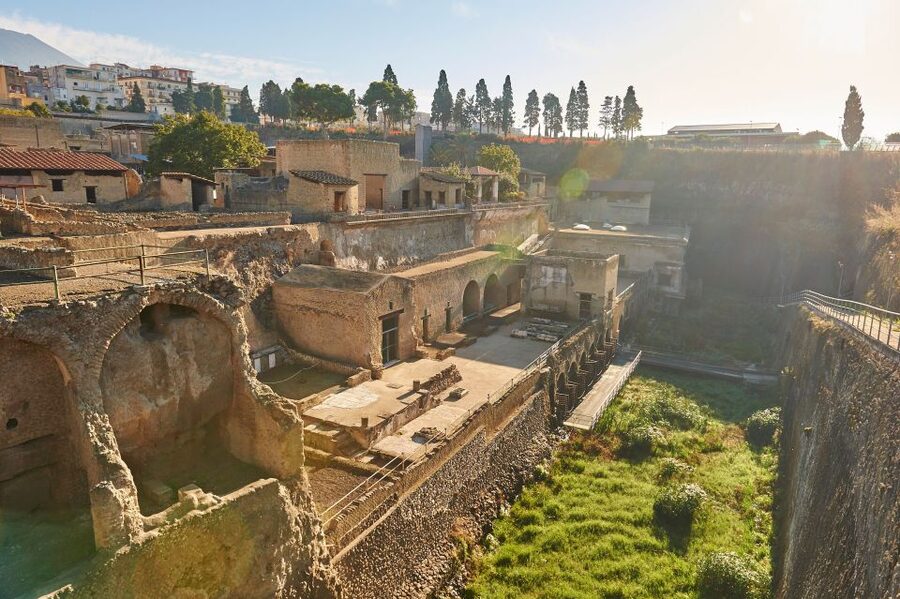
One site, and it hits you right in the gut. Herculaneum is a residential Roman town frozen in time by volcanic mud and ash from Vesuvius in 79 A.D. Even better: you’re guided through the place, with English headsets on the bus and a focused route that fits into a 4-hour half-day.
I love two things most. First, the Villa of the Papyri lets you picture high-status daily life in a way dry photos just can’t. Second, the Central Thermae public baths, with their wall art and Roman decoration, make the site feel like people actually used the spaces, not just studied them.
One consideration: the whole experience is tightly timed. It’s great for fitting this in, but if you’re hoping for a long, slow walk and extra time in every room, you may wish there were more minutes inside the archaeological zone—especially on a hot day.
In This Review
- Key highlights worth planning for
- Herculaneum: The Roman town Vesuvius basically paused
- Getting there from Sorrento: morning departure, headsets, and coach time
- Entering the site: paying fast and getting oriented quickly
- The Roman streets: walking through a town that stayed put
- Villa of the Papyri: a look at wealth you can see in the rooms
- Central Thermae baths: fresco and mosaic art in a public setting
- Shops, gymnasium, and everyday-town details
- The skeletons and the eruption story: what the site communicates
- Timing inside the 4 hours: how to not feel rushed
- Guides in English: Eugene, Toni, Cynthia, Dana, and the difference they make
- Price and value: $71 for a focused Roman town experience
- Who should book this half-day tour from Sorrento?
- Should you book? My honest call
- FAQ
- How long is the Half-Day Tour of Herculaneum from Sorrento?
- What time and where do I meet in Sorrento?
- Is the tour guided in English?
- Do I need to pay an entrance fee for Herculaneum?
- Is lunch included?
- Are headsets provided?
- What’s the starting price for this tour?
Key highlights worth planning for
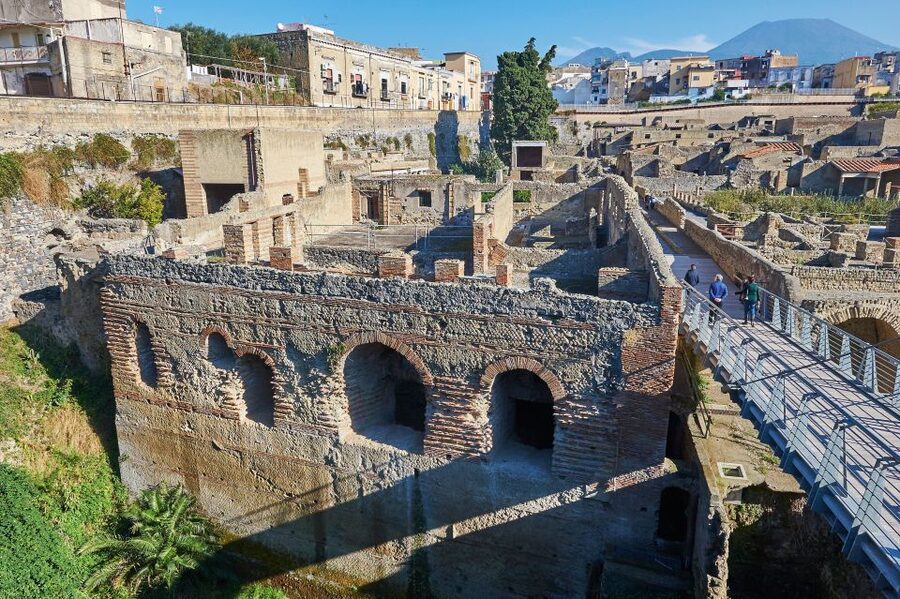
- Streets you can walk like the Romans did, with original layout and details still visible
- Villa of the Papyri for a real look at an elegant residence, not just scattered ruins
- Central Thermae baths, including the kind of wall art that shows how public life worked
- View from above before you head down, so you understand the town’s “shape” fast
- English guide plus headsets on the coach, so you don’t miss explanations while traveling
- Skeletons on site, tied to the sobering story of who fled—and who didn’t
The quieter dig: more Herculaneum visits
- Guided Day Tour of Pompeii and Herculaneum with Light Lunch★ 4.5 · 311 reviews
- Sorrento: Pompeii & Herculaneum Tour with Skip-the-Line★ 4.6 · 125 reviews
- Sorrento: Herculaneum Skip-the-Line Tour by Express Train★ 4.4 · 97 reviews
- Pompeii, Herculaneum and Winery on Vesuvius with an Archaeologist★ 5.0 · 89 reviews
Herculaneum: The Roman town Vesuvius basically paused
If Pompeii is the flashy tragedy, Herculaneum is the quieter one—more intimate, more residential, and often easier to imagine as home. This town was covered by volcanic mud and ash in 79 A.D., and that covering is what kept a lot of building surfaces and even some organic materials from completely disappearing. You’ll be walking through a place where the physical stuff looks close to what people left behind.
What makes it so compelling is the blend of ordinary and unforgettable. You’ll see streets, shops, and public spaces laid out like a functioning town. And yes, you’ll also see human remains. The guides usually connect what you see to the broader story—how many residents managed to flee (unlike at Pompeii, where the outcome was far worse), and how archaeologists still work to recover and interpret the site today.
Also, the timing of the discovery matters. The town was found in 1709, and excavation efforts have continued ever since. That means the site isn’t treated like a sealed museum artifact—it’s an active research landscape where new information still gets added.
Getting there from Sorrento: morning departure, headsets, and coach time
This is a morning-based half-day tour. You start at 08:10 at the Achille Lauro parking area, opposite Europa palace hotel. From there, the bus heads toward Castellammare, merges onto the motorway, and continues toward Naples, with the journey ending at the entrance to Herculaneum.
Two practical things help on this kind of day trip. First, you’re given headsets on the coach, which is a big deal when you want the explanations right away instead of waiting until you reach the site. Second, staying grouped by bus means you can skip the mental load of navigating around the area on your own and focus on the archaeology.
On the downside, road traffic can affect timing. A couple of guests pointed out the bus can run late at pickup, and the site day can feel compressed when that happens. If you’re the type who hates uncertainty, try to build in a little buffer around your morning plan back in Sorrento.
Entering the site: paying fast and getting oriented quickly
When you reach the entrance, your guide waits while you handle entrance fees before the tour starts. The adult general admission is €11, and children under 18 plus adults over 65 are free, so depending on your age, the entrance part of the day might be handled differently.
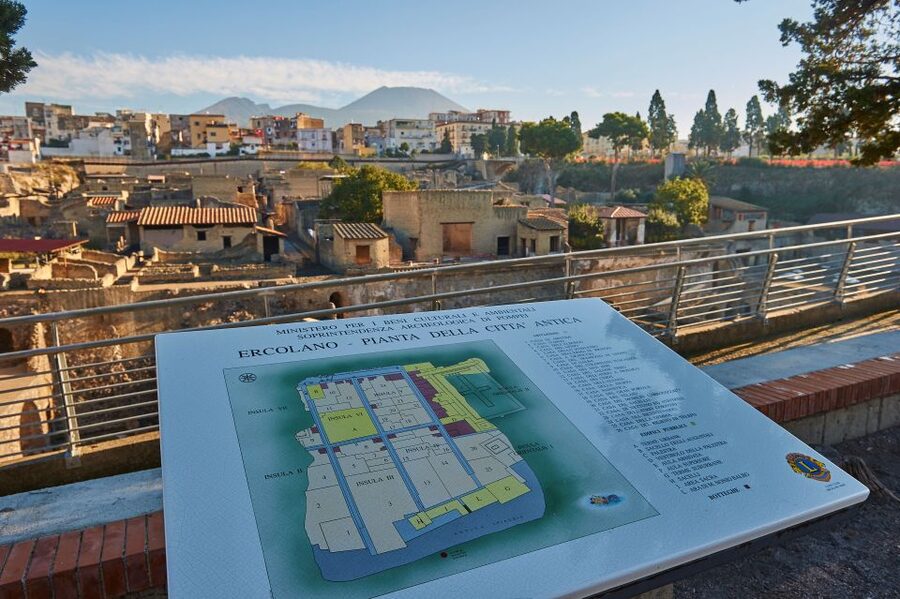
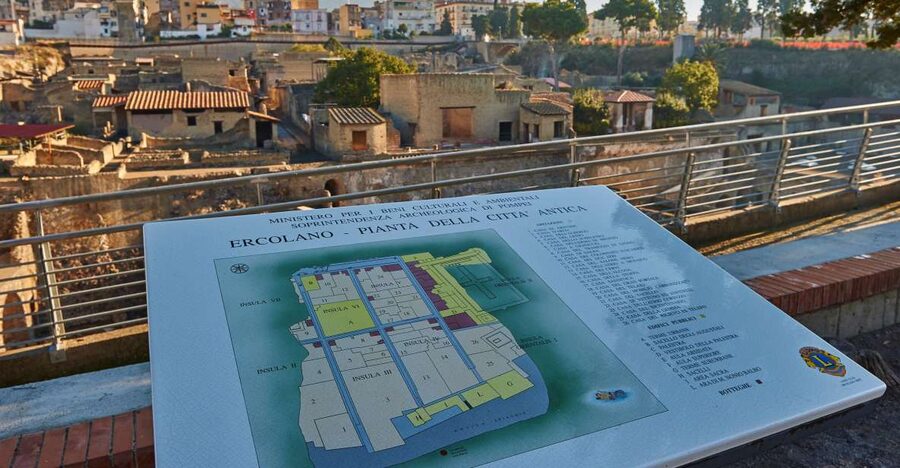
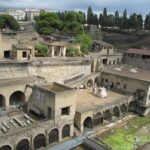
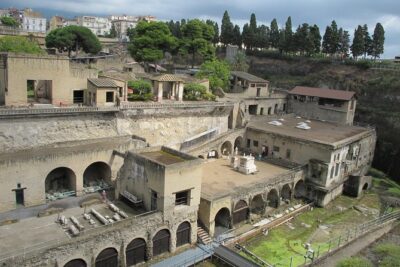
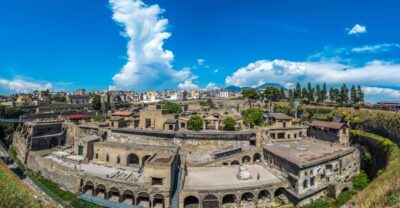
Then you get a useful orientation: you’ll have a chance to look at the town from above before you head down into the main archaeological walk. That viewpoint helps you understand how the town sits in relation to the coastline and the slope—so later, when you’re walking through former streets, it feels less like wandering and more like following a town plan.
Once you start, the guided portion is about one hour. The pace is set to show you multiple “headline” parts without turning it into an all-day marathon. Headsets make this smoother, but if you notice your audio cutting out, keep close to the guide and don’t be afraid to adjust so you can catch the next explanation.
The Roman streets: walking through a town that stayed put
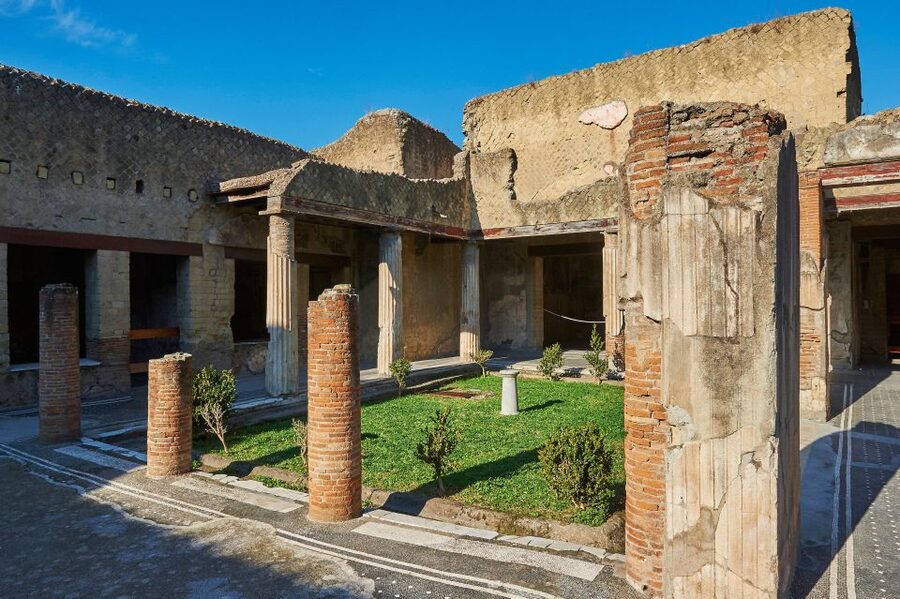
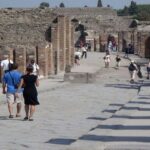
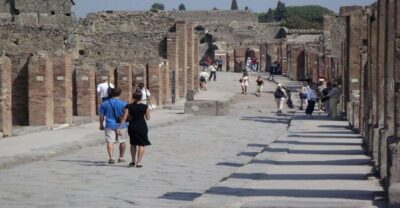
The best feeling on this tour is stepping into streets that exist in a way that’s close to how they were before the eruption. The town is preserved so well that you can walk through the layout and get a real sense of scale: where people moved, how spaces connect, and how the town functioned as a residential hub.
You’ll notice more than just walls. The site preserves original timbers in places and you can even see clay pots stored as they were at the time of the eruption. Those details matter because they turn Herculaneum from “ruins” into “evidence of daily life.”
And here’s something I’d pay attention to: the site can feel eerily empty in spirit, even though you may see plenty of visitors in the streets. That’s one of the reasons Herculaneum lands harder than some bigger monuments—it feels like you’re touring the remains of where ordinary routines happened.
Keep looking: more Sorrento trips along the same coast



Villa of the Papyri: a look at wealth you can see in the rooms
The Villa of the Papyri is a top stop for a reason. This is a large, luxurious residence, and it helps you understand what “home” meant for the wealthy in Roman coastal life. When you’re standing there, it’s not just the size that gets you—it’s the way the building reads like a statement of status.
Even on a half-day route, the guide’s explanations usually connect the architectural layout to the social function of a villa. You’re not just looking at stone; you’re being shown how space worked: where people gathered, how rooms related, and why luxury wasn’t random.
If you like Roman domestic life—how people lived, hosted, and displayed taste—this part is the payoff. If you’re mostly there for the dramatic volcanic story, you’ll still appreciate the villa because it shows what was lost when the eruption hit.
Central Thermae baths: fresco and mosaic art in a public setting
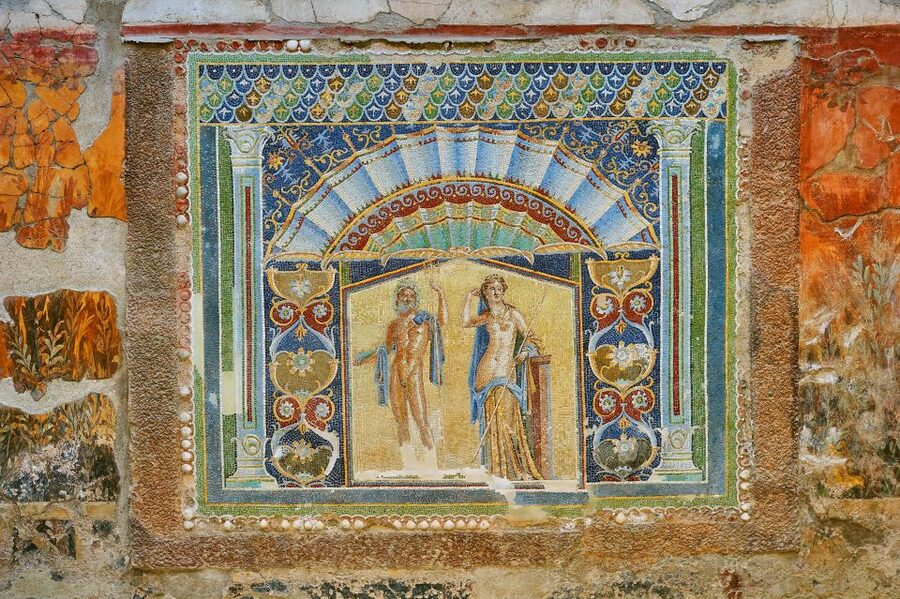
The Central Thermae are the public baths, and they’re one of the places where Herculaneum becomes more than archaeology class. The baths had art lining the walls, including decoration you can link to daily social behavior: washing, relaxing, talking, and passing time in shared spaces.
Seeing the bath area on-site does something that a photo can’t: it connects decoration to function. You’re not staring at art in isolation—you’re imagining people moving through spaces built for routine. That makes the descriptions feel practical, not academic.
A good guide also helps you spot what’s preserved and why it survived. With Herculaneum, the volcanic covering protected many surfaces in a way that’s rare, so details like wall art are more than just “nice to see.” They become evidence that Roman public culture was visual, not plain.
Shops, gymnasium, and everyday-town details
A big advantage of Herculaneum over some ruin sites is that it’s grounded in residential life. The half-day tour typically includes time for more “everyday” components like shops and a gymnasium, not just the biggest showpiece buildings.
This is where you start noticing patterns: the town isn’t arranged like a single monument. It’s stitched together like a real place where people worked, trained, shopped, and lived. If you’ve ever wished you could walk through a Roman town instead of only seeing temples or arenas, this is the kind of route that gives you that feeling.
Also, the streets and building preservation help you read the town like a map. Even with a limited time, you begin to recognize how areas relate. That’s a key part of the value here: the guide keeps you from getting lost in the details.
The skeletons and the eruption story: what the site communicates
There are skeletons that remain in Herculaneum, and this is the portion of the visit that can feel heavy fast. The tour frames them with the belief that many residents managed to flee, which is one reason the story doesn’t only become a list of deaths. It becomes a study in timing, escape, and the brutal unpredictability of disaster.
What I recommend is letting the guide set the scene before you look too hard. The explanations put the remains into context, and that makes the experience less shocking in a chaotic way and more meaningful in a reflective way.
And don’t rush past the evidence. The site is preserved well enough that the arrangement of spaces gives you a way to picture where movement stopped. You don’t need to make it dramatic in your own head. The place does that for you.
Timing inside the 4 hours: how to not feel rushed
This is a 4-hour tour from pickup to your return window, so the planning is “cover the essentials, don’t overextend.” The guided portion in Herculaneum is around one hour, then you get some time to wander on your own near the end.
That independent time is helpful, but it can feel short. One guest reported about half an hour for free exploration and wished it were longer. If you’re the kind of visitor who likes to linger over mosaic fragments, read every label the site might provide, or take slow photos, accept that you’re here for a “best route” not a slow museum stroll.
My tip: when you get that short free period, pick one or two areas you most want to return to—like the bath area or the villa—and don’t try to cover everything. With volcanic sites, it’s easy to feel like you saw a lot, but the value comes from one or two spots you truly understand.
Also, plan for heat. At least one review mentioned it was very hot. Herculaneum is outside and partly sloped, so wear comfortable shoes, bring water if you can, and assume you’ll spend time in sun.
Guides in English: Eugene, Toni, Cynthia, Dana, and the difference they make
The tour’s quality rises and falls with the guide. The English guides here get praised for clarity and for answering questions, with several names coming up: Eugene, Toni, Cynthia, and Dana. If you get one of these guides, you’re likely to feel like the site is being explained through real connections to Roman daily life.
Some guests also flagged headset tech glitches—audio can lose connection periodically. It’s not a reason to skip the tour, but it is a reason to stay alert. Keep your headset on, but also keep your attention on the guide’s body language and where they’re leading you next.
In a half-day format, a strong guide matters even more. They decide what you see, the order you learn it, and how the story ties together from the villa to the baths to the streets.
Price and value: $71 for a focused Roman town experience
At $71 per person, this isn’t the cheapest way to reach Herculaneum. But it does include the big ticket items that make a day trip easier: bus transport, an English-speaking guide, and entrance access to the site.
Here’s how I’d judge value in plain terms. You’re paying for:
- not having to manage the logistics of getting there on your own
- a guided route that hits major highlights in the time you have
- access to a preserved Roman town that’s hard to replicate with self-guided wandering alone
If you’re traveling with people who like structure—or you simply want to avoid turning your morning into a transport puzzle—this price starts to make sense. If you’re the DIY type who loves long independent wandering and you already have a good plan for getting to Herculaneum, you might find cheaper options. But you’d also lose some of the “why this matters” explanations that make Herculaneum stick.
Who should book this half-day tour from Sorrento?
This tour is a strong match if you:
- want a high-impact Roman site in a limited time window
- enjoy guided storytelling and practical explanations
- like the residential side of Roman life as much as the big monuments
It’s also a good fit if you’re trying to avoid regional transit hassles and just want the smooth day trip package.
If you’re planning a very slow, very deep archaeology trip, you may want more time in the site than this half-day offers. Still, as a first visit, it gives you an efficient orientation and the key highlights without burying you in information.
Should you book? My honest call
I’d book this if you want Herculaneum to feel real—streets you can walk, the Villa of the Papyri you can actually locate and understand, and the bath art you can picture as part of daily life. The guided structure and the English headsets make the experience easy to follow, especially when your time is tight.
Just go in with the right mindset: this is a focused route, not a full-day slow exploration. If you can handle that—and you show up prepared for sun and a fast pace—you’ll leave feeling like you really saw one of Italy’s most haunting, well-preserved Roman towns.
FAQ
How long is the Half-Day Tour of Herculaneum from Sorrento?
The tour lasts about 4 hours.
What time and where do I meet in Sorrento?
You meet at 08:10 at the Achille Lauro parking area, opposite Europa palace hotel.
Is the tour guided in English?
Yes. You’ll have a live English-speaking guide.
Do I need to pay an entrance fee for Herculaneum?
Yes, there is an entrance fee at the site. The general admission is €11, and children under 18 and adults over 65 are free.
Is lunch included?
No lunch is included.
Are headsets provided?
Yes. You’ll be given headsets by the guides on the coach during the journey.
What’s the starting price for this tour?
The price is listed as $71 per person.
More Tours in Sorrento




More Tour Reviews in Sorrento
- Sorrento Farm and Food Experience including Olive Oil, Limoncello, Wine tasting
★ 5.0 · 2,524 reviews



More of Herculaneum



Just off the boat: newer Sorrento reviews


Herculaneum from Sorrento, compared.
 ★ 4.5Guided Day Tour of Pompeii and Herculaneum with Light LunchFrom $185311 reviews
 ★ 4.6Pompeii & Herculaneum Tour with Skip-the-LineFrom $168125 reviews
 ★ 4.4Herculaneum Skip-the-Line Tour by Express TrainFrom $8997 reviews
 ★ 5.0Pompeii, Herculaneum and Winery on Vesuvius with an ArchaeologistFrom $86189 reviews
 ★ 4.5Pompeii & Herculaneum – Skip the line from SorrentoFrom $18644 reviews
 ★ 4.5Pompeii and Herculaneum Small Group Excursion from SorrentoFrom $13941 reviews
★ 4.6Pompeii and Herculaneum small group excursion from SorrentoFrom $16836 reviews
★ 4.5Pompeii and Herculaneum Small Group Excursion from SorrentoFrom $13941 reviews
★ 4.6Pompeii and Herculaneum small group excursion from SorrentoFrom $16836 reviews
 ★ 4.0Pompeii and Herculaneum FD Tour from SorrentoFrom $15135 reviews
Browse the lists this tour appears in