
Review · POMPEII FROM SORRENTO
Pompeii and Herculaneum from Sorrento or Naples
Pompeii hits fast.
What makes this trip work is the mix of two classic sites in one day and the fact that you move through them with guided walking time instead of just being dropped at the gates. I also like the air-conditioned minivan and the early departure rhythm, which helps you see the Bay of Naples and Mount Vesuvius from the road before the crowds fully settle in. One consideration: the big sites are still big. You’ll be walking for hours, and the entrance tickets are not included.
This is also not a “sit and watch” day. Pompeii is a sprawling open-air park, and Herculaneum is compact but detailed—so you’ll want comfy shoes and a steady pace. The tour caps at small numbers (up to 8 in the smaller-group setup), and the day runs like a well-timed outing rather than a slow sightseeing bus loop.
In This Review
- Key highlights worth your attention
- Why Pompeii + Herculaneum works so well from Sorrento or Naples
- Price and what you really pay (including entrance fees)
- The day’s rhythm: 8:00 am start and a full, structured visit
- Pompeii Archaeological Park: the best way to see a whole frozen city in 3 hours
- Herculaneum: smaller site, stronger preservation, and the villas you can picture
- Guides, small-group setups, and why the “how” matters
- Getting ready: what to bring for volcanic cities and lots of stone
- Who this tour suits best (and who may want a different plan)
- Should you book this Pompeii and Herculaneum tour?
- FAQ
- How long is the Pompeii and Herculaneum tour?
- What time does the tour start?
- Where does the tour depart from?
- Are entrance tickets included in the price?
- Is the tour in English?
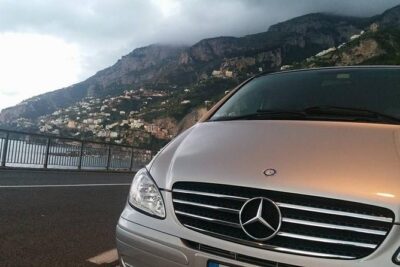
- What vehicle will we use?
- How large are the groups?
- Are children allowed, and do they pay?
- What if the minimum number of travelers isn’t met?
- Can I cancel for a full refund?
Key highlights worth your attention
- Two guided walks, with time to actually look: about 3 hours in Pompeii and about 2 hours in Herculaneum
- Small groups when it matters: max 8 with a minivan setup, or up to 19 with guide + driver for larger groups
- Air-conditioned transportation from Sorrento or Naples, plus Bay of Naples and Vesuvius viewpoints
- Mobile ticket and practical time-saving so you can get to the ruins faster
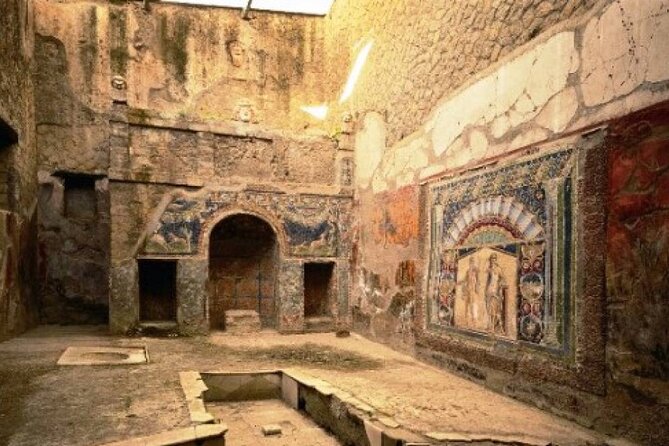
- Better preservation at Herculaneum: patrician villas and striking details like wood and ropes on display
Other ways to walk into Pompeii
- Sorrento: Skip-the-Line Pompeii Express Tour by Train★ 4.8 · 2,038 reviews
- Priority Access Pompeii & Mt. Vesuvius Full day from Sorrento★ 4.5 · 1,376 reviews
- Pompeii Express Guided Tour by Train from Sorrento★ 4.5 · 770 reviews
- Sorrento: Pompeii Half-Day Guided Tour with Priority Access★ 4.7 · 739 reviews
Why Pompeii + Herculaneum works so well from Sorrento or Naples
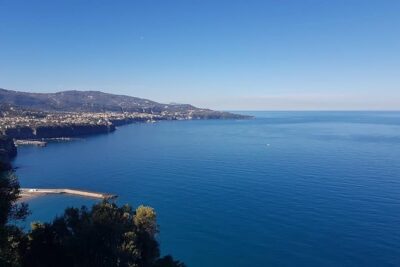
If you’re staying on the Sorrento side, a day trip like this can feel like a cheat code—organized transport, an early start, and someone helping you get oriented fast. You’ll head out from either Sorrento or Naples (depending on your departure choice), and the ride includes scenic moments over the Bay of Naples and toward Mount Vesuvius.
The real win is that this tour pairs Pompeii’s scale with Herculaneum’s detail. Pompeii is the bigger name, and it’s dramatic: an entire city frozen by the eruption and later uncovered. Herculaneum is smaller, and the preservation is the star—especially in the patrician villas, where the condition of materials helps you picture daily life more clearly than you’d expect from ruins.
A small-group or guided structure matters because both sites can overwhelm you if you go in “wandering mode.” You’ll still be free to look around, but you’ll also get a framework for what you’re seeing: streets and buildings in Pompeii, then the quieter shock of Herculaneum’s intact spaces.
Price and what you really pay (including entrance fees)
The tour price is $188.90 per person, and it’s timed to run as a full 8-hour excursion. What’s included is more than just transportation: you get guided walking time inside both sites, plus all the basic operating costs like taxes, parking, tolls, and gasoline.
But there’s a crucial budget detail: Pompeii entrance fee is €19 per person and Herculaneum entrance fee is €16 per person, and those are not included in the tour price. So you’ll want to add about €35 total for admissions when planning your final spend.
How this becomes good value: you’re not just paying for a bus ride. You’re paying for a timed route (Pompeii first, then Herculaneum), a guide-led walk in each place, and smaller-group attention depending on your group size. That’s especially useful at Pompeii, where a self-guided visit can eat up time while you figure out what matters most.
If you already know you want both sites and you don’t want to play ticket-and-timing Tetris on the day, this price often makes sense. If you’re on an ultra-tight budget and enjoy planning every step yourself, then you might compare alternatives that only cover one site.
The day’s rhythm: 8:00 am start and a full, structured visit
This tour starts at 8:00 am and ends back at the meeting point. That early start is more than a scheduling detail. It helps you get into Pompeii while the day is still cooler and before you spend your time in the slowest lines.
You’ll have two main blocks:
- Pompeii Archaeological Park: about 3 hours
- Herculaneum: about 2 hours
Between the stops, you’ll travel by air-conditioned vehicle, and you’ll get those Mount Vesuvius / Bay of Naples views en route. The total time on the ground is enough to see highlights, but not so long that you’ll feel like you’re trapped inside museum walls all day.
One practical note: the tour doesn’t include food and drinks. Plan around that. If you wait until you’re starving, you’ll lose your good mood—and the ruins won’t care. A simple strategy is to bring water and plan for a snack stop when you can. The tour structure doesn’t list meals, so you’ll want your own plan.
Pompeii Archaeological Park: the best way to see a whole frozen city in 3 hours
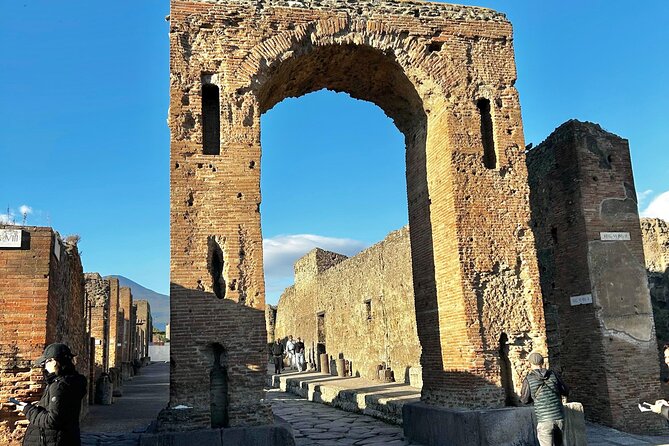
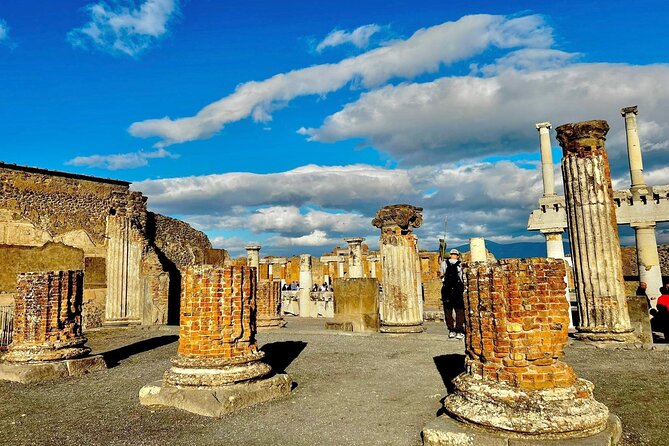
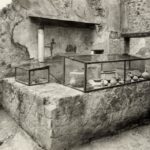
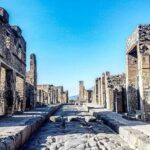
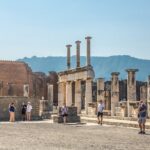
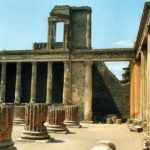
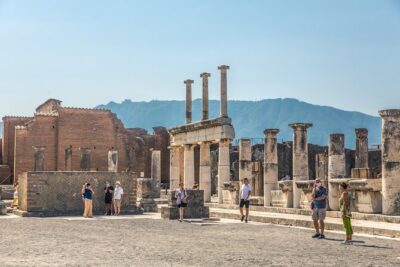
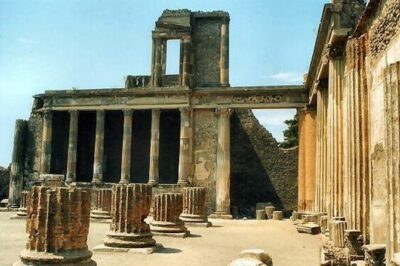
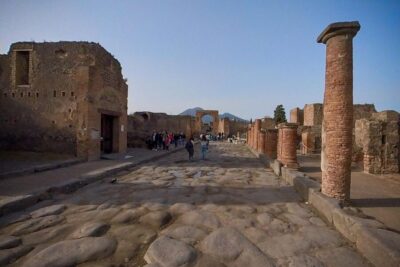
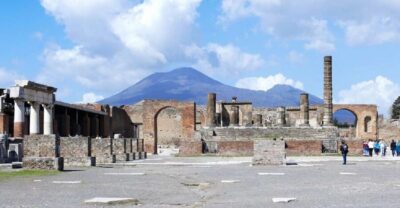
Pompeii is the big one: an open-air archaeological park that feels like walking through a city preserved in ash. You’ll spend about 3 hours here, which is long enough to connect with the layout and start to notice everyday details.
The key thing I like about guided time at Pompeii is that it can turn a confusing grid of streets into something readable. You get context for what you’re seeing—Roman daily life before the eruption of Mount Vesuvius in 79 AD—so the buildings aren’t just “cool old walls.” They become places that had a function.
You can also think of Pompeii as a set of contrasts:
- It looks like a city, not like a traditional museum.
- It’s visually dramatic, with ruins that show you scale fast.
- But it also requires patience, because the site is extensive.
Possible drawback: three hours can still feel like a sprint if you’re the type who wants to stop at every corner. Pompeii can ask a lot of your feet. If you tend to pause often for photos and reading, you might need to choose a few areas to focus on.
Still, the format helps. Instead of drifting around and losing time, you’ll have a route plan through the most meaningful parts, and you can slow down where it matters to you.
The quieter dig: more Herculaneum visits



Herculaneum: smaller site, stronger preservation, and the villas you can picture
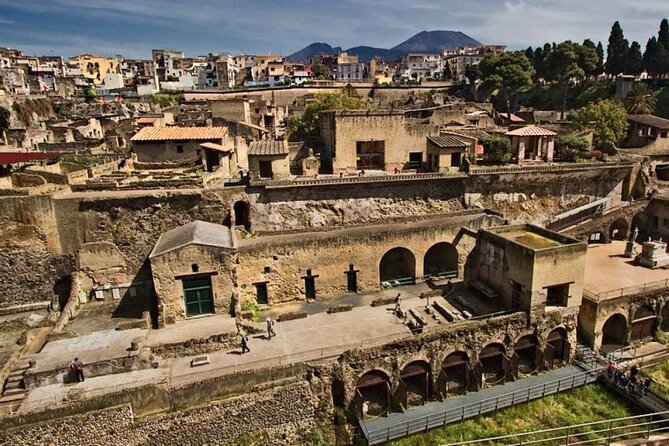
Then you’ll head to Herculaneum, which is often described as Pompeii’s “smaller sister.” That’s accurate, but the difference goes beyond size.
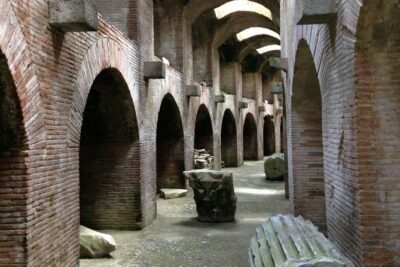
Here, you get about 2 hours, and the emphasis is on places with unusually intact features. The standout is the patrician villas—homes tied to wealthier Roman life—and the kind of preservation that can feel almost unreal. You’ll see details like brick work and mosaics, plus preserved elements such as wood and ropes displayed from the city’s condition after the eruption.
Why this feels so different: Herculaneum is all about texture. The materials help you build mental pictures of real rooms and real objects, rather than just imagining what a building might have been. It’s the kind of site where you’ll look closely and suddenly understand the scale of what was lost.
The other benefit is pacing. After Pompeii, Herculaneum can feel more manageable because it’s less sprawling. You get to slow down a bit and appreciate the craft and craftsmanship details. If Pompeii is where you get the shock of scale, Herculaneum is where you get the shock of how much is still there.
Guides, small-group setups, and why the “how” matters
The tour uses English-speaking staff, but the exact setup changes with group size:
- For up to max 8 people, you’ll have a minivan with an English-speaking driver
- For groups 9–19, you get a minibus, an English-speaking guide, and a driver for the excursion
In plain terms, smaller groups usually mean you ask more questions and get more attention. Larger groups can still be enjoyable, but you’ll likely move a bit more tightly.
Either way, the goal is the same: get you into the ruins with less friction and better context. The tour uses a mobile ticket, and the description promises time-saving around long lines. While your exact waiting time can vary depending on day and site operations, the overall structure is clearly built to help you spend your minutes walking, not hovering.
You’ll also be benefiting from a guide who can connect what you’re seeing to daily life—how people lived, what their spaces looked like, and what the eruption changed.
One name note from the provider’s feedback: guides such as Serena and Chiara appear in published guest comments for making days smooth and memorable. Even if your exact guide can be different, it’s a good sign that staff are a major part of the experience quality.
Getting ready: what to bring for volcanic cities and lots of stone
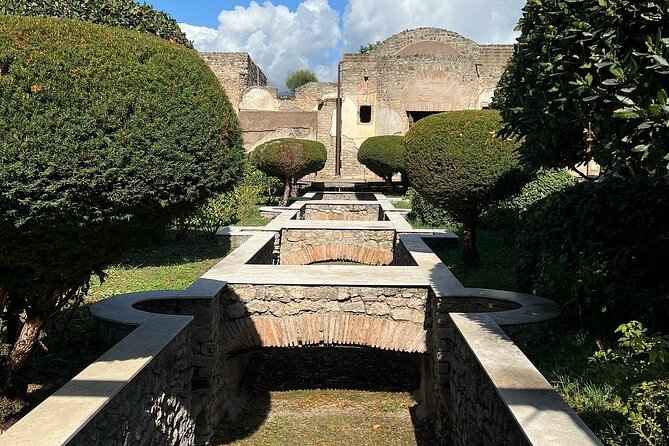
Both sites are outdoors. That means weather, sun, and walking surfaces matter more than you think. Even when the tour is well paced, Pompeii and Herculaneum still require your body.
Here’s what I’d pack and wear:
- Comfortable walking shoes (think support over style)
- Water (the tour doesn’t include drinks)
- Sunscreen and a hat since you’ll be out for hours
- A light layer if mornings feel cool, especially after an 8:00 am start
- A small bag for your essentials so you’re not juggling things while you walk
Also, prepare your expectations: these are ruins on a scale that can feel huge. If you try to photograph everything, you’ll run out of energy before your brain catches up.
If you do one smart thing, do this: pick a few “must-see” themes for each site—like mosaics in Herculaneum and street-level city life in Pompeii—and let those guide how you look.
Who this tour suits best (and who may want a different plan)
This works especially well if you:
- Want both Pompeii and Herculaneum without planning logistics
- Prefer a guided walking structure over self-guided drifting
- Like the idea of traveling from Sorrento or Naples with transport handled
- Appreciate smaller group attention (max 8 in one setup)
It may not be the best fit if you:
- Hate walking and want a mostly seated experience
- Plan to spend hours reading every sign and tracing every side street
- Want a day with no additional paid admissions (because entrances are extra)
If you’re traveling with kids, it’s a plus that children under 18 enter for free with valid ID. Just remember that a free ticket won’t make the walking easier—plan around breaks and energy.
Should you book this Pompeii and Herculaneum tour?
I’d book it if you want a well-timed day that hits both sites and keeps you from getting lost in Pompeii’s scale. The combination of guided time in both locations and air-conditioned transport makes it a practical choice, especially if you’re starting from Sorrento or Naples and want the day to feel organized rather than improvised.
I wouldn’t book it blindly if you’re very sensitive to long walks or you’re trying to stick to a strict all-in budget, because the Pompeii and Herculaneum entrance fees are extra. But for most people, the value is in the guided route and the fact that you’ll see the differences between the two cities rather than just ticking off names.
If you’re the type who wants to understand what you’re seeing—streets, villas, daily Roman life—this tour gives you a structure that makes the ruins much easier to read.
FAQ
How long is the Pompeii and Herculaneum tour?
The tour lasts about 8 hours total, with around 3 hours at Pompeii and around 2 hours at Herculaneum.
What time does the tour start?
The start time is 8:00 am.
Where does the tour depart from?
It departs from either Sorrento or Naples, depending on the option you choose.
Are entrance tickets included in the price?
No. Pompeii entrance is €19 per person and Herculaneum entrance is €16 per person.
Is the tour in English?
Yes. You’ll have an English-speaking driver for smaller groups (up to max 8) and an English-speaking guide for larger groups (9–19).
What vehicle will we use?
For up to 8 people, it’s a minivan. For groups of 9–19, it’s a minibus. Both include driver service for the excursion.
How large are the groups?
The experience caps at 19 travelers. The tour uses a smaller-group setup for up to 8 people and a larger-group setup from 9 to 19.
Are children allowed, and do they pay?
Yes. Children under 18 enter for free with a valid form of ID.
What if the minimum number of travelers isn’t met?
The tour requires a minimum of 6 people per tour. If it doesn’t meet the minimum after confirmation, you may be offered an alternative or a full refund.
Can I cancel for a full refund?
Yes. You can cancel up to 24 hours in advance for a full refund.
More of Naples, One Stop Away





More of Herculaneum

Back to Pompeii


Just off the boat: newer Sorrento reviews


Pompeii from Sorrento, compared.
 ★ 4.8Skip-the-Line Pompeii Express Tour by TrainFrom $632,038 reviews
 ★ 4.5Priority Access Pompeii & Mt. Vesuvius Full day from SorrentoFrom $1391,376 reviews
 ★ 4.5Pompeii Express Guided Tour by Train from SorrentoFrom $65770 reviews
 ★ 4.7Pompeii Half-Day Guided Tour with Priority AccessFrom $84739 reviews
 ★ 4.5Skip-the-Line Pompeii Guided Tour from SorrentoFrom $90722 reviews
 ★ 4.0Pompeii Ruins Half-Day Tour from Sorrento with GuideFrom $97714 reviews
 ★ 4.8Pompeii and Vesuvius Guided Tour with LunchFrom $130683 reviews
 ★ 4.3Day Tour to Pompeii Ruins and Mount VesuviusFrom $130489 reviews
Browse the lists this tour appears in