
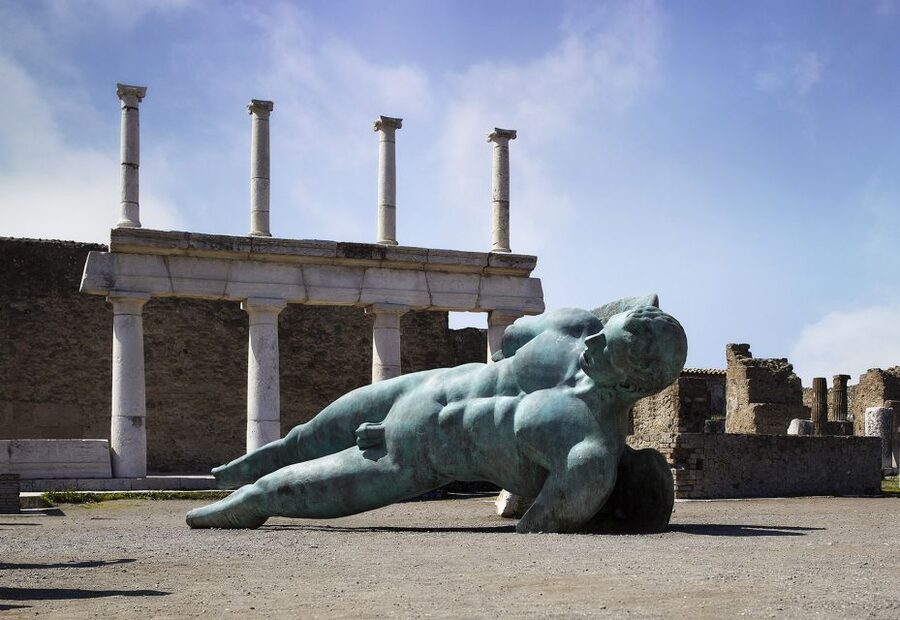
Review · POMPEII FROM SORRENTO
From Sorrento: Pompeii Skip-the-Line Tour
Pompeii feels shockingly close. A guided skip-the-line visit from Sorrento is one of the easier ways to get your bearings at this huge site, and the best guides (like Pasquale, Maria, or Mariana) help you read the city as real neighborhoods, not just ruins. I especially love the way you walk original Roman streets and see the details that still look painted and intact, from shops to villas and baths with frescoes and mosaics. The main consideration: this is a 4-hour format, so you may not reach every major highlight, such as the amphitheatre or the Garden of the Fugitive.
Logistics are mostly smooth because pickup and drop-off are included from your hotel or a dedicated meeting point. Still, a small timing bump can happen, and the return drop-off might be on a nearby street instead of exactly at your hotel, so it helps to know where you’ll be walking back from.
In This Review
- Key things that make this Pompeii tour work
- Pompeii on a 4-hour clock from Sorrento
- Skip-the-line entry and the guide’s job: making sense of the ruins
- Streets and ancient storefronts: seeing Pompeii as neighborhoods
- Villas and the Roman art of domestic life
- Baths, frescoes, and mosaics: the stops you’ll slow down for
- The Forum: why the civic center gives Pompeii its meaning
- What you might miss on a 4-hour format
- Pickup, timing, and the return drop-off reality check
- Price and value: is $94 a fair deal?
- What to bring for Pompeii (and what to wear)
- Mobility notes: who should choose a different Pompeii plan
- Who this Pompeii skip-the-line tour suits best
- Should you book this Pompeii skip-the-line tour from Sorrento?
- FAQ
- How long is the Pompeii tour from Sorrento?
- Is hotel pickup and drop-off included?
- What’s included in the price?
- Is food included?
- What language is the tour guide speaking?
- Is the tour wheelchair accessible?
- Question goes here
Key things that make this Pompeii tour work
- Skip-the-line entry helps you spend more time inside and less time queuing at the gate.
- A live English guide turns “ruins” into daily life—shops, homes, baths, and civic spaces.
- Hotel or meeting point pickup and drop-off removes the hardest part of getting there.
- The tour centers on core areas like the Forum, plus streets, villas, and bath complexes.
- Expect frescoes and mosaics to be major visual stops, not quick photo breaks.
- On a short tour, you may trade breadth for depth, so not every distant highlight is guaranteed.
Other ways to walk into Pompeii
- Sorrento: Skip-the-Line Pompeii Express Tour by Train★ 4.8 · 2,038 reviews
- Priority Access Pompeii & Mt. Vesuvius Full day from Sorrento★ 4.5 · 1,376 reviews
- Pompeii Express Guided Tour by Train from Sorrento★ 4.5 · 770 reviews
- Sorrento: Pompeii Half-Day Guided Tour with Priority Access★ 4.7 · 739 reviews
Pompeii on a 4-hour clock from Sorrento
Pompeii is one of those places where your brain keeps saying, wait, this is real. The city was buried by the eruption of Mount Vesuvius in 79 A.D., and excavation has been ongoing since the 18th century, so it feels both ancient and still in progress.
This tour is designed for a practical goal: see the essentials without turning your day into a whole travel marathon. Starting from Sorrento with pickup and a set 4-hour window gives you structure, which matters at Pompeii where it’s easy to wander and miss the meaning of what you’re seeing.
Skip-the-line entry and the guide’s job: making sense of the ruins
The “skip-the-line” part isn’t just marketing. Pompeii gets busy, and the gate can swallow time fast. By using prearranged access, you can focus on what actually improves your visit: a guide who explains what you’re looking at and why it mattered.
This matters because Pompeii doesn’t come with labels that do the work for you. A professional local guide helps you connect the dots—how streets flowed, where people bought food, where they bathed, and what public spaces were for. In the best cases, the guide’s storytelling clicks into place the moment you step onto the first original street segment.
Guides can vary by date, and that shows in the reviews. Pasquale stands out for being both knowledgeable and personable, while Maria and Mariana are praised for keeping facts clear and understandable in English. If you care about getting the most out of your time, a strong guide is the difference between looking at fragments and understanding a city.
Streets and ancient storefronts: seeing Pompeii as neighborhoods
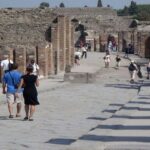
Your walk through Pompeii’s ancient layout is the heart of the experience. You’ll go past original Roman streets and encounter areas that feel like they were designed for everyday movement—shops close to foot traffic, doorways and thresholds still catching your eye, and building fronts that show how people lived and worked side by side.
Think of this part as your orientation phase. Once you understand the street rhythm—how narrow lanes direct the flow, how businesses sit along the path, and how residences sit behind street-facing spaces—everything else becomes easier to interpret. Without that setup, frescoed walls and mosaics can start feeling like isolated artworks instead of part of a working community.
Villas and the Roman art of domestic life
After the streets and storefronts, the tour shifts to residential Pompeii: villas and homes where the city’s wealth and everyday habits show up in design choices. In a short tour, you won’t get to every house in the way a full-day plan might, but you can still see what makes Pompeii startling: spaces that preserve atmosphere.
This is where you’ll notice how Romans used buildings for both comfort and status. Even in surviving fragments, you can often sense the hierarchy of spaces—public-facing areas versus more private zones. The guide’s explanations help you see those cues instead of just walking past rooms and wondering what you’re missing.
If your interest is “what would a normal day feel like,” residential stops are the most satisfying. You’re not only looking at catastrophe; you’re seeing daily routines reflected in architecture.
Keep looking: more Sorrento trips along the same coast




Baths, frescoes, and mosaics: the stops you’ll slow down for
Pompeii’s baths are famous for a reason. The tour includes bath areas with preserved frescoes and mosaics, and these are the moments that make people sit with their phones away from their faces for a second.
Here’s why this matters: visual preservation at Pompeii isn’t just decorative. Frescoes and mosaics can tell you about taste, social identity, and how people wanted their surroundings to feel. The detail level is the whole point. When a mosaic floor or wall painting is still recognizable, it turns the site from “historical theme park” into something closer to an archaeological time capsule.
On a shorter tour, your time is limited, so your best strategy is simple: pick one or two fresco or mosaic scenes to really look at. Let the guide narrate, then pause for your own scan. If you try to take everything in at once, you’ll likely rush through the most memorable parts.
The Forum: why the civic center gives Pompeii its meaning
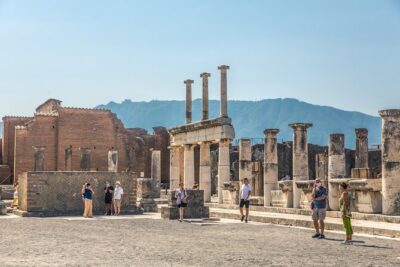
The tour also targets the Forum, the center of Roman civic life. This is where Pompeii starts feeling like a functioning city rather than a collection of houses and shops.
You’re essentially moving from private and commercial life into public life: spaces designed for community, official business, and social interaction. Even if your interests are more modern and less academic, the Forum helps you grasp how the city organized itself—what was public, what was important, and where people would gather.
If you tend to get lost in ruins, this stop is a relief. It gives you a clear structure for what you’re seeing: daily life flows into public life, and Pompeii’s layout makes sense.
What you might miss on a 4-hour format
A quick heads-up based on common experiences: with only 4 hours, you may not cover every top-tier attraction. Some people expected to see the amphitheatre or the Garden of the Fugitive, and those stops may not fit into the route depending on pace and the day’s flow.
So if your personal “must-sees” include those specific areas, you might consider a longer option in general. But if your goal is to understand how Pompeii worked day to day—streets, shops, villas, baths, and the Forum—this 4-hour plan can be a solid sweet spot. It’s enough time for real context without requiring an entire day commitment.
Pickup, timing, and the return drop-off reality check
Pompeii tours from Sorrento depend on timing and access. Pickup is included via your hotel or a dedicated meeting place, and you get drop-off too, which is a huge convenience.
Still, here’s the practical bit: buses can run a little late. One review mentioned a delayed bus but noted it wasn’t a major issue. Another mentioned the return driver dropped the person up the street rather than at the exact hotel entrance, which can catch you off guard if you’re expecting a perfect handoff.
My advice is simple:
- Know your pickup point clearly before you leave.
- On return, plan to walk the last stretch if needed.
- Wear comfortable shoes so you can handle a short extra walk without stress.
Also, double-check where the closest pickup point is if your accommodation is tucked into a small street. The tour provider does their best, but in tight areas the bus can’t always get right up to the door.
Price and value: is $94 a fair deal?
At $94 per person for a 4-hour guided visit, the value largely comes from three things that are included: the professional local guide, the entrance fee, and the pickup/drop-off from Sorrento.
You’re paying for organization as much as you’re paying for history. Pompeii isn’t the kind of place where a casual self-guided stroll automatically becomes meaningful. The guide helps you turn your walk into an understanding of the city’s layout, daily life, and civic center. That’s what makes the time feel “earned.”
Entrance fees also matter. Even if you could buy admission on your own, you’d still have to solve transportation and timing. With this package, you hand that work over and focus on the site.
If you’re someone who loves ruins but also wants clarity—what you’re seeing and why—you’re likely to feel the price is fair.
What to bring for Pompeii (and what to wear)
Pompeii is a walking tour through uneven archaeological grounds, so footwear matters. Bring comfortable shoes first. You’ll also want water and sun protection, because even when you find shade, you can still be exposed for long stretches.
Other essentials from the tour guidance:
- Passport or ID card (there’s a note about possible free or reduced admission where applicable)
- Sun hat
- Camera (if you care about photos, you’ll want it)
- Plan for direct sunlight and take breaks as the guide stops for key points
If you’re visiting in warm weather, treat this like a day with real outdoors time, not museum time.
Mobility notes: who should choose a different Pompeii plan
This tour isn’t suitable for people with mobility impairments. There’s also limited wheelchair and buggy access listed, so if you need smooth, step-free routes, this may not match your requirements.
If mobility is a factor, it’s worth researching other Pompeii options designed for accessibility, or asking detailed questions before you commit. Don’t assume a “classic walking tour” will adapt well to your needs.
Who this Pompeii skip-the-line tour suits best
This works especially well if you:
- Want a guided orientation to Pompeii rather than a long self-guided day
- Like your history with practical explanations—streets, shops, baths, and civic life
- Prefer not to wrestle with transport from Sorrento
- Are happy focusing on core highlights like the Forum and major preserved areas
If you’re a deep Pompeii specialist chasing every site and outlying sector, you might feel the 4-hour structure is tight. But if you want a coherent experience that doesn’t swallow your whole day, this is a reasonable format.
Should you book this Pompeii skip-the-line tour from Sorrento?
If you’re trying to make the most of a Sorrento visit, I’d book this plan when your priority is clarity and the big preserved areas: streets, homes, baths with frescoes and mosaics, and the Forum. The skip-the-line access plus guide and entrance fee included makes it easier to feel confident you’re using your time well.
I’d think twice (or upgrade) if your personal must-sees are the amphitheatre and the Garden of the Fugitive, since the short schedule can leave gaps. And if you’re sensitive to timing changes or need exact drop-off at your hotel door, plan for a short walk on return.
FAQ
How long is the Pompeii tour from Sorrento?
The tour lasts 4 hours.
Is hotel pickup and drop-off included?
Yes. Pickup and drop-off are included from your hotel or a dedicated meeting point.
What’s included in the price?
You get a professional local guide, hotel or dedicated meeting point pickup/drop-off, and the entrance fee to Pompeii.
Is food included?
No. Food and drinks are not included.
What language is the tour guide speaking?
The live tour guide provides the tour in English.
Is the tour wheelchair accessible?
It is not suitable for people with mobility impairments, and there is limited wheelchair and buggy access.
Question goes here
Answer paragraph
More Tours in Sorrento





More Tour Reviews in Sorrento
- Sorrento Farm and Food Experience including Olive Oil, Limoncello, Wine tasting
★ 5.0 · 2,524 reviews



Back to Pompeii




Just off the boat: newer Sorrento reviews





Pompeii from Sorrento, compared.
 ★ 4.8Skip-the-Line Pompeii Express Tour by TrainFrom $632,038 reviews
 ★ 4.5Priority Access Pompeii & Mt. Vesuvius Full day from SorrentoFrom $1391,376 reviews
 ★ 4.5Pompeii Express Guided Tour by Train from SorrentoFrom $65770 reviews
 ★ 4.7Pompeii Half-Day Guided Tour with Priority AccessFrom $84739 reviews
 ★ 4.5Skip-the-Line Pompeii Guided Tour from SorrentoFrom $90722 reviews
 ★ 4.0Pompeii Ruins Half-Day Tour from Sorrento with GuideFrom $97714 reviews
 ★ 4.8Pompeii and Vesuvius Guided Tour with LunchFrom $130683 reviews
 ★ 4.3Day Tour to Pompeii Ruins and Mount VesuviusFrom $130489 reviews
Browse the lists this tour appears in