
Lemons and pasta take over Sorrento tonight. This chef-led class starts with a Prosecco toast and bruschetta, then gets you cooking step by step—so you’re not just watching. I love the hands-on instruction that turns a menu into real skills, and I also love that the lesson ends with a proper sit-down meal (plus wine) made from what you cooked.
The main catch is time: at roughly 3 hours, it’s focused and fun, not a slow, day-long training session.
In This Review
- Key Highlights You’ll Care About
- Sorrento Lemons: Why This Class Feels Like a Place, Not Just a Recipe
- Via dell’Accademia at 6:30 pm: The Easy Start That Sets the Mood
- Cooking with a Chef in English: What “Choose Your Dishes” Really Means
- Starter: Eggplant Parmigiana with a Creamy, Lemon-Side Mindset
- Main Course 1: Scialatielli with Lemon and Fresh Shrimp Tartare
- Main Course 2: Local Fish Meatball with Sorrento Lemon Velouté
- Dessert: Tiramisù Golden with Edible Gold Dust
- The End Meal: Wines with Your Table and a Bottle-Per-Two Setup
- Price and Value: Is $224.76 Worth It?
- Who Should Book This Sorrento Cooking Class?
- Should You Book L’Accademia Sorrento, Land of Lemons?
- FAQ
- How long is the Chef Cooking Class Sorrento, Land of Lemons?
- What time does the class start?
- Where does the class meet?
- Is the class offered in English?
- How big is the group?
- Do you eat the food you cook?
- Is wine included?
- Is cancellation free?
Key Highlights You’ll Care About
- Prosecco and bruschetta to start: marinated yellow cherry tomatoes, herbs, and extra virgin olive oil set the tone.
- Cook what’s on the menu: you choose dishes for each course and learn how each one comes together.
- Sorrento lemon shows up in multiple courses: sauces feel bright without being complicated.
- Two main courses plus dessert: you finish with a full meal, not a few bites.
- Wine included with dinner: one bottle for every two guests makes it easy to linger.
Back to the kitchen with a few more classes
- Sorrento: Cook Like a Local with a Stunning Sea View★ 5.0 · 763 reviews
- Sorrento: Pasta and Tiramisu Cooking Class with Wine★ 4.8 · 597 reviews
- Hands-On Italian Cooking Class with Local Sorrento Chef★ 5.0 · 283 reviews
- Shared Cooking Class with Fresh Garden Ingredients in Sorrento★ 5.0 · 194 reviews
Sorrento Lemons: Why This Class Feels Like a Place, Not Just a Recipe
Sorrento is lemon country, and this class actually uses that fact instead of treating lemons like a garnish. You’ll see Sorrento lemons used to flavor the sauces and finish dishes with a bright, clean taste. That matters because lemon flavor in Italian cooking is rarely about shouting. It’s about balance—cutting richness, lifting tomato and herbs, and making seafood taste even more “sea.”
I also like how the class is built around classic Italian comfort food, but with Sorrento ingredients guiding the direction. The menu isn’t random: eggplant parmigiana anchors you in a familiar Italian tradition, then you get one pasta dish and one fish-based dish, and finally a tiramisù that feels like a celebratory finish.
Via dell’Accademia at 6:30 pm: The Easy Start That Sets the Mood
This experience meets at Via dell’Accademia, 6, 80067 Sorrento, starting at 6:30 pm and ending back at the same meeting point. Meeting later in the evening is smart here. It gives you daytime freedom to explore Sorrento, then you get a concentrated cooking session when the town’s dinner rhythm kicks in.
The kickoff is part food, part atmosphere. Before you cook, you toast with Prosecco and bruschetta. The bruschetta is described as marinated yellow cherry tomatoes with aromatic herbs and extra virgin olive oil. That’s a nice first lesson too: it shows how Italian flavor often begins with simple ingredients treated with care—oil, herbs, and a little time for the tomatoes to taste their best.
If you want this to feel smooth, arrive a touch early so you’re not rushing while the group settles in. Once you’re seated, ask the chef what to focus on for your own comfort level—hand skills, sauce consistency, frying rhythm, plating, whatever matters to you.
Cooking with a Chef in English: What “Choose Your Dishes” Really Means
This is offered in English, and the chef guides the whole class. The format is hands-on, and you’ll have the chance to choose dishes from the lesson’s menu for each course. That choice is more than a perk. It helps you cook what you genuinely want to eat at the end, which means you’ll actually remember the techniques.
You’ll roll up your sleeves and work through Italian cooking fundamentals: working with tomato sauce, building flavor with olive oil and herbs, and balancing acidity from lemon. The class also frames the recipes as something rooted in family tradition—passed down, refined, and shared—so it doesn’t feel like you’re memorizing a single “performance” dish.
A practical thing to know: this is a 10-person maximum group. Small groups can be a game changer for cooking classes because you get time for real questions and quicker feedback. You’re not waiting your turn while the chef only addresses the loudest person in the room.
Starter: Eggplant Parmigiana with a Creamy, Lemon-Side Mindset
Your starter option is Eggplant Parmigiana, built with deep-fried eggplant, homemade tomato sauce, fresh mozzarella, basil, and a touch of stracciata for extra creaminess. Even if you’ve had parmigiana many times, the details here matter.
Deep-fried eggplant means you’re aiming for crisp edges and a softer interior that can handle the layers of sauce and cheese. The homemade tomato sauce is the flavor backbone—this is where most people either make it taste flat or make it taste like home, depending on how it’s handled. Fresh mozzarella adds that classic creamy pull, and basil brings the green note that makes the tomatoes feel alive.
The added stracciata is a subtle but smart touch. It’s richer and creamier than plain cheese alone, which helps the fried eggplant feel less heavy. If you’re the type who cares about mouthfeel (and you should be), parmigiana is a great starter to learn.
One helpful mindset: treat eggplant parmigiana as a layering lesson. You’re not just cooking ingredients—you’re building a final texture. That’s the skill you’ll reuse later when you make baked dishes at home.
Keep looking: more Sorrento trips along the same coast
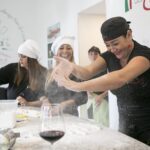




Main Course 1: Scialatielli with Lemon and Fresh Shrimp Tartare
For the first main, you might make Scialatielli with Lemon and Fresh Shrimp Tartare. Scialatielli is a thick, ridged pasta shape made for sauces that cling. Here, the sauce is made with Sorrento lemons, parsley, extra virgin olive oil, and topped with finely chopped fresh shrimp.
What I like about this dish is how it teaches the role of lemon in seafood cooking. Lemon isn’t just “add acidity.” It’s used to brighten the entire sauce so the olive oil doesn’t feel heavy and the shrimp stays fresh-tasting.
The shrimp tartare element also gives you a technique you can repeat at home: finely chopped shrimp mixed with the right flavor partners. It’s the kind of detail that turns a pasta dish into something you’d happily serve to friends.
Why this main works well in a class format: it’s flavorful without requiring complicated equipment. If you’re comfortable chopping and tasting as you go, you’re set up for success.
Main Course 2: Local Fish Meatball with Sorrento Lemon Velouté
The second main is Local fish meatball with Sorrento Lemon Velouté—a delicate local fish croquette served with a silky lemon velouté. “Velouté” sounds fancy, but the real takeaway is texture: a sauce that’s smooth and coat-your-spoon creamy, yet still light enough that lemon can do its job.
Fish croquettes/meatballs can be tricky if you rush the process, so a chef-led class helps you avoid the most common mistakes—uneven texture, sauce that’s too thick, or flavors that don’t blend.
This course is also a good counterbalance to the shrimp pasta. If one main feels citrus-forward and herb-driven, the other main gives you lemon in a creamy sauce format. Together, you get two different ways to use the same local ingredient.
Dessert: Tiramisù Golden with Edible Gold Dust
Dessert is where this class goes from good food to a real celebration. You’ll make Tiramisù Golden, a take on the classic with mascarpone mousse, coffee-soaked ladyfingers, cocoa, and edible gold dust.
Coffee-soaked ladyfingers can go two ways: too firm or too soggy. In a cooking class, you learn the in-between. The goal is to soften the ladyfingers just enough that they hold the dessert’s structure while still delivering that coffee flavor in every bite.
Mascarpone mousse brings the signature richness, while cocoa adds the bitter-sweet finish that keeps tiramisù from tasting like straight sugar. The edible gold dust is mostly for fun, but it also signals something important: this class treats dessert like part of the craft, not an afterthought.
If you want to impress at home, tiramisù is the dessert to learn. It’s a crowd-pleaser, and once you understand the coffee soak timing and the layering, it becomes repeatable.
The End Meal: Wines with Your Table and a Bottle-Per-Two Setup
After cooking, you sit down to savor what you made. The class includes a carefully selected range of Italian wines, with one bottle for every two guests. That’s a thoughtful arrangement for two reasons.
First, it keeps the vibe relaxed. You’re not stuck hunting for extra drinks or doing “one person pays, everyone argues about it later.” Second, it means the meal feels complete. Wine becomes part of the pairing experience with the dishes you cooked, from tomato and mozzarella flavors to lemon-forward mains and coffee dessert.
It also gives you time to compare notes with your group. Cooking classes can be chaotic if everyone leaves at different times, but this format keeps the session unified: cook, then eat together, then head back.
Price and Value: Is $224.76 Worth It?
At $224.76 per person for about 3 hours, you’re paying for more than a recipe card.
You’re paying for:
- Chef instruction in small group format (up to 10)
- Ingredients for a multi-course meal (starter, two mains, dessert)
- The structured lesson time (you don’t have to plan, source, or coordinate everything)
- Italian wine included with dinner
- A meal you’ll actually eat, not just “taste and leave”
If you’ve tried to reproduce an Italian dinner at home, you already know the hidden costs: buying the right cheese, getting the right pasta or ingredients, and spending time to make everything taste cohesive. This class compresses that effort into a short window with guidance.
The only reason the price might feel heavy is if you’re looking for a very long class where you’ll keep cooking well past dinner. But if you want a high-quality, multi-course experience with real wine at the table, the value is easier to see.
Who Should Book This Sorrento Cooking Class?
This is a strong fit if you:
- Love hands-on cooking and want to learn by doing
- Want an evening plan with a full sit-down meal
- Enjoy Italian classics with a regional twist from Sorrento lemons
- Prefer English instruction
- Want a small group experience (max 10)
It may be less ideal if you want a slow, ultra-detailed course where you repeat techniques over and over. This is also a menu that includes seafood elements (shrimp and local fish) in the sample main courses, so consider that if you have specific dietary preferences around seafood.
Should You Book L’Accademia Sorrento, Land of Lemons?
I’d book it if your ideal evening in Sorrento includes three things: cooking with a chef, eating what you make, and leaving with skills that feel practical. The combination of a Prosecco toast, a multi-course menu featuring lemon in multiple ways, and included wine makes it more of an experience than a quick cooking demo.
If your priority is a short but satisfying evening meal that you helped create—and you’re happy to learn through a focused 3-hour session—this one makes sense.
FAQ
How long is the Chef Cooking Class Sorrento, Land of Lemons?
It lasts approximately 3 hours.
What time does the class start?
The start time is 6:30 pm.
Where does the class meet?
The meeting point is Via dell’Accademia, 6, 80067 Sorrento NA, Italy.
Is the class offered in English?
Yes, it is offered in English.
How big is the group?
The maximum number of travelers is 10.
Do you eat the food you cook?
Yes. After the lesson, you sit down to savor the dishes you prepared.
Is wine included?
Yes. Italian wines are included, with one bottle for every two guests.
Is cancellation free?
Free cancellation is available. You can cancel up to 24 hours in advance of the experience for a full refund.
More Cooking Classes in Sorrento




More Tour Reviews in Sorrento
- Sorrento Farm and Food Experience including Olive Oil, Limoncello, Wine tasting
★ 5.0 · 2,524 reviews





More Sorrento Cooking Classes

Just off the boat: newer Sorrento reviews





Sorrento Cooking Classes, compared.
 ★ 5.0Cook Like a Local with a Stunning Sea ViewFrom $156763 reviews
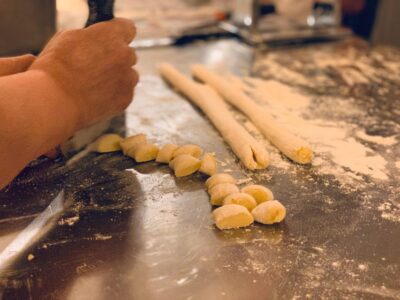 ★ 4.8Pasta and Tiramisu Cooking Class with Wine597 reviews
 ★ 5.0Hands-On Italian Cooking Class with Local Sorrento ChefFrom $193283 reviews
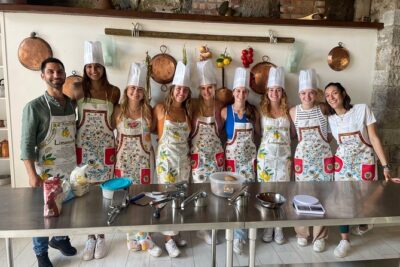 ★ 5.0Shared Cooking Class with Fresh Garden Ingredients in SorrentoFrom $145194 reviews
 ★ 5.0Authentic Pasta & Pizza Cooking Class with Sorrento Coast PickupFrom $157175 reviews
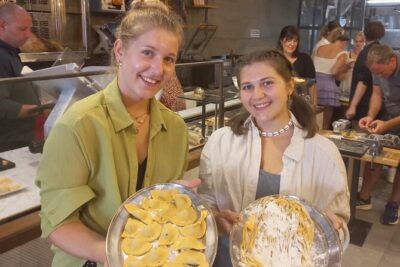 ★ 4.5Pasta and Tiramisu Cooking Class with Lunch and WineFrom $107165 reviews
 ★ 5.0Cooking Class: Your Culinary Love Affair in SorrentoFrom $169161 reviews
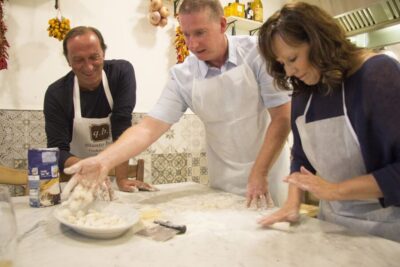 ★ 5.0Authentic Local Cooking Class and MealFrom $169153 reviews
Browse the lists this tour appears in