
Review · POMPEII FROM SORRENTO
Private Pompeii Tour with Guide & Transfer included from Sorrento
One wrong turn at Pompeii costs hours. This private tour is built to keep you moving with round-trip transfer from Sorrento, priority entry to skip the ticket line, and a guide who helps you understand what you’re actually looking at. I like how the pacing gives you a real chance to ask questions, not just march through stone. You’ll also hit the major zones—Forum life, baths, theater, and big-name houses—without needing to plan every step.
What I love most is the logistics: pickup from your hotel area, then return at the end, so you’re not juggling buses or trains. I also like that the guide portion is anchored by a proper walk of the Archaeological Park of Pompeii with an official local guide, which is the best way to avoid feeling lost. One thing to consider: the site is large, and even with a private format you’ll still cover a lot in 4 to 5 hours, so in peak summer you’ll want to manage heat and expect shorter time windows at some spots.
In This Review
- Key highlights to know before you go
- Getting from Sorrento to Pompeii without the headache
- Priority entry at Pompeii: where the minutes really matter
- The guide makes Pompeii readable (even if you’ve never been)
- How the 79 AD eruption story shows up in the streets
- Archaeological Park of Pompeii: your 2-hour orientation walk
- The Forum: the core of daily Roman life
- Walking Via dell’Abbondanza: the street where business happened
- Stabian Baths: daily routines, split by entrances
- Villa road outside the walls: Via delle Ville and the Villa of the Mysteries area
- Casa del Fauno: luxury that feels surprisingly human
- Teatro Grande and the Basilica: public space for performance and order
- Timing, pace, and staying comfortable in 4 to 5 hours
- Price and value: why $504.67 can make sense
- Who this private Pompeii tour is best for
- Should you book this private Pompeii tour from Sorrento?
- FAQ
- How long is the Pompeii tour from Sorrento?
- Is pickup included from Sorrento hotels?
- Does the tour include admission tickets?
- Do I get to skip the ticket line?
- Is this tour private?
- Is food included?
- What language is the guide?
- What should I wear or bring for Pompeii?
Key highlights to know before you go
- Hotel-area pickup and drop-off: you start and finish with the transport handled
- Fast-track / priority access: designed to help you bypass the line at the ticket window
- Official local guide on foot: you don’t just see ruins—you get the story fast
- Tickets are included: admission is covered for the Pompeii archaeology portion
- A private group only: you set the pace within the time you have
- Made for the whole Pompeii experience: Forum, street life, baths, villas, and the theater
Other ways to walk into Pompeii
- Sorrento: Skip-the-Line Pompeii Express Tour by Train★ 4.8 · 2,038 reviews
- Priority Access Pompeii & Mt. Vesuvius Full day from Sorrento★ 4.5 · 1,376 reviews
- Pompeii Express Guided Tour by Train from Sorrento★ 4.5 · 770 reviews
- Sorrento: Pompeii Half-Day Guided Tour with Priority Access★ 4.7 · 739 reviews
Getting from Sorrento to Pompeii without the headache
Pompeii is the kind of trip that can either feel easy or feel like a puzzle. Here, you remove the puzzle. You get a driver who picks you up from your hotel area in Sorrento and brings you to the Archaeological Park, then you return to your hotel by private vehicle after the tour.
The practical win is time. Instead of budgeting for transport changes and waiting around, you can spend that energy on the ruins. It also helps if you’re not comfortable navigating on your own in a place where signage and crowds can get overwhelming.
One caution: not every hotel in the Sorrento area is reachable by vehicle due to traffic restrictions and pedestrian-only zones. You’ll need to confirm the exact pickup location with the local provider at least 24 hours before departure, so build in a little time for that message.
Priority entry at Pompeii: where the minutes really matter
One of the biggest bottlenecks at Pompeii is the ticket line. This tour includes priority access designed to help you bypass the line at the ticket window. That matters because Pompeii runs on daylight and heat, and wasting the first hour can throw off your entire visit.
A fast start also changes how the day feels. When you get in quickly, you’re more likely to stay sharp during the early part of the walk, when the site is easiest to orient. Later on, after you’ve been on your feet, every extra minute becomes a bigger deal.
This is paired with the right kind of tour structure: a longer guide-led walk of the main archaeological area, followed by shorter targeted stops. The result is a tour that doesn’t leave you staring at random walls hoping they make sense.
The guide makes Pompeii readable (even if you’ve never been)
Pompeii can feel like a museum of fragments until you understand the layout. The guide role here is what turns the experience into something you can follow.
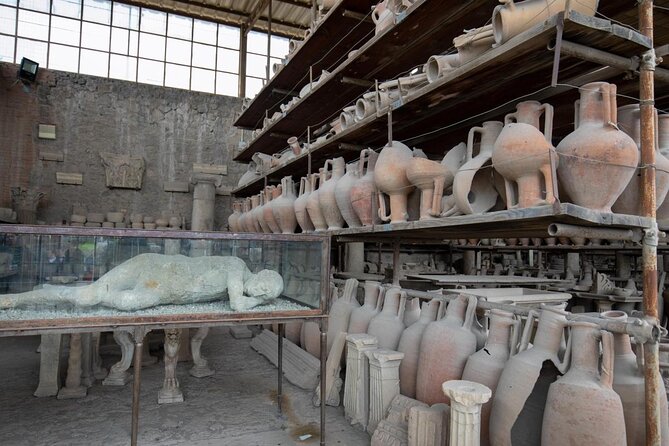
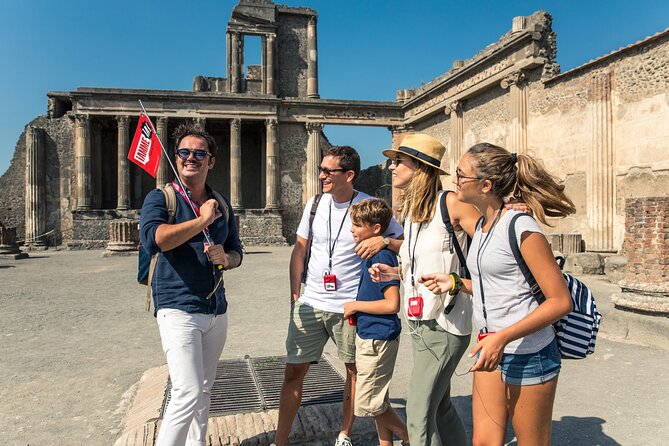
You’ll start with a guided walk inside the Archaeological Park of Pompeii for about 2 hours. The guide is there to connect what you’re seeing to how the city functioned before the eruption of Mount Vesuvius in 79 AD. The city was buried under lapilli and lava, which preserved buildings, materials, and infrastructure—so the ruins aren’t just pretty stones. They’re snapshots of daily life.
From the feedback tied to this tour, the guide quality is a standout. One of the guides named is Vincenzo, described as friendly and knowledgeable, with the ability to help visitors find meaning without feeling rushed. That’s exactly what you want: the sense that someone is translating the site, not just walking ahead and pointing.
Private format matters too. If you want to linger on a detail, ask a second question, or slow down when the site feels crowded, you can. It’s still structured, but it’s not one-size-fits-all.
How the 79 AD eruption story shows up in the streets
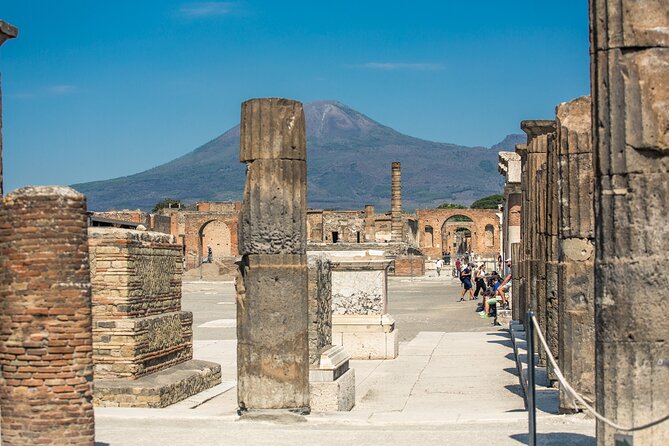
Before you walk far, you’re given the big picture: Pompeii got buried during the 79 AD eruption. That explanation isn’t just background—it tells you why the city looks the way it does.
Think about it like this: Pompeii preserves construction and everyday details that you normally never get to see at street level. That’s why the tour spends time on roads, markets, baths, and public spaces. These places weren’t built as tourist attractions; they were built for ordinary routines. When the eruption froze them in time, those routines became visible.
The best thing you can do as you go is let the guide anchor each area in daily functions—justice and administration in the Forum, shopping and food in street markets, bathing routines at the baths. Once you start thinking like that, even the smaller stops become easier to read.
Skip the queues: more door-to-door runs





Archaeological Park of Pompeii: your 2-hour orientation walk
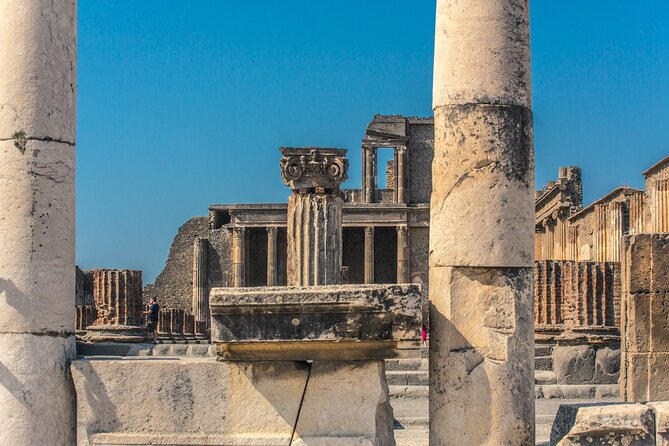
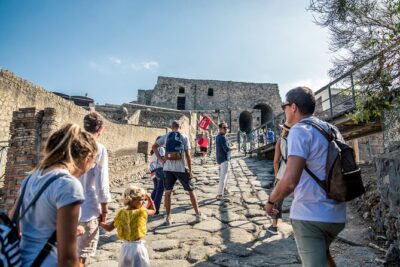
The heart of the visit is a guided walking tour of the Archaeological Park of Pompeii for about 2 hours. This is where you get your bearings, and where you learn how the city’s spaces connect.
This is also the portion where you’ll benefit most from having an official guide. Without one, Pompeii’s scale can trick you into feeling like you’re just collecting landmarks. With a guide, you can understand how the city’s zones work together and why certain buildings matter.
In practice, plan for walking. Even at a comfortable pace, Pompeii involves uneven ground and lots of steps. Wear comfortable shoes and treat sunscreen like part of the itinerary, especially in summer when it gets very hot.
The Forum: the core of daily Roman life
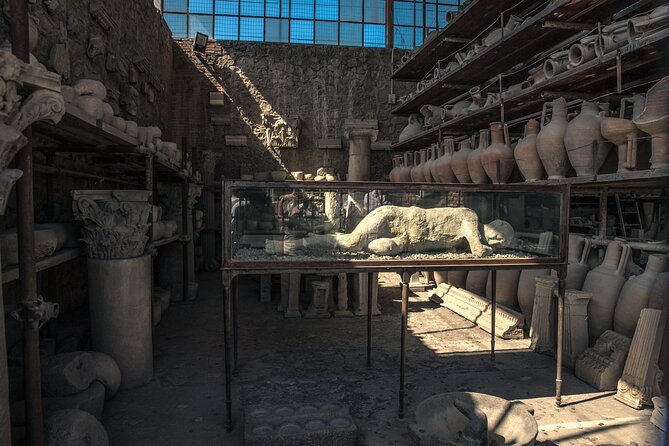
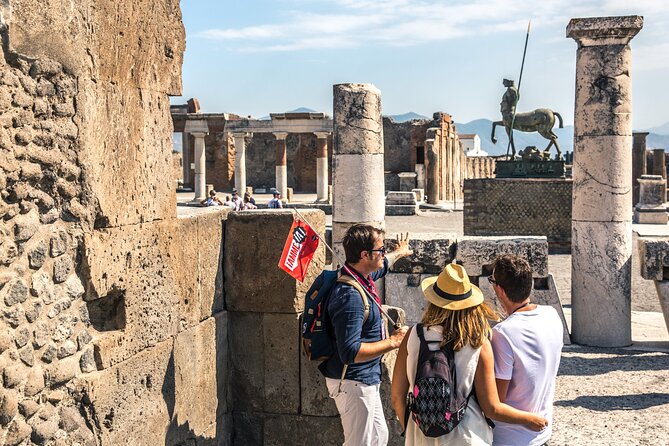
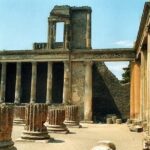
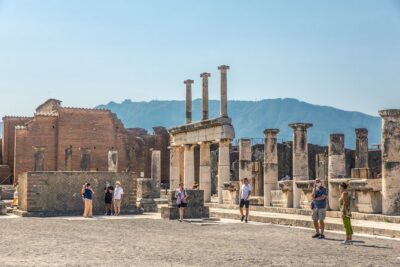
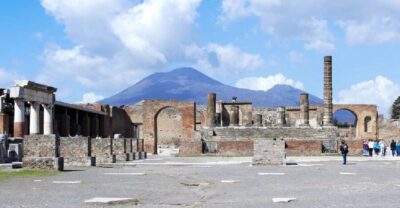
After the main orientation walk, you move into the Foro de Pompeya, the Civic Forum and focal point for public buildings. This is where administration and justice took place, plus business, trade, and worship—all happening around the same central space.
You’ll also stop at the Tempio di Giove Capitolino, a temple that visually anchors the north side of the Forum with Mount Vesuvius rising behind. In the colony era, it was renovated and became a kind of Capitolium, with cult statues of Jupiter, Juno, and Minerva positioned to be visible from the Forum square.
And then the tour adds more detail around how the city served its people:
- Macellum: a complex that connected worship, markets, and meeting spaces. You’ll also see clues about imperial cult intent through sculptural remnants and layout.
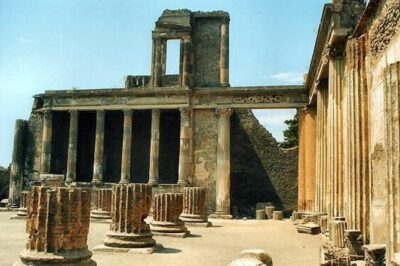
- Basilica: a large administrative and business building, with space used for justice and commerce.
The value of these stops is that they show you Pompeii as a working city. These weren’t quiet monuments. They were central to work, decisions, trade, and ritual.
Walking Via dell’Abbondanza: the street where business happened
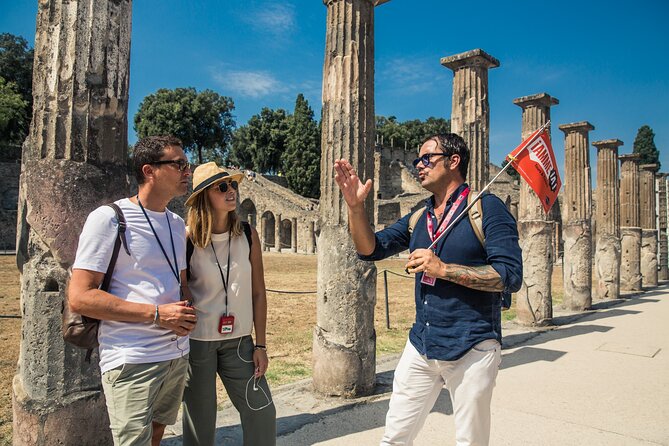
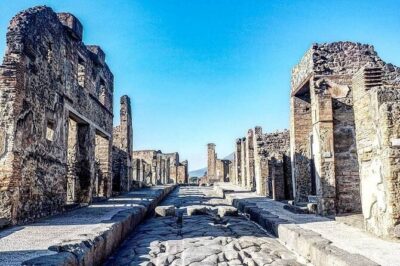
Next comes Via dell’Abbondanza, the ancient main street running east/west from the Forum toward the Porta Sarno. The tour gives you a short window here, but it’s enough to connect the dots.
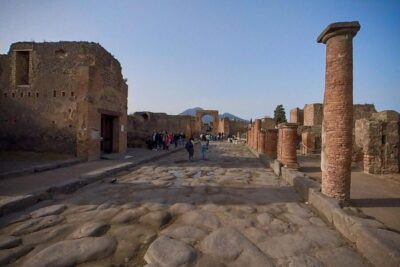
This road was crowded and noisy in Roman times, lined with shops and workshops (officinae), plus cafes and snack bars. The interesting part is how the street layout and the building fronts help you imagine the soundscape and the flow of people moving through daily trade.
Even if you only spend about 10 minutes there, take those minutes slowly. Look at the street as a system: entrances, storefront spaces, and the rhythm of the road. If you rush, Via dell’Abbondanza turns into just another walkway. If you slow down, it becomes the spine of the city.
Stabian Baths: daily routines, split by entrances
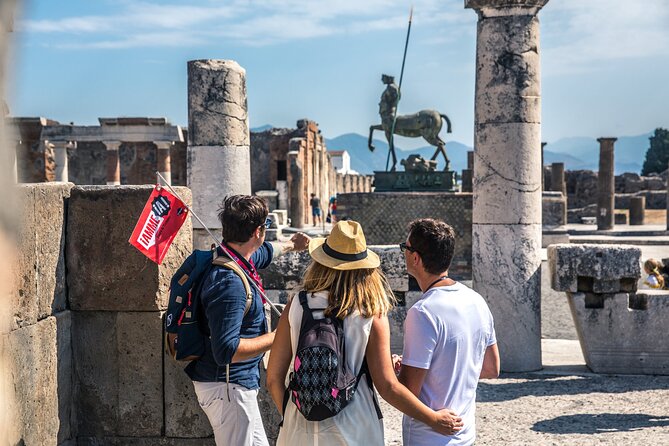
Then you’ll visit the Stabian Baths (Terme Stabiane), located behind the Temple of Jupiter. These baths date to shortly after the colony of veterans, around 80 BC.
What I find useful in this stop is the way the tour frames the baths as a routine machine. Women’s and men’s quarters had separate entrances, and the men’s area included spaces for dressing and bathing at different temperatures: an apodyterium and tepidarium, frigidarium, and calidarium.
You’ll also hear that the baths were heavily damaged during the earthquake of 62 AD. That detail matters because it places Pompeii in time before the final eruption. The city wasn’t frozen in perfect condition; it had already been shaken.
Villa road outside the walls: Via delle Ville and the Villa of the Mysteries area
After the core city stops, you’ll move to Via delle Ville, also called the path toward the Villa of the Mysteries. This route runs outside Pompeii’s city walls away from Porta Ercolano and passes through a necropolis with impressive tombs.
The standout reference point here is the Villa of the Mysteries, known for its frescoes depicting Dionysian rites. The tour frames this as a quieter, more atmospheric contrast to the busy public spaces inside the city.
Even though this portion is described as a scenic road approach, it’s still a meaningful change of pace. It helps you understand that Pompeii wasn’t only about public buildings and markets. The outskirts had their own world—memorial spaces and suburban estates.
Casa del Fauno: luxury that feels surprisingly human
Next up is Casa del Fauno, the House of the Faun. This was built in the 2nd century BC and is one of the largest and most impressive private residences in Pompeii.
The tour focuses on why it matters: it reflects the aristocratic lifestyle of the Roman republic and contains major works of art. You’ll also learn what makes it stand out among surviving archaeological evidence, including the sense that it’s not just a big house. It’s a statement of wealth and taste.
Because your time here is limited (around 10 minutes), I’d prioritize the big visual anchors over trying to read every small detail. Use the guide to point you toward what’s most representative.
Teatro Grande and the Basilica: public space for performance and order
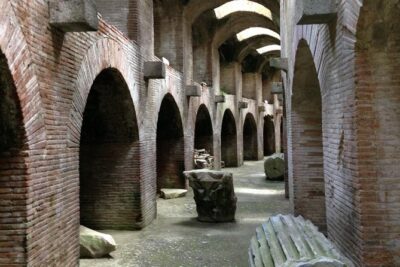
You’ll also see the Teatro Grande (Large Theater). It was built on a hillside and uses the slope’s natural depression to create an auditorium divided into sectors. The stage hosted tragedies of the Greco-Roman traditions.
This stop helps balance the day. Pompeii’s story isn’t only daily chores and commerce; it also includes public culture and performance. Standing in a theater built for drama makes it easier to imagine that the city had entertainment alongside routine.
Then you’ll return to a more administrative tone with the Basilica, the biggest building in the Forum area, used for business and justice. Taken together, theater and basilica give you two sides of public life: spectacle and order.
Timing, pace, and staying comfortable in 4 to 5 hours
This is roughly a 4 to 5 hour private experience. The day is packed by design: you get the 2-hour Pompeii walk, then a run of shorter stops at major sites.
That’s great if you want structure. It’s also a gentle warning: you won’t have unlimited time to sit and study every corner. If you’re the type who wants to linger for 30 minutes on one room or one fresco, you may end the tour wishing you had a second pass.
Heat is the real practical concern. Pompeii can feel brutally warm, especially in summer, and the tour suggests sunscreen and comfortable shoes. One guide-led tip supported by the experience feedback: in hot months, an early morning start can make the visit much easier.
Price and value: why $504.67 can make sense
At $504.67 per person, this isn’t a budget outing. But it also isn’t just a ticket plus a phone audio app.
You’re paying for:
- Private round-trip transport from your hotel area in Sorrento
- An English-speaking expert local guide with live commentary
- Priority access for faster entry
- A plan that covers key Pompeii spaces in a single half-day format
- Admission tickets included for the Pompeii archaeology portion
For groups that want to avoid the stress of logistics and crowds, the value can be real. You’re not paying extra for separate travel planning. You’re also paying to reduce uncertainty: the guide handles route sense, context, and pacing, so you don’t waste time trying to translate the site yourself.
If you’re traveling solo, you’ll feel the cost more. If you’re traveling with others, the private setup can start to feel more reasonable because you’re sharing the service and transport rather than splitting a public-bus experience.
Who this private Pompeii tour is best for
This tour makes a lot of sense if you:
- Want a private guide so you don’t get lost in a huge site
- Prefer clear structure and short, targeted stops rather than long meandering
- Care about understanding how Pompeii worked day to day (Forum, markets, baths, street life)
- Want hotel pickup and drop-off so your time stays protected
It may not be ideal if you strongly dislike walking or prefer a slower pace with fewer stops. The itinerary is designed to fit many highlights into a short day.
Should you book this private Pompeii tour from Sorrento?
I’d book it if your top priority is a smooth, high-context Pompeii visit: get in faster, walk with an official guide, cover the major zones, and return without transport hassle. The combination of priority access and a private structure is the difference between feeling oriented and feeling overwhelmed.
I’d think twice if you’re hoping for a slow, room-by-room museum experience. This tour is built for efficiency and understanding within about half a day.
If you’re going in hot season, also plan to lean into the early-start strategy when available and bring your sun protection. Pompeii is unforgiving when you overstay in the wrong conditions.
FAQ
How long is the Pompeii tour from Sorrento?
It’s about 4 to 5 hours in total, including the guided portions and time at the different Pompeii sites.
Is pickup included from Sorrento hotels?
Yes. Private transportation with an English-speaking driver includes pickup from your hotel in the Sorrento area and return afterward. Some hotels may not be reachable due to traffic restrictions and pedestrian zones, so you need to confirm the exact pickup location at least 24 hours before departure.
Does the tour include admission tickets?
Yes. Admission is included for the Pompeii archaeological site and the listed stops within the visit.
Do I get to skip the ticket line?
The tour includes priority access to the Pompeii archaeological site, designed to help you bypass the line at the ticket window.
Is this tour private?
Yes. It’s a private tour/activity, so only your group participates.
Is food included?
No. Food and beverages are not included.
What language is the guide?
The guide provides live commentary in English.
What should I wear or bring for Pompeii?
Wear comfortable shoes and bring sunscreen. The tour notes that in summer it gets very hot.
More Tour Reviews in Sorrento
- Sorrento Farm and Food Experience including Olive Oil, Limoncello, Wine tasting
★ 5.0 · 2,524 reviews





More Private Transfers

Back to Pompeii


Just off the boat: newer Sorrento reviews




Pompeii from Sorrento, compared.
 ★ 4.8Skip-the-Line Pompeii Express Tour by TrainFrom $632,038 reviews
 ★ 4.5Priority Access Pompeii & Mt. Vesuvius Full day from SorrentoFrom $1391,376 reviews
 ★ 4.5Pompeii Express Guided Tour by Train from SorrentoFrom $65770 reviews
 ★ 4.7Pompeii Half-Day Guided Tour with Priority AccessFrom $84739 reviews
 ★ 4.5Skip-the-Line Pompeii Guided Tour from SorrentoFrom $90722 reviews
 ★ 4.0Pompeii Ruins Half-Day Tour from Sorrento with GuideFrom $97714 reviews
 ★ 4.8Pompeii and Vesuvius Guided Tour with LunchFrom $130683 reviews
 ★ 4.3Day Tour to Pompeii Ruins and Mount VesuviusFrom $130489 reviews
Browse the lists this tour appears in