
Review · AMALFI COAST FROM SORRENTO
Pompeii & Amalfi Coast Private Tour: Archaeologist-led, Flexible
You walk a city that stopped mid-day.
This archaeologist-led private tour pairs Pompeii’s unusually preserved streets with a flexible Amalfi Coast route built around your group, so the day feels less like a checklist and more like a plan that can bend. You’ll have pickup and round-trip transport from your location, plus an on-the-ground guide in Pompeii who can explain what you’re actually standing on.
Two things I really like: Pompeii isn’t rushed, and you’ll get context for daily life instead of only big monuments. And on the coast, the drive and town stops are flexible, which matters because one group wants viewpoints and photos while another wants slower streets and better food breaks. One possible drawback: Pompeii is still lots of walking on uneven ground, and the operator notes it’s not recommended if you have walking issues.
If you want Pompeii to feel human, not distant, this tour has a strong recipe for that.
In This Review
- Key highlights worth planning around
- Pompeii feels personal with an archaeologist-led guide
- Porta Marina sets the tone before you even reach the Forum
- Basilica and the Forum: the power center, explained step-by-step
- Markets, baths, and everyday routines you can actually picture
- Private homes and the spectacle of Roman entertainment
- Museum time: where the eruption becomes human
- Amalfi Coast by road: why the drive is part of the tour
- Choosing towns: Sorrento, Positano, Amalfi, Ravello, and more
- Timing and lunch: how to avoid the usual day-trip traps
- Price and value: what you’re really paying for
- Who this tour suits best
- Should you book this Pompeii & Amalfi Coast private tour?
- FAQ
- What’s the total duration of the tour?
- Where can the guide pick me up?
- Is this tour private?
- Is the Pompeii admission fee included?
- Do I get skip-the-line entry?
- What transport and in-vehicle amenities are included?
- Is lunch included?
- What language is the tour in?
- Is this tour suitable if I have trouble walking?
- Are service animals allowed?
- What’s the cancellation policy?
Key highlights worth planning around
- Official-guided Pompeii walking tour that focuses on what everyday people did, not just the famous ruins
- Porta Marina entry vibe: a dramatic gateway that sets the tone from the first steps
- A flexible Amalfi Coast itinerary customized to your group’s timing and interests
- Private pickup from Naples, Sorrento, Positano, or Pompeii (and elsewhere nearby for an added charge)
- Diet-friendly lunch help when you ask in advance, including experience with gluten allergies
- WiFi and bottled water on board, useful for a long coastal day
Still deciding on the coast road? A few more Amalfi days
- From Sorrento/Nerano: Amalfi and Positano Boat Tour★ 4.7 · 3,107 reviews
- Day Trip to Positano, Amalfi & Ravello from Sorrento★ 4.5 · 2,371 reviews
- From Sorrento: Positano and Amalfi Boat Trip with Transfer★ 4.9 · 1,598 reviews
- From Sorrento: Positano and Amalfi Day Cruise★ 4.0 · 1,500 reviews
Pompeii feels personal with an archaeologist-led guide
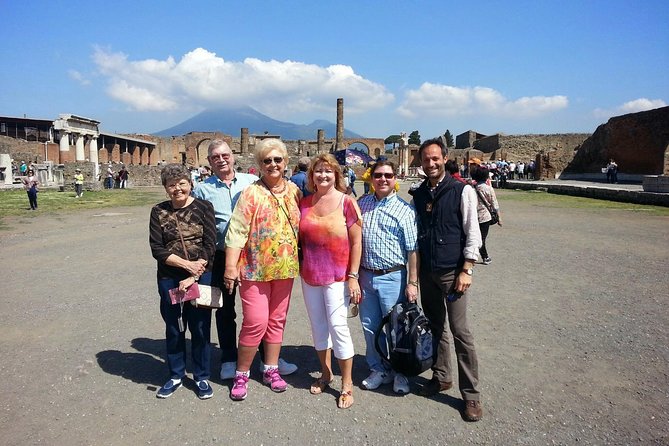
Pompeii can feel like an open-air museum. This tour nudges it toward something more like a living neighborhood you can understand. The guide’s approach is built around how the city worked—streets, shops, public buildings, and private homes—so the ruins don’t stay as silent stone.
I also like that the tour is private, which is a quiet advantage. You can ask questions as you walk, adjust the pace, and spend longer where you’re genuinely interested. The reviews back this up with repeated mentions of the guide’s explanations and ability to adapt to different ages and energy levels, including families with kids.
Porta Marina sets the tone before you even reach the Forum
You start with a first impression that’s hard to get with a standard entry point: Porta Marina. It’s a steep, basalt-paved approach up to a dual-arched gateway, one side made for pack animals and the other for Roman pedestrians. Coming out of the tunnel’s shadow, you get that sudden sense that the city is waiting for you.
From here, the path leads you toward big anchors like the Temple of Apollo and the Basilica/Forum area. Even if you’ve seen Pompeii photos before, this entrance makes it feel staged the way a person would have experienced arrival. It’s a strong start, especially if your time is limited and you want impact right away.
One practical consideration: you’ll likely be walking on slopes and paths right away. If your legs get tired fast, it’s worth mentioning it at pickup so the guide can pace you from minute one.
Basilica and the Forum: the power center, explained step-by-step
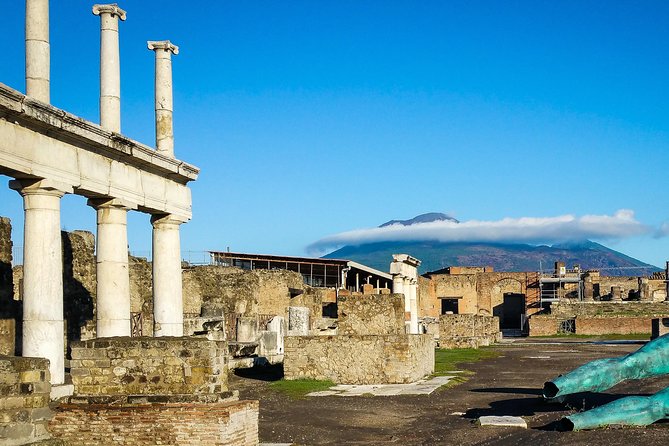
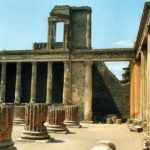
Two of Pompeii’s biggest “feel it in your bones” moments are the Basilica Pompeiana and the Forum. The Basilica wasn’t a church—it functioned as a courthouse and commercial exchange. That means you’re not only seeing architecture; you’re imagining meetings, disputes, and financial decisions happening under that huge roof span (now mostly in remnants).
The Forum is described as the city’s public square, the place where religion, politics, and commerce rubbed shoulders. The original travertine paving matters because it helps you walk in the same lanes people used. If you focus on what the guide highlights—like the civic structure and trade mechanisms—you start to understand why this space was so important.
This is where the private format shines. Instead of sprinting to match a route, you slow down enough to connect symbols and spaces to real Roman life.
Markets, baths, and everyday routines you can actually picture
Pompeii isn’t only elite villas and big temples. This tour includes places that let you see daily rhythm.
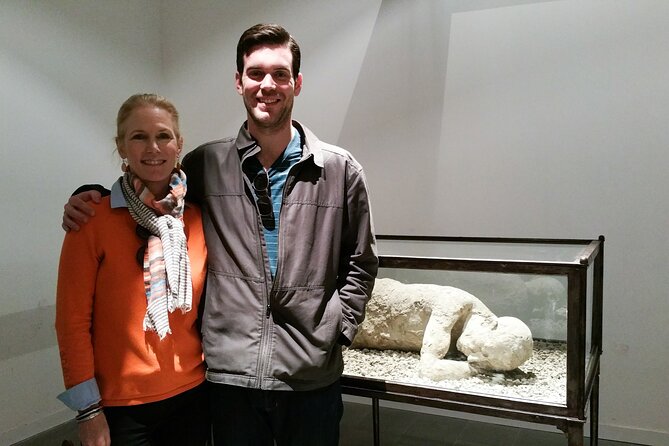
At the Macellum, the covered market off the Forum shows the layout of the stalls and central area used for food trade. What makes it memorable is the focus on commerce: the stone table tied to weights and measures, frescoes that connect to market goods, and the human trace left by plaster casts related to the eruption victims found in the context of this area.
Then comes the Forum Baths, which are a standout because the complex was still operating in 79 AD. You can follow the bathing circuit—changing rooms, cold and warm rooms, and the hot-air system concept (hypocaust). Even if you’ve never thought about Roman bathing before, the building helps you picture routine and social behavior, not just sightseeing.
If you get heat fatigue, these stops offer a practical benefit: they’re indoors or semi-contained in many ways compared with open plazas, and the guide can steer you to where you’ll be comfortable.
Other ways to walk into Pompeii


Private homes and the spectacle of Roman entertainment

Pompeii’s Casa dei Vettii is often compared to a standout art space because the frescoes are so vivid. It’s a wealthy merchant home that still helps you see what status looked like at ground level—bright wall paintings, a peristyle garden, and the idea that luxury wasn’t just furniture, but a whole design of daily movement through rooms.
Next you’ll see the Thermopolium, Pompeii’s ancient “fast-food” counter. The big reason it works is preservation plus detail: an L-shaped masonry counter, bright frescoes that likely acted like a visual menu, and deep jars (dolia) that hold evidence of ingredients found during excavation work. Even the small personal touches—graffiti and painted scenes—add personality to a site that could otherwise feel academic.
Then the tour can include the Teatro Grande, a horseshoe-shaped theater with seating tied to Roman social hierarchy. The acoustics are a big part of why people love this stop. If you pay attention while you walk the tiers and stage line, you can understand how performance and status were built into the structure.
Museum time: where the eruption becomes human
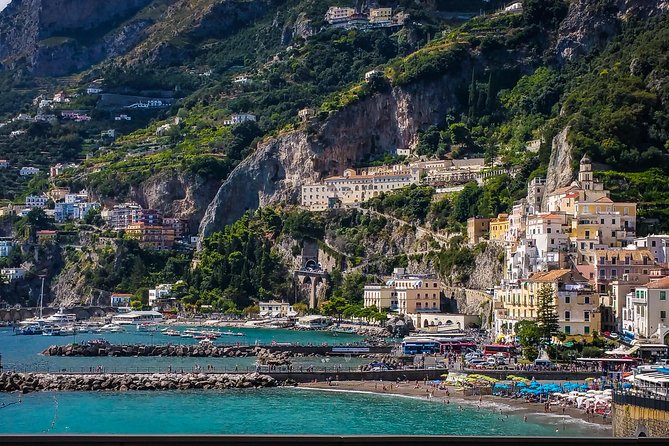
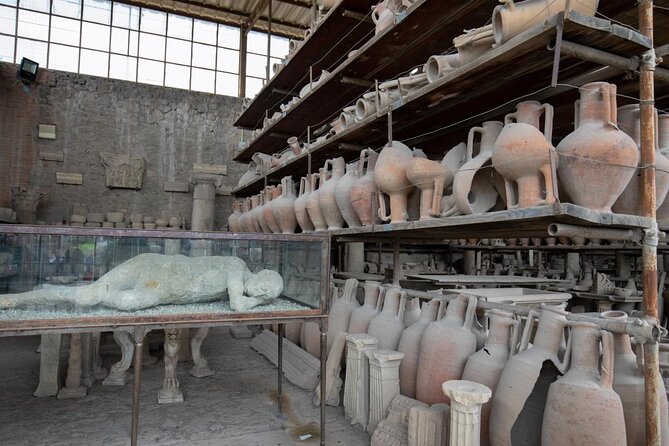
The Antiquarium di Pompei is included, and it helps close the loop. Ruins are powerful, but the museum collects the small objects and fragile works that explain what you’re missing outside the plaster casts and artifacts. You’ll see treasures such as silver hoards and items tied to everyday beliefs, plus frescoes that once lived on Pompeian walls.
Most importantly, it connects the “frozen moments” of plaster casts to the eruption story in a way the street stones can’t do alone. If you’re trying to remember Pompeii as more than architecture, this is often the place where the emotion lands.
A practical note: since this is part of an 8–9 hour day, museum time is best used by watching for what your guide points out. Don’t try to read everything; follow the guide’s cues so the museum supports what you saw outside.
Amalfi Coast by road: why the drive is part of the tour
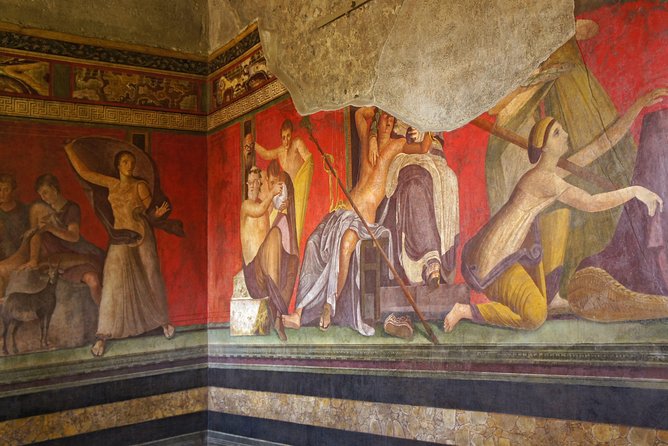
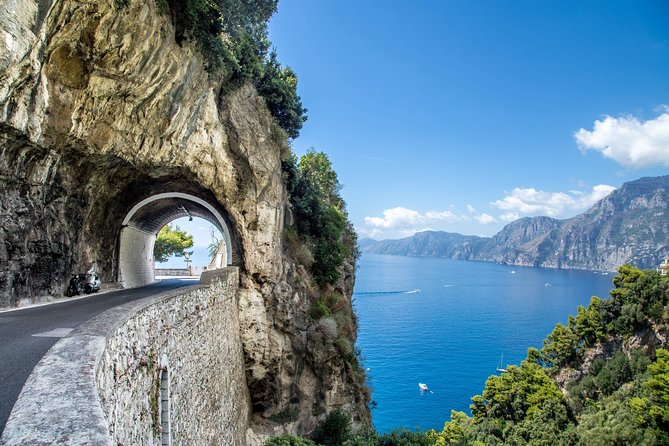
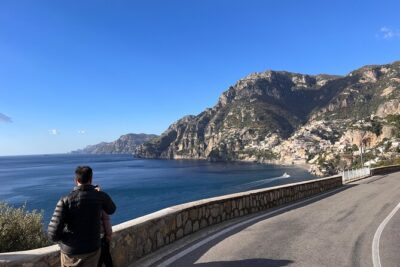
After Pompeii, you shift from ruins to the coastline, and the transport matters. The route uses scenic coastal roads like SS145 Sorrentina and SS163 the Amalfi Drive. This is the kind of driving where the viewpoints are the attraction.
On this road, you get repeated moments of turquoise water below, towns appearing like they’re stacked on the cliffs, and long stretches where you can see how the coast was built to be reached by winding paths. Your guide can also time stops for photos and short breaks, which helps a long day feel less exhausting.
One downside to expect: the Amalfi Coast is not flat. Even if you’re in a car most of the time, you’ll still face steps, short walks, and crowds in popular towns during peak season. Planning for comfortable shoes is not optional.
Choosing towns: Sorrento, Positano, Amalfi, Ravello, and more
The tour structure includes time in several signature stops, and then leaves room for adjustment. Here’s what each area adds.
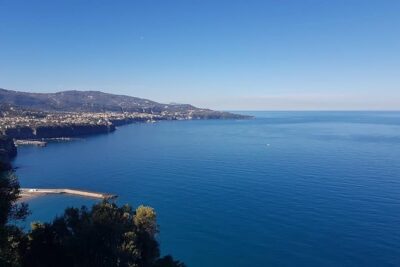
Sorrento is the peninsula’s cliff-top base with a lively centro storico feel and viewpoints over the Bay of Naples. It’s a good place to reset after Pompeii with a more relaxed rhythm, plus you’ll get the sense of where the coast begins before it turns into the classic Amalfi “vertical” villages.
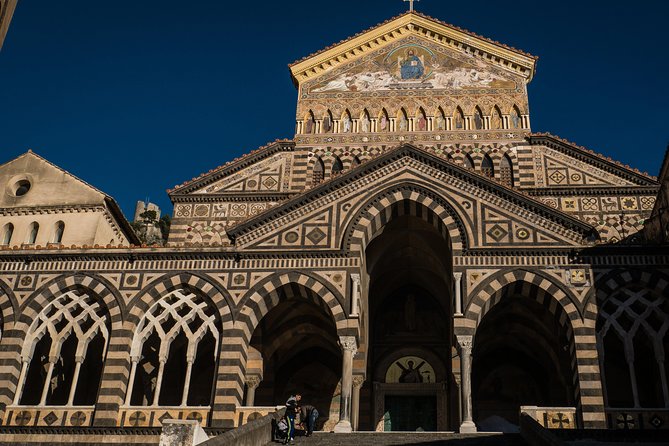
Amalfi brings the historic center and the big religious anchor: the Duomo di Sant’Andrea with its striped facade and notable bronze door from Constantinople. If you like walking short lanes and spotting details like the paper heritage or harbor views, you’ll find a lot to do without needing a long hike.
Positano is known for its steep cascade of pastel buildings. You’ll walk narrow lanes, notice bougainvillea, and likely spend time around the Church of Santa Maria Assunta area and viewpoints toward the sea. It’s scenic, but it can be crowded, so your guide’s pacing matters.
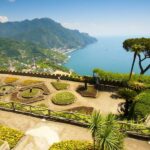
Ravello is quieter and higher. The focus here is on gardens and panoramas, including Villa Cimbrone Gardens and the famed Terrace of Infinity. If you want the coast at its calmest, Ravello is often the “exhale” stop—less frantic, more slow walking and views.
The itinerary also lists additional towns that can work well for different interests, such as:
- Vietri sul Mare, known for handmade ceramics and the Church of San Giovanni Battista
- Minori and Maiori, for a more relaxed feel than the big-name villages
- Erchie, positioned as a calmer coastal alternative farther from the busiest areas
Because the tour is flexible, your guide can help you pick the best combination for your energy level and preferences. That’s a real value, because the Amalfi Coast isn’t one-size-fits-all.
Timing and lunch: how to avoid the usual day-trip traps
This is where a private guide can save your day. The tour runs 8–9 hours, so timing affects everything: how much you see in Pompeii, how long you have for coastal viewpoints, and whether lunch feels rushed.
Lunch is not included, but the guide will help with choices on request. The practical win is that he can handle needs that typical tours ignore. One of the strongest examples from the bookings is support for a gluten allergy by directing the group to freshly made gluten-free pasta near the Pompeii entrance—exactly the kind of detail that matters when you’re hungry and short on time.
If you care about photo spots, you’ll benefit from a guide who knows where to stop for pictures without eating up your entire schedule. Reviews also mention picture stops and time management, including for groups with limited shore time from cruise schedules.
Price and value: what you’re really paying for
At $540.66 per person for an 8–9 hour private day, you should think of this as paying for three big things:
1) Private transport with pickup and drop-off
2) Guide time that’s specific to Pompeii and tied to official guiding format in the park
3) Flexibility to adjust towns and pacing to your group
Pompeii admission fees are not included unless you select the ticket-included option. If you don’t, the Pompeii admission fee listed is €19 per person (with free entry for kids). That means the true cost depends on what you choose during booking.
The value is strongest if you want more than “see the highlights.” If you like asking questions, building context, and having someone adjust the day to your pace, a private setup usually earns its keep. If you only want quick stops and don’t care about explanations, you might find cheaper options—but you’d likely lose the human-scale Pompeii experience that this tour is built around.
Who this tour suits best
This tour is a great fit for people who want Pompeii explained in a way that connects ruins to real routines—markets, baths, civic life, homes, and entertainment. It also works well if your group has mixed ages, since the guide has experience pacing for different energy levels.
It may not be ideal if you have walking issues. The operator specifically says Pompeii is not recommended for people who have walking problems, and the Amalfi Coast involves stairs and uneven terrain in several towns.
Should you book this Pompeii & Amalfi Coast private tour?
Book it if your ideal day looks like: Pompeii with a guide who can turn stones into daily life, followed by a coast route where you can stop for views and adjust town choices on the fly. The biggest draw here is the mix of archaeology-focused walking and practical, flexible coastal pacing.
Skip it or ask a lot of questions before booking if your main goal is minimal walking. Pompeii’s ground is uneven, and the day is long. Also check whether you’re selecting the ticket-included option, since that changes whether you pay Pompeii admission separately and whether you get skip-the-line entry.
If you’re planning your first (or best) Pompeii day from Sorrento/Naples, this is one of the more thoughtful ways to do it without feeling herded.
FAQ
What’s the total duration of the tour?
The tour is listed as 8 to 9 hours approximately.
Where can the guide pick me up?
Pickup is offered in Naples, Sorrento, Positano, or Pompeii. The port, airport, or railways in Naples are not a problem. The guide can also meet you in Amalfi or Ravello for an additional charge.
Is this tour private?
Yes. It is a private tour/activity, and only your group participates.
Is the Pompeii admission fee included?
Pompeii admission fees are not included unless you choose the ticket-included option during booking. If you don’t select that option, Pompeii admission is listed as €19 per person (free for kids).
Do I get skip-the-line entry?
Skip-the-line entry is included only if you select the option where admissions/tickets are included during booking.
What transport and in-vehicle amenities are included?
The tour includes private transportation pick-up and drop-off, plus bottled water and WiFi on board.
Is lunch included?
Lunch is not included. The guide indicates there will be many different choices available based on your request.
What language is the tour in?
The tour is offered in English.
Is this tour suitable if I have trouble walking?
The operator says travelers should have moderate physical fitness, and visiting Pompeii is not recommended for those who have walking issues.
Are service animals allowed?
Yes, service animals are allowed.
What’s the cancellation policy?
Free cancellation is available up to 24 hours in advance for a full refund. If you cancel less than 24 hours before the start time, the amount paid is not refunded.
More Tour Reviews in Sorrento
- Sorrento Farm and Food Experience including Olive Oil, Limoncello, Wine tasting
★ 5.0 · 2,524 reviews





Back to Pompeii
The Amalfi Coast, Keep Going



Just off the boat: newer Sorrento reviews



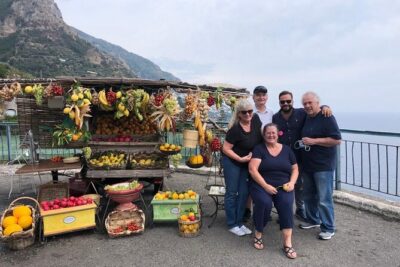
Amalfi Coast from Sorrento, compared.
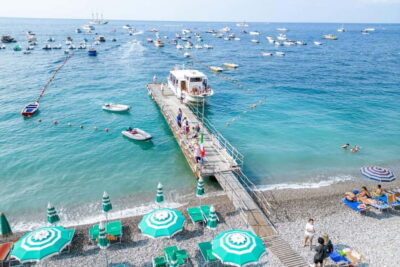 ★ 4.7Amalfi and Positano Boat TourFrom $713,107 reviews
 ★ 4.5Day Trip to Positano, Amalfi & Ravello from SorrentoFrom $1312,371 reviews
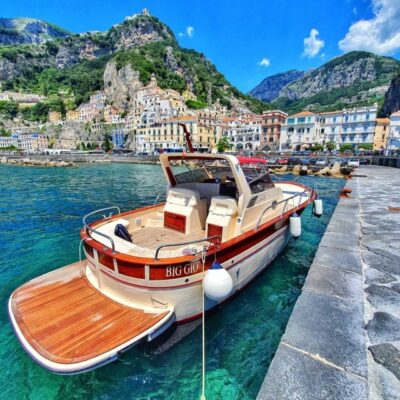 ★ 4.9Positano and Amalfi Boat Trip with TransferFrom $1741,598 reviews
 ★ 4.0Positano and Amalfi Day CruiseFrom $621,500 reviews
 ★ 5.0Full-Day Amalfi Coast Experience from Sorrento, Naples or SalernoFrom $1021,275 reviews
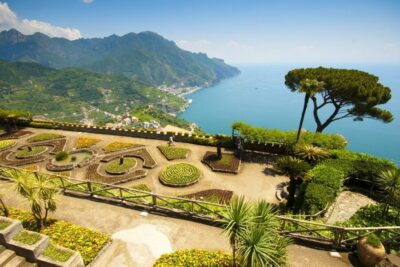 ★ 4.5Positano, Amalfi and Ravello Sharing Tour from SorrentoFrom $1151,179 reviews
 ★ 4.5Amalfi Coast Day Tour from Sorrento with Light Lunch and WineFrom $1391,148 reviews
 ★ 5.0Private Amalfi Coast Day Tour from Sorrento or NaplesFrom $3531,059 reviews
Browse the lists this tour appears in