

Review · AMALFI COAST FROM SORRENTO
Amalfi Coast and Pompeii from Naples or Sorrento
One day, two worlds: sea cliffs and buried streets. This small-group outing connects Capri by boat and land with major sights on the Amalfi Coast and a guided stop at Pompeii, all built around smart transport from Sorrento.
I love the wooden-boat circumnavigation that takes you past villages, caves, natural arches, and the Faraglioni. I also love the two-hour guided walk in Pompeii, so you’re not just wandering ruins and guessing what matters.
The main thing to watch is that the day is full and involves moderate walking, plus Pompeii entrance is not included (and it’s €19 per person), so plan for that added cost.
In This Review
- Key things to plan for
- A day that links Capri, Positano, Amalfi, and Pompeii
- Starting in Sorrento: how the transport keeps your day realistic
- Positano: the hour-long look at steps, shops, and lemon culture
- Amalfi Coast: a quick hit at Amalfi’s maritime republic vibe
- Pompeii: two hours that turn ruins into a town
- Capri by wooden boat: caves, arches, and the Faraglioni
- Blue Grotto and the rest of Capri’s must-see sights
- Capri’s chairlift option: a good “maybe” for your energy level
- Price and value: is $235 worth it?
- Who this tour fits best (and who should think twice)
- Booking decision: should you book this tour?
- FAQ
- FAQ
- What time does the tour start?
- How long is the experience?
- Is Pompeii entrance included in the price?
- Does the tour include food and drinks?
- How big are the groups?
- How do you get from Sorrento to Capri?
- Do you visit the Blue Grotto and Capri’s main areas?
- Can I cancel and get a refund?
- Is there a way to reach Capri’s highest point?
Key things to plan for

- Hydrofoil out of Sorrento helps you gain time on a packed schedule
- Two-part Capri: boat around the island plus land time on Capri and Anacapri
- Blue Grotto visit is a highlight, but build buffer into your day for the timing
- Pompeii is guided for two hours, but you’ll still want comfy shoes
- Small groups up to 19 means easier listening and fewer bottlenecks than big buses
Still deciding on the coast road? A few more Amalfi days
- From Sorrento/Nerano: Amalfi and Positano Boat Tour★ 4.7 · 3,107 reviews
- Day Trip to Positano, Amalfi & Ravello from Sorrento★ 4.5 · 2,371 reviews
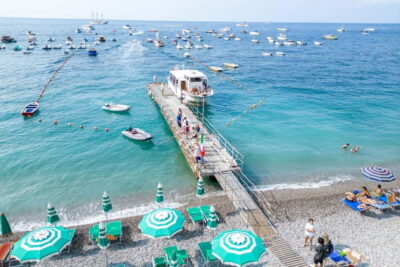
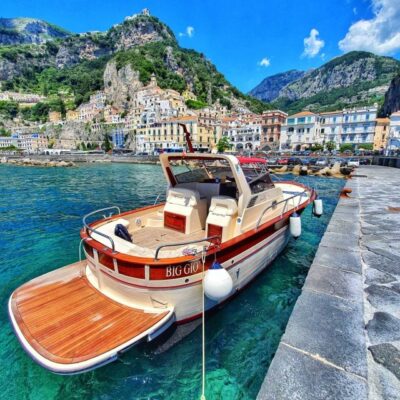
- From Sorrento: Positano and Amalfi Boat Trip with Transfer★ 4.9 · 1,598 reviews
- From Sorrento: Positano and Amalfi Day Cruise★ 4.0 · 1,500 reviews
A day that links Capri, Positano, Amalfi, and Pompeii
This tour is the sort of day Italy does best: multiple “wow” moments, one after another, without requiring you to piece together tickets, boats, or routes. The backbone is the Sorrento departure, with a hydrofoil ride for the sea portion and air-conditioned road transport for the rest.
What you’re really paying for is rhythm and guidance. Capri looks different from every angle, and Pompeii is the kind of place where a guide can turn “old stones” into a real town you can picture. If you want your day to feel organized (and not like a sprint), this kind of plan fits.
Also, you’re not stuck on one type of scenery. You get cliffside coast towns like Positano and Amalfi, then you shift gears to a time capsule city at Pompeii. It’s contrast on purpose, and that’s usually a good sign for your photos and your memory of the day.
Starting in Sorrento: how the transport keeps your day realistic

The schedule starts at 8:00am, and it runs about 8 hours. That matters because this itinerary is built on moving efficiently between sea and land.
You’ll travel with an English-speaking driver and vehicles designed for small groups. If you’re in a smaller group (up to 8), you’ll use a minivan; larger groups (9–19) use a minibus. Either way, the ride is air-conditioned, which is a nice relief when summer heat decides to show up.
For the sea side, the tour uses a round-trip hydrofoil from Sorrento. Hydrofoils can be a little “schedule-driven,” meaning you’ll want to be ready on time and not linger for one more cappuccino before departure. But they’re also one of the fastest ways to connect the coast to Capri without wasting half your day in transit.
Positano: the hour-long look at steps, shops, and lemon culture
Positano is the first named stop, with about 1 hour there. This is the town that looks like it pours right into the sea: terraced streets, steep paths, and lots of storefront energy.
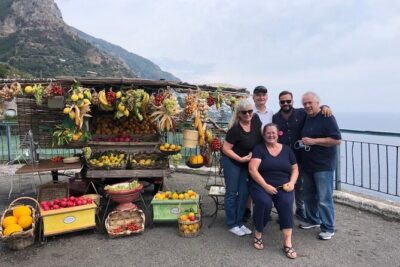
Here’s what to do with your hour. Slow down just enough to enjoy the view from below, then pick a direction and follow it on foot. You’ll likely find artisan shops with local crafts and products, including the town’s famous lemon-themed items and ceramics. The key is to treat Positano as a photo-and-stroll stop rather than a “sit down and linger” stop.
The short time is both a strength and a consideration. It’s great for getting the vibe and moving on. If you’re hoping for a long beach moment or a deep dive into shops, you may feel slightly rushed.
Amalfi Coast: a quick hit at Amalfi’s maritime republic vibe
Next comes Amalfi, also with about 1 hour. Amalfi is known for its whitewashed hillside look, and the city has the feel of a place that has been trading with the sea for centuries.
One of the highlights here is the basilica with its cupola, which points to the mix of influences that shaped the region over time. You don’t need to be a history buff to appreciate it; you’ll feel the significance in the way the old city is organized around church and public life.
With just an hour, you’ll want to keep it simple:
- Pick a viewpoint you can reach on foot.
- Spend time near the main sights rather than wandering randomly.
- If you want photos, do them early, before you feel time pressure.
Other ways to walk into Pompeii




Pompeii: two hours that turn ruins into a town
Pompeii is the only stop in the given itinerary that’s clearly timed as a longer block: 2 hours at the Pompeii Archaeological Park. The big win is that you get a walking tour with an English-speaking guide for that entire time.
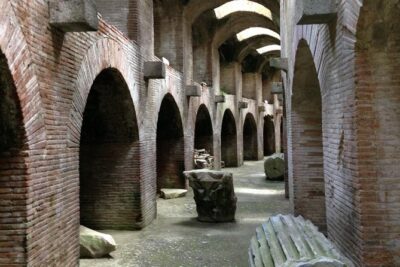
Pompeii works best when someone helps you “read” what you’re seeing. Instead of just looking at walls, you learn how the streets, homes, and public spaces would have functioned. That’s especially important because the site is so large; without guidance, it’s easy to miss what matters most.
Two practical notes:
- The Pompeii entrance fee is not included and is listed as €19 per person.
- Pompeii is outdoors and involves walking on uneven ground. This fits “moderate physical fitness” better than people who prefer a totally flat day.
There’s also a useful detail for families: children under 18 enter for free with a valid ID.
Capri by wooden boat: caves, arches, and the Faraglioni
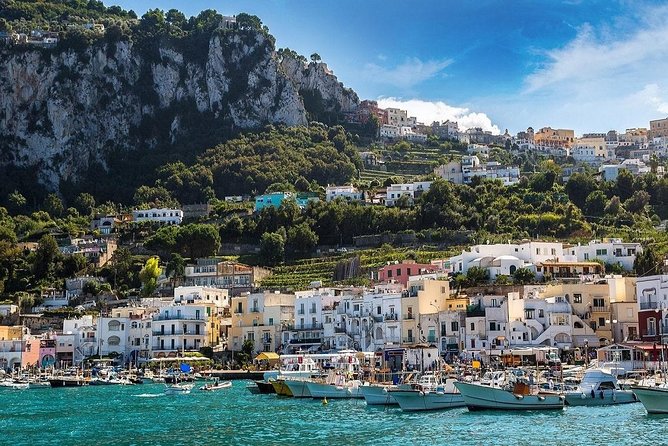
Capri is where the day really earns its reputation, and you’ll approach it two ways: on sea and on land. On the sea side, you’ll circumnavigate much of the island aboard a wooden boat.
This is the part you’ll remember when you look at your photos later. The scenery isn’t just pretty; it’s structured. You pass seaside villages, caves, natural arches, and the Faraglioni, the jagged rock formations Capri is famous for. A boat tour gives you angles you simply can’t get from shore streets.
This is also where the guide earns value. The guide’s job isn’t just to talk. It’s to help you understand what you’re seeing and where to look, so you don’t miss the best views while you’re busy checking your phone camera settings.
The tour description also frames it as a private-style experience with private car and boat transport for the Capri portion. Practically, you can expect less chaos than mass-departure boat lines—especially if you’re in the smaller end of the group size.
Blue Grotto and the rest of Capri’s must-see sights
After the boat segment, the itinerary includes a visit to the Blue Grotto. This is a highlight because it’s one of Capri’s most distinctive water features, and the color effect is what people come for.
One thing to keep in mind: the day is coordinated around multiple moving parts. Timing can shift depending on conditions and transport. The tour plan still keeps moving, so you should treat Blue Grotto as part of a sequence, not an isolated, flexible block.
Next, you take a car to explore the island’s towns: Capri and Anacapri. This is where you trade water views for viewpoints from above, and where the vibe changes from steep-lane Capri to the calmer feeling higher up in Anacapri.
There’s also a named top sight here: Villa San Michele. Expect this to be a payoff stop for the day’s pacing—somewhere you can appreciate the island’s layout and views more than just the streets.
Capri’s chairlift option: a good “maybe” for your energy level
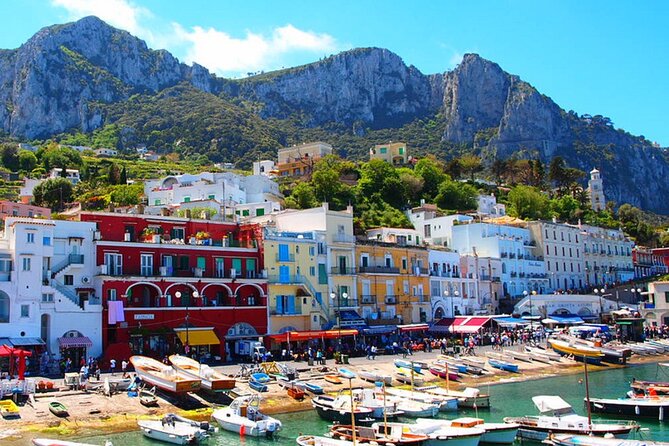
The tour includes a chance to ride the chairlift to the island’s highest point. That’s an important detail because it’s not framed as mandatory. In other words, it’s there if it fits your energy and comfort.
I like having options on a day this long. If you’re feeling good after the boat and grotto, chairlift time can be a big view reward. If your legs are tired, it’s still okay to focus on the other stops without feeling like you “missed the real Capri.”
Either way, this section helps you understand why Capri feels so dramatic. Even without knowing every rock formation name, you’ll see how height and coastline mix to create that signature look.
Price and value: is $235 worth it?
At $235.01 per person, you’re paying for more than transportation. You’re paying for coordination: hydrofoil round-trip, guided time at Pompeii, and a structured Capri plan with both boat and land components. You’re also paying for the kind of small-group logistics that are hard to self-organize unless you’re already an expert on this exact route.
What’s not included is also clear, which helps you judge value:
- Pompeii entrance is €19 per person.
- Food and drinks are not included.
So your real “all-in” cost depends on your choices once you’re there, and on whether you’re adding Pompeii entry. But the tour already covers the parts that are usually the messiest: guided routing, transport between locations, and keeping the day from turning into ticket-queue roulette.
If you want a DIY day, you can attempt it. But you’ll spend more time solving problems than enjoying scenery. For most people, paying for driver + guide + transport on an intense day is the smarter trade.
Who this tour fits best (and who should think twice)
This is built for people who like a busy itinerary but still want it guided. You should feel comfortable with moderate physical fitness, especially because Pompeii is a walking experience and the coast towns involve stairs and uneven paths.
You’ll likely love it if you:
- Want Capri from both sea and land
- Appreciate a guide for Pompeii so you don’t miss the best bits
- Prefer small-group pacing over large-bus crowds
- Like short stops in multiple places instead of one long stay
You might want to rethink it if you:
- Hate switching between boat and car during one day
- Need lots of free time to wander without a schedule
- Are sensitive to walking on uneven outdoor ground
The tour also lists a maximum group size of 19, which is a good sign. Smaller groups usually mean less time waiting for people and more time actually seeing things.
Booking decision: should you book this tour?
Yes, if you want a high-impact day with Capri’s signature scenery and Pompeii’s must-see storytelling handled for you. The strongest part is the combination: a boat view of the island plus a guide-driven Pompeii walk. That’s the rare overlap where guidance really matters.
If you’re on the fence, I’d decide based on one question: do you want to manage the logistics yourself? If the answer is no, this tour is a solid way to buy back your time and focus on views and pacing.
Just budget for Pompeii entrance, wear shoes you trust, and treat chairlift time as a bonus rather than a must.
FAQ
FAQ
What time does the tour start?
The start time is 8:00am.
How long is the experience?
It runs for about 8 hours.
Is Pompeii entrance included in the price?
No. Pompeii entrance is not included. The fee listed is €19 per person (children under 18 enter for free with valid ID).
Does the tour include food and drinks?
No. Food and drinks are not included.
How big are the groups?
The tour has a maximum of 19 travelers. Smaller groups (up to 8) use a minivan; larger groups (9–19) use a minibus.
How do you get from Sorrento to Capri?
The tour includes round-trip transportation from Sorrento by hydrofoil.
Do you visit the Blue Grotto and Capri’s main areas?
Yes. The plan includes a Blue Grotto visit, plus time by car in Capri and Anacapri, with sights like Villa San Michele.
Can I cancel and get a refund?
Yes. Free cancellation is available if you cancel up to 24 hours in advance for a full refund.
Is there a way to reach Capri’s highest point?
There’s an included chance to ride the chairlift to the island’s highest point.
More of Naples, One Stop Away





Back to Pompeii

The Amalfi Coast, Keep Going



Just off the boat: newer Sorrento reviews


Amalfi Coast from Sorrento, compared.
 ★ 4.7Amalfi and Positano Boat TourFrom $713,107 reviews
 ★ 4.5Day Trip to Positano, Amalfi & Ravello from SorrentoFrom $1312,371 reviews
 ★ 4.9Positano and Amalfi Boat Trip with TransferFrom $1741,598 reviews
 ★ 4.0Positano and Amalfi Day CruiseFrom $621,500 reviews
 ★ 5.0Full-Day Amalfi Coast Experience from Sorrento, Naples or SalernoFrom $1021,275 reviews
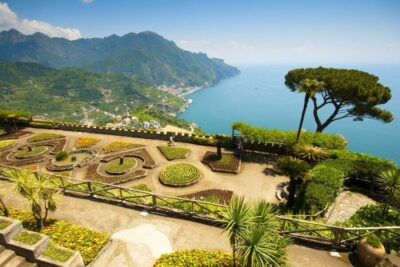 ★ 4.5Positano, Amalfi and Ravello Sharing Tour from SorrentoFrom $1151,179 reviews
 ★ 4.5Amalfi Coast Day Tour from Sorrento with Light Lunch and WineFrom $1391,148 reviews
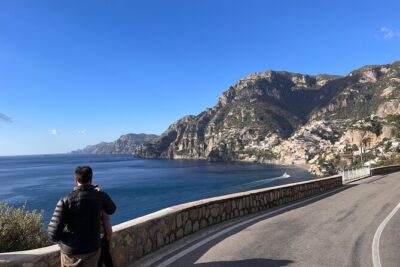 ★ 5.0Private Amalfi Coast Day Tour from Sorrento or NaplesFrom $3531,059 reviews
Browse the lists this tour appears in