Review · SORRENTO
Sorrento through the eyes of a local
Sorrento feels like a secret again. This 2-hour walk with a local guide trades checklist sightseeing for stories tied to real corners of the town. You start right where locals pass, and you keep moving through spaces most visitors never get time for.
I love the way you get personal hints from the guide and how the walk carries that old Sorrento atmosphere at a relaxed pace. I also like the free limoncello and sweets, plus the stop inside the O’ Parruchiano restaurant garden, where you can see the famous Italian pergola up close.
One thing to consider: the route is tight and time is limited, so you’ll see some stops from the outside (like Villa Fiorentino) even though you’ll go inside a few other highlights.
In This Review
- Key things that make this walk worth your time
- Piazza Tasso meeting point and the start of the Sorrento story
- Pity Road: narrow lanes that explain how Sorrento worked
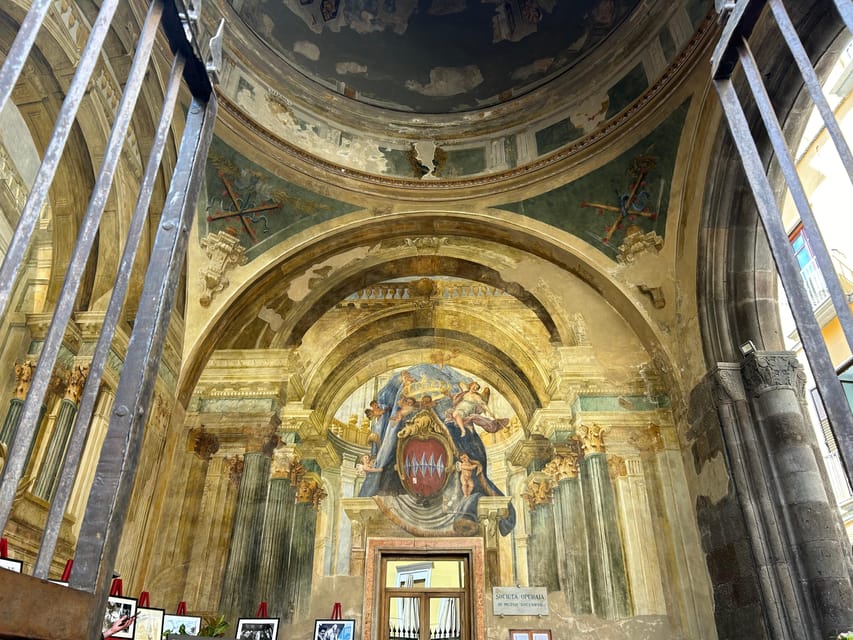
- Craft workshop moment: Sorrento inlay in a deconsecrated church
- Sorrento Cathedral and the nativity from the 800s
- O’ Parruchiano hidden garden and the Italian pergola
- Villa Fiorentino from the outside: art exhibitions and big names
- Sedil Dominova: an old meeting point in the heart of town
- Limoncello break at the right tempo
- Piazza della Vittoria panorama and the St. Francis cloister wall
- Comunal Villa overlook and the full coast view
- St. Antonino church and the cripta: the quieter side of Sorrento
- Mills Valley ending walk: finishing with a sense of place
- Price and value: what $30 buys in two hours
- Who this Sorrento walk is best for
- Should you book? My practical take
- FAQ
- Where do we meet for the Sorrento walk?
- How long is the tour?
- Is limoncello included, and do I need to buy it?
- Will I be able to visit the garden inside the O’ Parruchiano restaurant?
- What language is the guide speaking?
- Is the tour wheelchair accessible?
- Can I cancel for a refund?
- What should I do if I’m running late?
Key things that make this walk worth your time
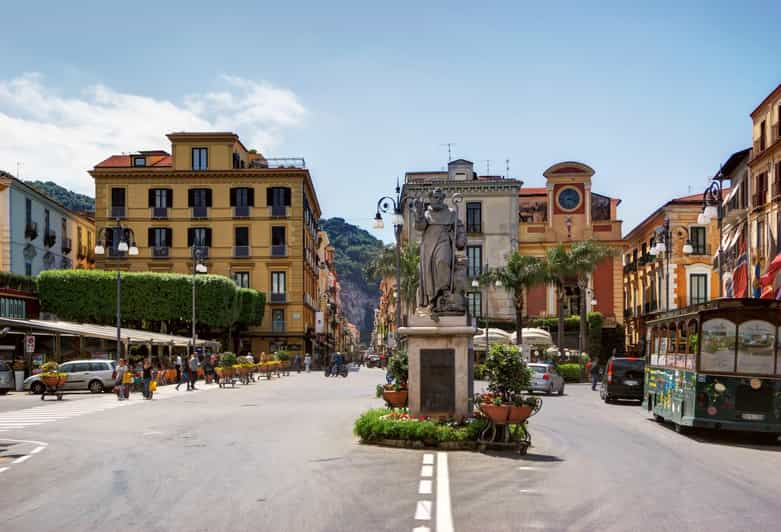
- Start in Piazza Tasso by the Torquato Tasso statue, so you get the town’s center story fast
- Pity Road shows Sorrento’s narrow old-street feel, where carriages once squeezed through
- Sorrento inlay craft gets explained in a historic, deconsecrated church setting
- O’ Parruchiano garden access gives you a view many visitors never see
- Photo-friendly viewpoints at Piazza della Vittoria and the Comunal Villa overlook
- Taste stop included with local Sorrento limoncello and sweets
Weighing this one up? See how it lands against a few Sorrento favourites.
- Sorrento: Exclusive Capri Boat Tour and Optional Blue Grotto★ 4.8 · 3,170 reviews
- From Sorrento/Nerano: Amalfi and Positano Boat Tour★ 4.7 · 3,107 reviews
- Sorrento Farm and Food Experience including Olive Oil, Limoncello, Wine tasting★ 5.0 · 2,524 reviews
- Capri Blue Grotto Small-Group Boat Day Tour From Sorrento★ 4.5 · 2,511 reviews
Piazza Tasso meeting point and the start of the Sorrento story

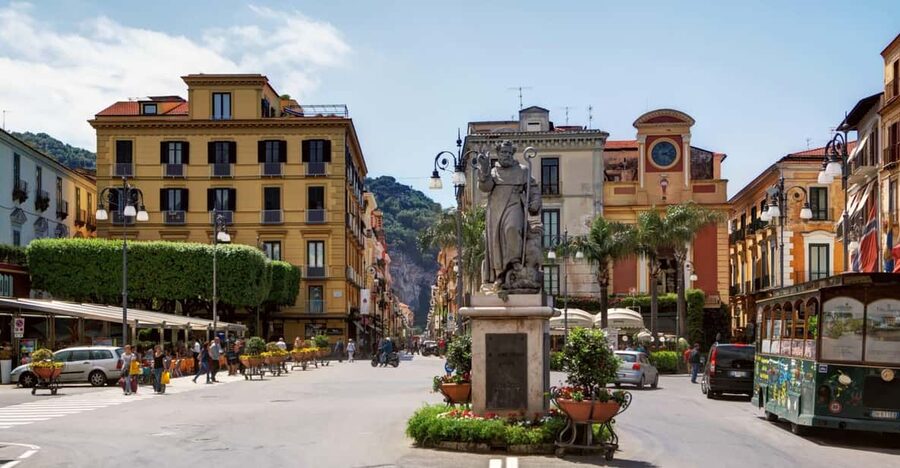
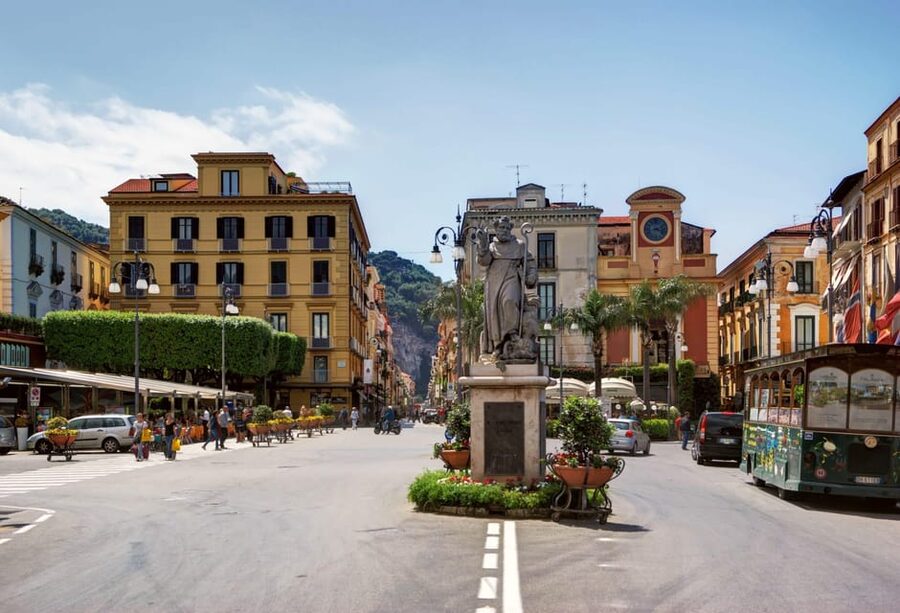
The tour starts in a spot that feels like the town’s living room: Piazza Tasso, in front of the statue of Torquato Tasso, near Bar Fauno. That matters, because you’re not “heading out” into random streets right away. You’re anchored to Sorrento’s main square first, and the guide sets the scene with the plaza’s history and the statue’s meaning.
This is one of the smartest ways to begin. If you start with context, every turn later feels less like walking around and more like reading a page of a book. And it’s practical: you can arrive, orient yourself, and then get moving without that lost-in-Sorrento feeling.
Also, the pace is designed for real feet-on-the-stones walking. In many tours, you spend more time stopping than seeing. Here, the stop-to-stop rhythm keeps you engaged without rushing you through every church doorway.
Pity Road: narrow lanes that explain how Sorrento worked
Next comes a street that almost feels like a trick. The Pity Road is ancient and extremely narrow, and you’ll get the picture of how people once passed through with carriages. Even if you’ve seen old alleys elsewhere in Italy, this one hits different because it’s so tight you can sense the limits of the space.
What I like about this stop is that it turns a “pretty street” into a functional slice of history. The guide helps you understand how design shaped daily life: where traffic could go, why buildings faced the way they did, and why the town’s layout feels the way it does today.
If you’re the kind of traveler who enjoys details—materials, street width, small contrasts—this is where the tour starts to feel like a conversation with someone who actually lives here.
Craft workshop moment: Sorrento inlay in a deconsecrated church
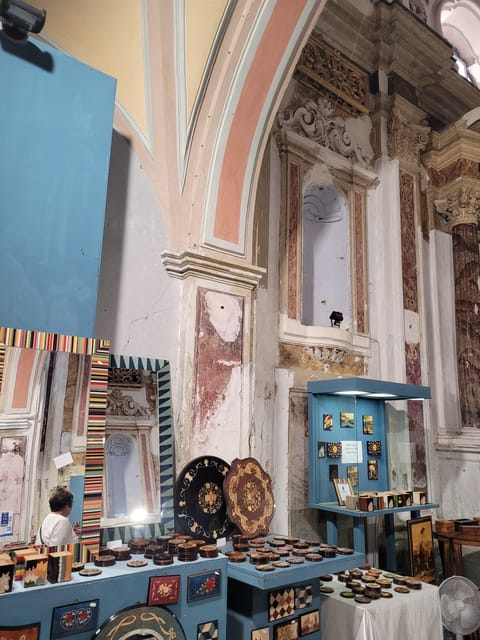
From the street scale of Pity Road, you shift to craft and hands-on artistry. You’ll see how Sorrento inlay is made, explained in an old deconsecrated church setting. This matters because it connects a famous Sorrento product to the real place where it’s interpreted and preserved.
Inlay is one of those things that can look decorative until someone explains the process. Once you know how the pieces are worked into designs, you’ll start noticing why Sorrento’s look is so recognizable in shops and markets. You’ll also understand why people pay for these objects: it’s not “souvenir” pricing for a quick print.
Practical note: if you’re sensitive to crowds, this stop is usually easier than a major cathedral queue because it’s built around watching and listening, not racing.
Sorrento Cathedral and the nativity from the 800s

Next, you’ll get a proper church stop at the Sorrento Cathedral. Inside, you can see a nativity dating to the 800s. It’s the kind of object that repays slow looking. Nativity scenes aren’t new to Italy, but the age changes your perspective: you’re not only seeing a tradition, you’re seeing its persistence.
This is also a relief in the itinerary. You’re not just walking past views and facades—you’re getting a concentrated moment indoors where the guide can point out what to pay attention to.
Keep your expectations grounded: this is still a two-hour walk. That means you’ll visit, look, and keep moving, rather than doing a long museum-style session.
- Sorrento Farm and Food Experience including Olive Oil, Limoncello, Wine tasting
★ 5.0 · 2,524 reviews



O’ Parruchiano hidden garden and the Italian pergola
Now for one of the tour’s stand-out perks: a garden inside the O’ Parruchiano restaurant. You can see the famous Italian pergola there, and it’s exactly the sort of access that makes the difference between sightseeing and seeing how people actually use spaces.
This stop is valuable for two reasons. First, it gives you a quiet pocket away from the main rush. Second, it lets you experience a key architectural feature (the pergola) in context, not as a postcard element.
It also explains why the tour is priced the way it is. Many walking tours can show you streets. This one can show you a space that would be hard to find or even notice as a visitor.
If you care about photos, this is one of your best moments. The light under a pergola and the garden framing make for better shots than just shooting the town from a lookout.
Villa Fiorentino from the outside: art exhibitions and big names
From the garden, you head to Villa Fiorentino from the outside. The building is known for exhibitions and has hosted works linked to major artists, including paintings by Dalì and Picasso.
Here’s the practical trade-off: you’re not going inside Villa Fiorentino on this walk. You’re taking in the exterior and letting the guide connect it to the art scene tied to Sorrento. If you’re hoping for an interior museum tour, plan a separate visit later.
Still, the exterior stop is useful. It anchors your walk to culture beyond the churches and coast—especially if you’re planning time in the region for art exhibitions, or if you like to know what kind of town you’re actually visiting.
Sedil Dominova: an old meeting point in the heart of town

Next is Sedil Dominova, an old meeting point. Think of it as a social node—where people would gather, talk, trade news, and watch daily life unfold.
This stop is good because it changes how you read the center of Sorrento. Instead of only seeing stone and views, you start noticing where conversations could happen, where decisions might have been made, and why certain locations matter.
It’s also one of those moments where the guide’s local knowledge really shows. When someone explains how a place was used, you feel less like a passing observer and more like you’re temporarily part of the town’s rhythm.
Limoncello break at the right tempo
Then comes the reason many people relax into this tour: a refreshing stop with Sorrento limoncello tasting. You also get sweets as part of this experience, and it’s specifically framed as local and famous for a reason.
This is the kind of break that works better than a long sit-down. After an hour of walking, tasting something local gives your brain a clean reset. You remember the scent, the sweetness, and the town’s lemon character.
It’s also a helpful reality check. Sorrento has plenty of lemon-themed products, but tasting helps you separate generic candy from the version locals actually enjoy.
Piazza della Vittoria panorama and the St. Francis cloister wall
With energy refreshed, you head toward Piazza della Vittoria for panorama views. This is the payoff area: you get to look out and connect the architecture of town to the coastline beyond.
After the view, you’ll visit the cloyster of St. Francis. Here, you’ll see modern graffiti art from a famous singer. It’s a great pairing with the older religious setting. Instead of making the town feel stuck in the past, the guide shows how Sorrento updates its visual language without losing its identity.
If you like contrast—old stone paired with contemporary street art—this part feels fun and different. It’s not just “more history.” It’s also proof the town is still alive.
Comunal Villa overlook and the full coast view
From there, you go to the Comunal Villa, where you can look out over the Sorrento coast. This is a classic geography stop, but the tour keeps it practical. You’re not wandering until you find a view; you’re led to a point where the layout of the coastline makes sense.
I like that it’s not one quick glance. You get time to take it in, and the guide’s commentary helps you understand what you’re seeing.
If you’re staying nearby longer, use this moment to decide what direction you’ll explore next: which bays you’d like to photograph, and which areas might be worth returning to on your own time.
St. Antonino church and the cripta: the quieter side of Sorrento
Next is St. Antonino church, where you visit the cripta. This is the tour’s most “slow and reverent” stretch because you’re moving from daylight views back into older interior space.
A cripta visit can be short in many tours, but this one treats it as part of the story instead of a checkbox. You’ll appreciate the shift in temperature, acoustics, and mood. It’s a reminder that Sorrento isn’t only about scenery—it has depth under the surface.
Keep in mind that church interiors can mean rules about movement and quiet. It’s worth keeping your pace gentle and your camera ready only when appropriate.
Mills Valley ending walk: finishing with a sense of place
The tour ends with a walk up to the Mills Valley, where you say goodbye. This final stretch helps you avoid the common problem of ending immediately after the last big view. Instead, the route builds toward a natural finish point, and you end with one more change of scenery.
It’s also useful for planning. When a walking tour ends at an area like this, you often get a good chance to continue exploring nearby on your own—quiet streets, local corners, and less pressure than the busiest central zones.
Price and value: what $30 buys in two hours
At $30 per person for a 2-hour guided walk, you’re paying for three things: local guidance, included tastings, and access that would be hard to get alone.
The included limoncello and sweets reduce the cost of the “food break” you’d otherwise pay for. More importantly, the O’ Parruchiano garden access is the kind of detail that’s difficult to replicate on your own unless you already know where to look and who to ask.
You’re also getting English narration from a live guide, and the tour is wheelchair accessible. That last point matters because it signals the route has been structured with more than able-bodied walkers in mind.
Could you walk these streets without paying? Sure. But if you want the town to feel like a place you understand—not just photos you collect—this kind of guided structure is the value.
Who this Sorrento walk is best for
This tour suits you if you:
- like learning while walking, not only watching from a bus window
- want a less touristy rhythm through central Sorrento
- enjoy craft explanations, church details, and local food tastings
- care about views but prefer them woven into a route with context
It may be less ideal if you:
- want a long, sit-down museum-style experience
- plan to spend extra time inside major buildings beyond quick visits
- need lots of free time between stops (the route keeps a steady pace)
One final note from the feel of it: guides like Camilla and Alessandra bring a real love for the town, and the walk tends to stay fun rather than stiff. You’ll likely come away with more than “I saw Sorrento.” You’ll understand how its streets, crafts, and landmarks connect.
Should you book? My practical take
If you have just a short window in Sorrento and you want the town to feel personal, I think you should book this. The mix of Piazza Tasso context, craft explanation, the O’ Parruchiano garden, and the included limoncello tasting adds up fast for a $30 price tag.
If you’re the type who loves wandering on your own, you can still DIY parts of the route. But you’ll miss the “why this place matters” layer, and you’ll likely never get the same garden access without a guide.
FAQ
Where do we meet for the Sorrento walk?
You meet right in front of the statue of Torquato Tasso, near Bar Fauno in Piazza Tasso.
How long is the tour?
The tour lasts 2 hours.
Is limoncello included, and do I need to buy it?
Yes. You get a free try of Sorrento limoncello during the tour, along with local sweets.
Will I be able to visit the garden inside the O’ Parruchiano restaurant?
Yes. The tour includes a special walk in the garden of O’ Parruchiano, and it’s noted as something you wouldn’t see if you’re not a guest.
What language is the guide speaking?
The live tour guide speaks English.
Is the tour wheelchair accessible?
Yes, the tour is listed as wheelchair accessible.
Can I cancel for a refund?
Yes. Free cancellation is available up to 24 hours in advance for a full refund.
What should I do if I’m running late?
If you’re late, send the guide a message.
More Tour Reviews in Sorrento
- Sorrento Farm and Food Experience including Olive Oil, Limoncello, Wine tasting
★ 5.0 · 2,524 reviews